

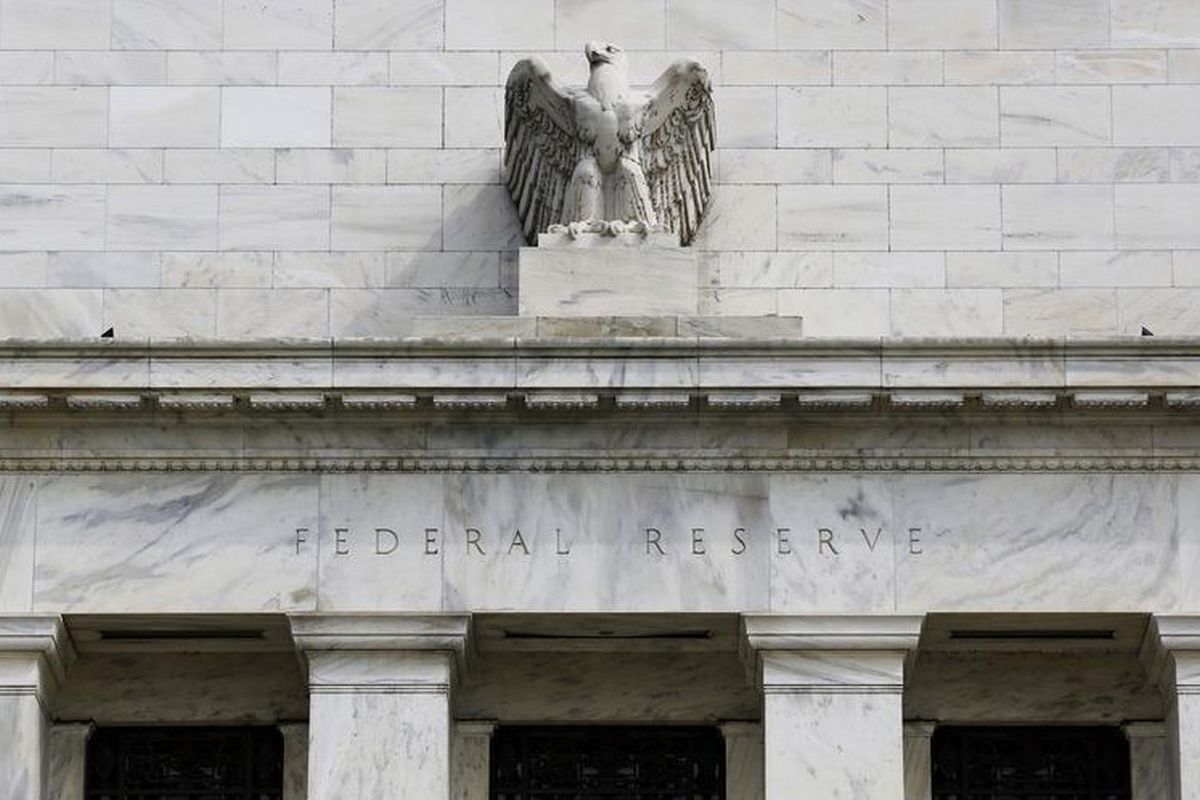
NEW YORK (Sept 17): Investors are gaining more confidence in the Federal Reserve's inflation-fighting backbone, but uncertainty about how far it will raise interest rates to keep prices in check is likely to cause volatility for stocks and bonds in the weeks ahead.
The US central bank on Wednesday raised rates for the first time since 2023, a widely expected move as it seeks to address persistently above-target inflation, despite repeated public calls by President Donald Trump for rate cuts. Bond yields pulled back on Thursday, after a long run-up which had partly reflected worries over whether the central bank would take action.
But markets now confront a very different investment backdrop, including a lack of clarity about how tight the Fed will now seek to make monetary policy. In the face of higher rates, some investors said it could make rate-sensitive assets, such as small-cap stocks, less attractive.
The meeting "does make them look independent...it adds trust to the market," said Matthew Miskin, co-chief investment strategist at Manulife John Hancock Investments. Yet the Fed "may have come off a little too hawkish in this meeting and we're just going to have to see how the economy can react in the next couple of months," he said.
Many investors saw the meeting as a test of independence for new Fed chair Kevin Warsh, who was picked by Trump.
"I hope at least at a very high level, one takeaway that investors have is that economics is trumping politics at the Fed, at least for right now," said Marta Norton, chief investment strategist at retirement and wealth services provider Empower.
Unanimous hike vote lands hawkish
Higher rates stand to slow the economy, by raising borrowing costs for consumers and companies, and also could pose a headwind for the performance of stocks and other risk assets.
Markets entered 2026 pricing in rate cuts, but that flipped after the late-February US-Israeli war with Iran drove up energy prices and inflation, shifting bets toward possible hikes.
Wednesday's quarter-percentage-point hike lifted the Fed's benchmark rate to 3.75-4%. Investors took note that the vote among Fed officials was unanimous, following the last meeting in July when the decision to hold rates steady was 9 to 3.
"A unanimous hike materially raises the probability of another move before year-end, and investors positioned for the easing cycle of early 2026 need to fully recalibrate," said David Krakauer, vice president of portfolio management at Mercer Advisors.
Following Wednesday's meeting, stocks fell, with the benchmark S&P 500 ending down 0.45%. The US dollar gained sharply against a basket of currencies, but was paring back somewhat on Thursday.
"This meeting landed as hawkish as it could have been -- the thoughts, the message, the unanimous decision itself," said Danny Zaid, portfolio manager at TwentyFour Asset Management.
The benchmark 10-year yield pulled back on Thursday after topping 5% following the decision, and was last at 4.95% while the 30-year yield was last at 5.30%.
Investors gauge next rate increase
Forecasts released on Wednesday showed Fed officials expect one more rate increase this year, and expect to hold steady in 2027.
"Much of the tightening risk is already priced in, but the bigger signal is whether the Fed believes this is enough or the beginning of more to come," said Karen Manna, fixed income strategist at Federated Hermes.
Fed Funds futures late on Wednesday suggested roughly even odds of a hike at the Fed's next meeting in October, which comes just before the US midterm elections that decide control of Congress. More hikes are priced in for 2027.
"One more hike is on the cards for this year and the risks are we’ll get more rather than less in 2027,” said Dustin Reid, chief strategist at Mackenzie Investments in Toronto.
Inflation has been running consistently above the Fed's annual 2% target for several years. The latest reading of the core Personal Consumption Expenditures Price Index, which Fed officials use as a guidepost for inflation's underlying run rate, came at 3.3% on an annual basis.
Warsh's speech late last month at the Fed's Jackson Hole, Wyoming, conference was seen as hawkish and raised investor expectations for a hike, which were solidified with hotter-than-expected inflation data released last week.
However, the new chair's desire to shun forward guidance about the rate path has also bred uncertainty on Wall Street. His press conference following the Fed's last meeting in July left investors confused about his approach to inflation, and was followed by a rise in long-dated Treasury yields.
"Warsh has given the bond market more clarity ... today that underlying trends in inflation are still too strong," said Collin Martin, head of fixed income research and strategy, Schwab Center for Financial Research.
Investors are mulling how to adjust portfolios for a higher rate environment.
"We don't want to overreact to one meeting," said Phil Blancato, chief market strategist at Osaic. Still, he said, "if this looks like the start of a hiking cycle, reducing duration and trimming some small-cap exposure could make sense."
Uploaded by Lam Seng Fatt