

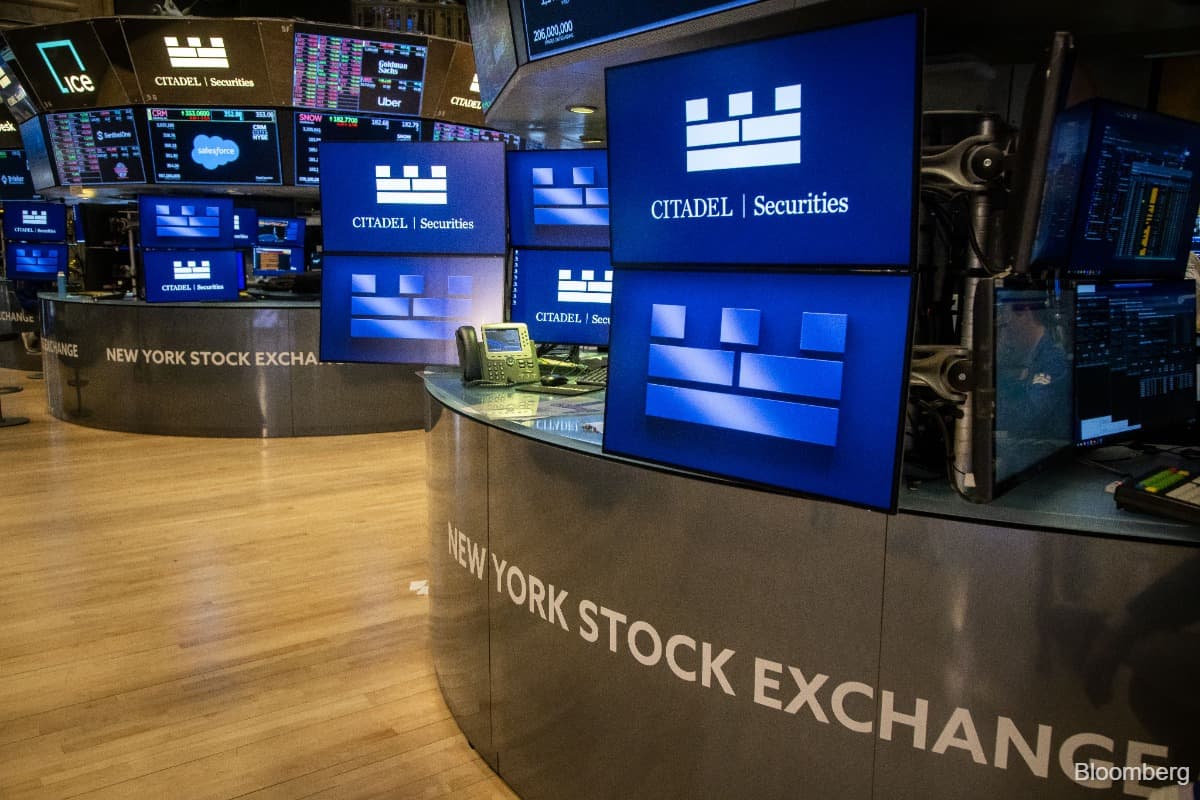
(Sept 17): Citadel Securities LLC is seeking to attract Asia institutions including retail brokers, sovereign wealth funds and asset managers for its 24-hour US equities trading service.
After introducing all-day trading in November, the Miami-based firm is trying to attract more non-US institutional clients for extended-hour business, a space currently dominated by retail investors, Joseph Mecane, head of execution services, said in an interview in Hong Kong on Wednesday. It will also target insurers and mega-banks.
The move comes as major US exchanges gear up to extend trading hours, underscoring a global shift towards around-the-clock markets. The New York Stock Exchange (NYSE) is planning to allow 23-hour, five days a week execution for some trades from December. Nasdaq Inc is also hoping to extend trading hours on its stock venues to 23 hours during the work week.
“Once you have the exchanges live 23/5, and you have the infrastructure that enables more participants to come into the marketplace” that will drive growth and expansion, said Mecane. Citadel Securities will plug into these venues as well as continuing to act as a single counterparty, he said.
The company has been hiring to prepare for the broader adoption of all-hours trading. It now has about 10 people in Hong Kong focused on sales and servicing clients, and about 50 in the US, Mecane said.
About 11% of US market volume is in pre- and post-sessions, he said, adding that Citadel Securities accounts for at least half of the retail execution that happens overnight in the US.
In the past, traders in Asia had to wait until late night to access US markets. Now, they can trade during day time underpinned by platforms like Citadel Securities and its rivals, which act as counterparties.
Founded by billionaire Ken Griffin, Citadel Securities rose to prominence in the era of meme stocks and handled about 35% of all US-listed retail volume as of the end of June.
The company is among a group of non-bank firms that developed their own technology and quantitative analysis to help match buyers and sellers. Its biggest US rivals include Jane Street Group, Hudson River Trading and Susquehanna International Group.
More than 20% of the orders that Citadel Securities execute in the US for traditional retail platforms originate from non-US investors, Mecane said. Outside of US trading hours, these overseas orders account for about 60%.
Retail traders from Hong Kong and South Korea are top contributors to overnight sessions, but there’s also growing interest from Asian institutions, he added.
Tokenised Stocks
In January, the NYSE announced plans to build a venue using blockchain technology to allow for trading tokenised stocks and exchange-traded funds around the clock.
NYSE, which is owned by Intercontinental Exchange Inc, plans to use its existing technology that matches buyers and sellers, combined with private blockchain networks, to facilitate the trading of tokenised securities in real-time. The exchange is looking to launch the new digital trading platform later this year, pending regulatory approval.
Citadel Securities is paying close attention to the development. “It’s important to make sure that similar products that do similar things have the same level of regulation,” Mecane said. “Once we have a better sense of what the SEC is going to allow, we will clearly look to be a leader in the space.”
Citadel Securities rode the wave of volatility that took hold across markets in the second quarter to post a record US$7.3 billion (RM29.55 billion) of trading revenue for the period.
That was more than triple the level from the same period a year earlier, a person familiar said at the time. Net income also climbed, increasing more than 250% to US$3.3 billion, the person added.
Uploaded by Felyx Teoh