

(Sept 17): Electricity market reforms in one of China’s economic powerhouses could herald a more sweeping slowdown in the country’s demand for natural gas.
Gas-fired plants in Guangdong province have moved from steady power generation to mostly peak-time operations, according to Wood Mackenzie Ltd, marking a shift that could further subdue consumption growth of the cleaner-burning fuel.
The coastal province accounts for about one-third of China’s gas-fired capacity, much of it fed by pricier imports of super-chilled seaborne cargoes. The country’s ravenous appetite for energy has spurred a massive wave of global investment in a fossil fuel touted as a bridge to net zero. But WoodMac’s latest analysis suggests doubts are creeping in over whether that’s sustainable given the country’s unprecedented build-out of renewables.
Guangdong’s gas plants switched last year from guaranteed operating hours and regulated tariffs to a purely economic dispatch system. Generators must now compete to recover fuel costs, while payments to stay on standby to support the grid have been increased, WoodMac principal analyst Kai Dong said in a report.
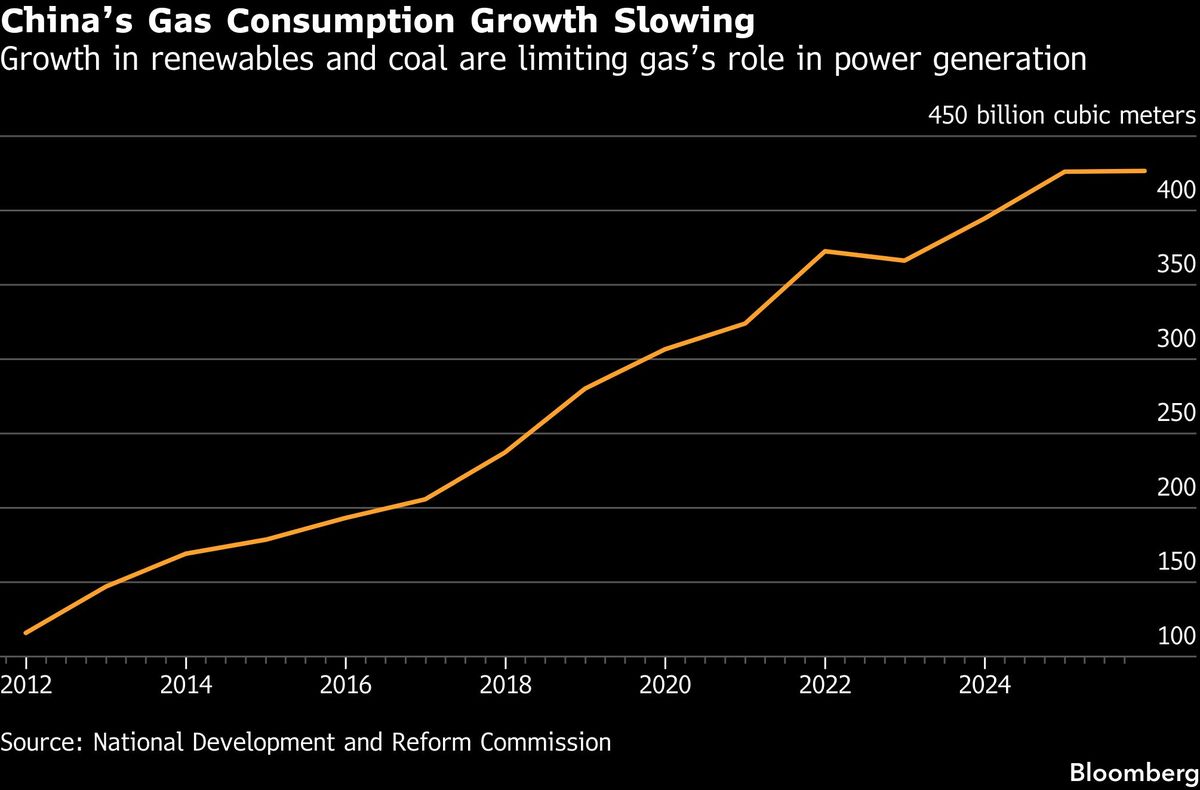
The shift reflects the rapid growth in clean energy. Gas plants are increasingly being used to balance intermittent renewables output instead of delivering baseload power, Woodmac said. To displace coal as the main baseload source, the price of imported liquefied natural gas (LNG) would need to drop to about US$6 (RM24.29) per million British thermal units. Spot prices are currently close to US$30.
China was the world’s largest LNG importer last year. But the country has slowed purchases and re-routed cargoes to more lucrative markets after the near-closure of the Strait of Hormuz sent prices soaring to the highest level in more than three years.
“With China’s other provinces following similar frameworks, the key question for the global LNG market is how much less demand growth this could mean than previously anticipated,” Dong said in the report, which was also presented at the Gastech conference in Bangkok this week.
China gets cheaper gas from domestic sources or overland via pipelines from Russia and Central Asia, leaving LNG as the segment most vulnerable to price spikes. Electricity generation is an important pillar of gas demand, although industrial processes and heating buildings account for bigger shares.
On the wire
China’s August activity report opened a crucial window for policymakers to assess their stance, according to Bloomberg Economics. The data probably gave them assurance they can stick with current policy settings.
China’s autumn grain harvest is still likely to be abundant, despite disruptions to global food supply from this year’s super El Niño, the Securities Times reported.
CATL bulls are unfazed by a US$100 billion market value wipeout over just four months, arguing the Chinese battery leader’s technology moat makes it a clear winner in the long-term global energy transition.
For the third year running, West China Cement is trying to get investors to visit its factories in Africa. This year, the company’s management even dangled a free lobster buffet as an incentive.
Uploaded by Felyx Teoh