

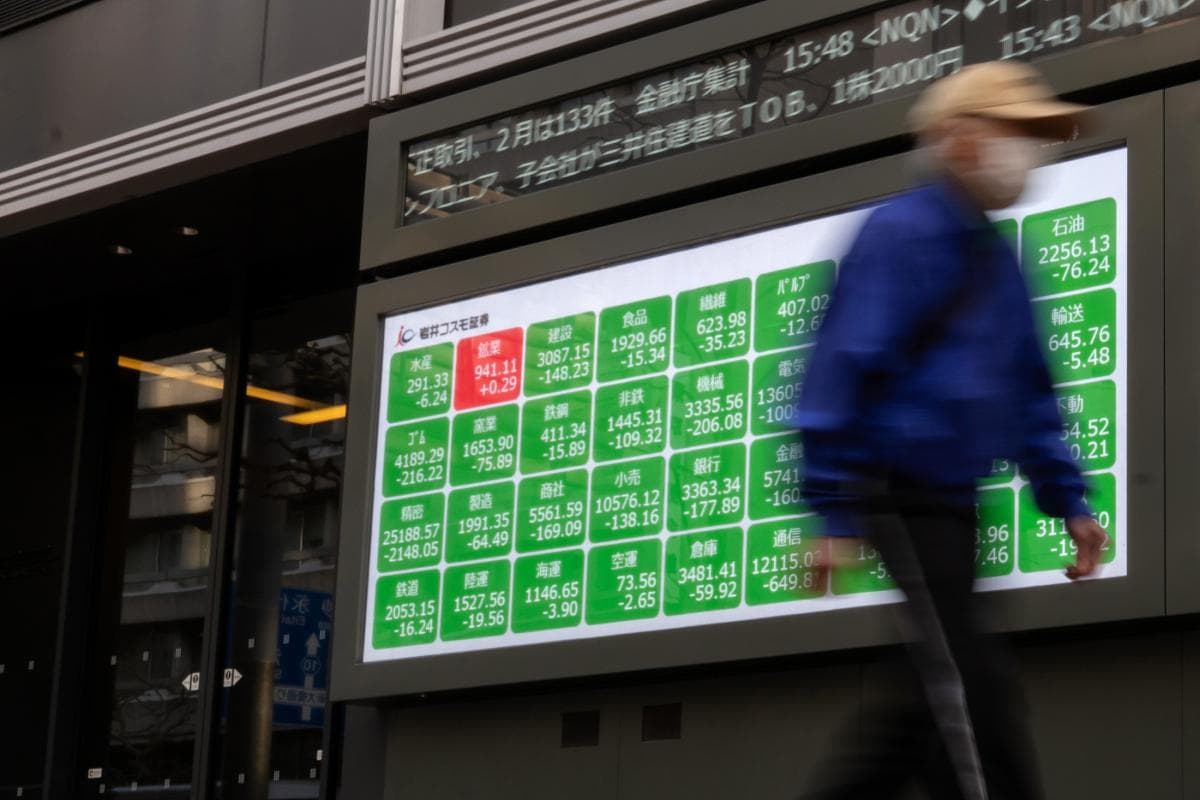
(Sept 17) : Stocks in Asia were poised for losses, tracking a decline on Wall Street after the Federal Reserve raised interest rates for the first time since 2023 and signaled further tightening to curb inflation. The dollar gained the most since June.
Equity-index futures for Australia, Hong Kong and South Korea pointed lower, while those for Japan showed a modest gain. US stock contracts were little changed after the S&P 500 Index fell to its lowest since July, while the Nasdaq 100 Index ended little changed after an index of semiconductor stocks advanced for a second session.
Treasuries fell after the decision, with shorter-dated debt leading losses as Chairman Kevin Warsh struck a hawkish tone, saying the rate increase “removed a dose of accommodation.” Rate-sensitive two-year yield climbed to its highest since 2024, helping push the dollar higher for a third straight session. Money markets priced about a 50% chance of another Fed hike in October. Oil and gold fell.
Investors are now weighing how quickly the Fed may tighten further as policymakers confront broader inflation pressures. The Fed’s projections point to another hike this year, putting upcoming inflation and labor-market data in the spotlight ahead of the October meeting.
“The Committee removed references to inflation being driven by supply shocks, suggesting policymakers are increasingly focused on broader and more persistent inflation pressures rather than viewing recent price increases as largely transitory or externally driven,” said Daniel Siluk, portfolio manager at Janus Henderson Investors.
The Federal Open Market Committee voted unanimously to lift the benchmark rate by a quarter percentage point to a range of 3.75% to 4%. The Fed’s so-called dot plot, which shows policymakers’ projections for the path of interest rates, indicated one more increase this year.
Warsh reinforced the inflation-fighting message he delivered at Jackson Hole last month. Speaking to reporters Wednesday, he said too many categories of goods and services were showing annualized price gains above 3% over six- and 12-month periods.
President Donald Trump said on social media after the decision that US interest rates should be at 1% or lower, though he stopped short of directly criticizing Warsh.
“We are ‘carrying’ almost every country in the World, and that cannot go on any longer,” Trump said. “LOWER THE INTEREST RATES FOR THE UNITED STATES OF AMERICA, AND FAST!”
Wednesday’s move may mark the start of a broader tightening cycle, with both policymakers and traders anticipating at least one more increase this year. Attention is now shifting to the timing and pace of further moves.
“History is clear that once the Fed begins raising rates, they do it multiple times,” said Chris Zaccarelli, chief investment officer at Northlight Asset Management. “But the pattern is less clear about whether they will raise rates at consecutive meetings or leave rates unchanged” at some of them.
Elsewhere, oil retreated on signs that some recent Middle East supply disruptions are easing, with traders also adjusting positions after a blistering rally.
Brent settled near US$106 a barrel as Saudi Arabia seeks to restore about half the capacity of its East-West pipeline within days after drone strikes forced its closure last week.
Oil has surged almost 80% this year following the outbreak of the US-Iran war and as the Russia-Ukraine conflict drags on. The jump, alongside even steeper increases in fuel costs, has added to concerns over global inflation.
Oil’s price dip should be seen “as a breather rather than a clear reversal for now,” said Charu Chanana, chief investment strategist at Saxo Markets in Singapore, cautioning that risks remained severe. Any further escalation or prolonged outages could quickly put upward pressure back on prices, she added.
uploaded by Isabelle Francis