

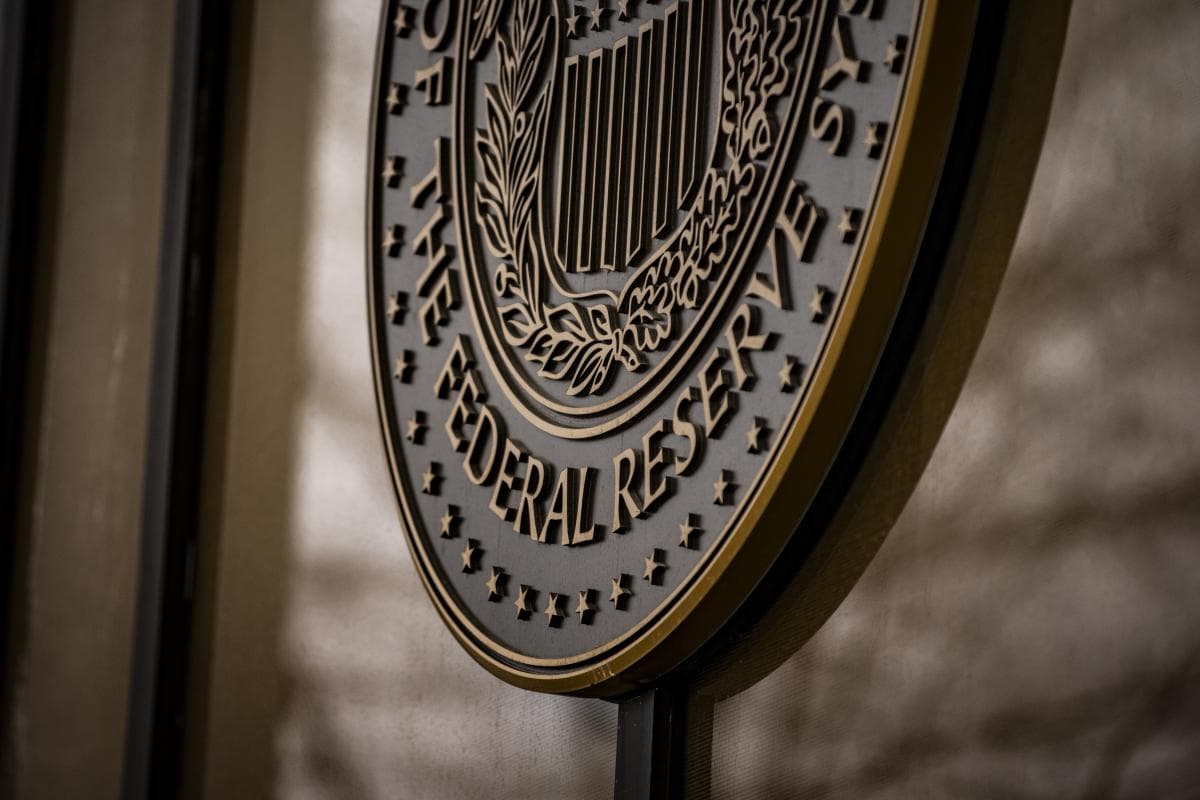
(Sept 17) : Wall Street traders drove stocks to the lowest since July on bets the Federal Reserve will keep raising rates to combat inflation after delivering its first hike in three years.
Equities erased gains, with most major groups in the S&P 500 falling. The Dow Jones Industrial Average lost 1.2%. Short-dated Treasuries underperformed, with two-year yields hitting the highest since 2024. The dollar climbed. Money markets priced in an about 50% chance of a Fed hike in October.
The Federal Open Market Committee voted unanimously to increase the benchmark rate to a range of 3.75% to 4%. The so-called dot plot, which the US central bank uses to signal its outlook for the path of monetary policy, suggests one more hike this year.
“We removed a dose of accommodation so that financial and credit conditions would be more consistent with our ultimate objectives,” Fed Chair Kevin Warsh said during a press conference. “Today’s action starts to show we’re serious about this, and we will deliver on the price stability objective.”
The debate now shifts from whether rates will rise again to how many hikes lie ahead, noted Seema Shah at Principal Asset Management. The unanimous vote shows that rising energy prices and stubborn inflation have brought even the doves on board, making a “one-and-done” move highly unlikely, she said.
“Warsh’s press conference was coherent, confident and consistently hawkish without coming across as crazily so,” said Krishna Guha at Evercore. Still, he noted that one aspect that might have disturbed the bond market was the characterization of the hike as removing “a dose of accommodation.”
“That comment risks unmooring our sense of how far the Fed chair thinks rates might need to go,” Guha added.
“The Fed’s interest rate hike today is likely to be followed by at least one more later this year, probably in December,” said Stephen Brown at Capital Economics. “We judge that Fed officials are underestimating the potential for the unemployment rate to decline, so we are sticking with our forecast for a third hike in 2027 as well.”
Hopes of limited hikes faded in the face of the Fed’s resolve to address inflation, according to Andrzej Skiba, head of BlueBay US fixed income at RBC Global Asset Management. Still, after the initial reset, he bets Warsh’s “clear messaging” could actually help support Treasury prices further out the curve.
Wednesday’s rate decision sends a message to the markets that the Fed isn’t just talking about inflation, it’s actually doing something about it, according to Alex Guiliano at Resonate Wealth Partners.
“While one 25-basis point hike isn’t likely to bring inflation down overnight, it could help to stabilize the bond market, which has a direct impact on borrowing costs,” he said.
Meantime, President Donald Trump demanded a rate cut after the Fed decided to hike. In a social media post, he said that US rates “should be 1%, or less” because “Our Country is BOOMING with new Investment” and has “the Best Credit in the World.”
uploaded by Isabelle Francis