

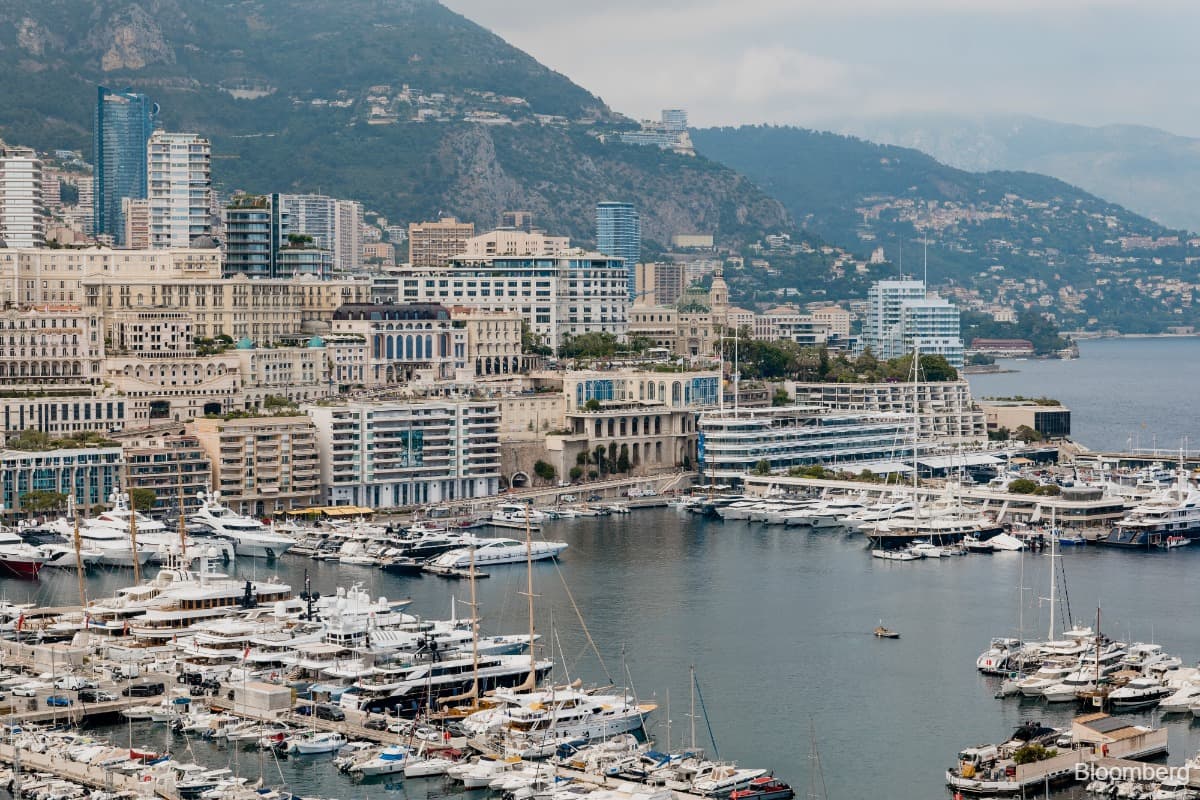
(Sept 16): Monaco is among several nations poised to exit a global financial watchdog’s dirty money watchlist next month, marking a change in fortune for the city-state that’s home to the world’s highest concentration of millionaires and billionaires.
The French Riviera principality was placed on the Financial Action Task Force’s “grey list” in June 2024, bringing with it heightened scrutiny over shortcomings in its efforts to tackle illegal money flows. However, officials from the Paris-based monitor have since found significant progress, according to people familiar with the matter.
Bulgaria and Ivory Coast are also expected to come off the list, some of the people said, who asked not to be identified because the deliberations are private.
The official outcome isn’t due until the final day of the FATF’s next plenary in the French capital on Oct 30 and no final decisions have been made, the people said. Listings are determined based on a consensus among the group’s membership, which includes the US, UK, European Commission, China, Japan and India.
The watchdog’s recommendations are closely tracked by global investors who are wary of conducting business in places found to be deficient in anti-money laundering regulations. Jurisdictions added to the list require closer monitoring, and the designation may cast serious doubt over the integrity of their financial systems.
A 2021 International Monetary Fund report found grey-listed countries experienced “a large and statistically significant reduction in capital inflows.”
An exchange-traded fund that tracks Bulgaria’s benchmark stock index was up 2.8% at 12pm in Sofia. Monte Carlo casino owner Société des Bains de Mer also rose on the news, up by 1.8% in Paris trading at 11am.
A spokesperson for the FATF declined to comment on the listing decisions.
The FATF’s October plenary will mark the first under the presidency of British official Giles Thomson. Since assuming the role in July, he has placed a particular priority on combating fraud, including scam compounds.
Monaco’s expected delisting comes as the city-state is still reeling from a murder plot on its soil in late June, which triggered a large-scale manhunt.
Since arriving on the grey list, the principality has tightened laws and sought to show it can take meaningful enforcement actions. Earlier this year, its anti-money laundering watchdog fined UBS Group AG €6 million (US$6.9 million or RM27.9 million) over a range of failings. Two other banks, including Julius Baer Group Ltd, have also been fined.
A spokesperson for the Monaco government declined to comment.
For Bulgaria, the original grey-list designation in 2023 came at the peak of the nation’s negotiations to enter the euro area.
The Council of Europe has long criticised the country, which regularly ranks among the European Union’s most corrupt. But more recently, FATF officials have praised improvements in risk-based supervision and market-entry controls for virtual asset service providers. In early September, Prime Minister Rumen Radev met with FATF representatives to discuss the nation’s progress.
Besides meeting all formal criteria, “we have another guarantee that puts us in a strong position to take Bulgaria out of this disgraceful list — and it is the political will and the actions taken by the Bulgarian government with regard to fighting money laundering, grey economy and corruption,” he told a government body in late August.
Elsewhere, the Ivory Coast’s progress on bank supervision and beneficial ownership verification has drawn plaudits from the FATF, which previously raised concerns about oversight and enforcement. Among the steps recently taken: a multi-year prison sentence handed out to a local influencer on money-laundering charges.
“It is highly likely that we have met all the conditions, but we are awaiting the final assessments,” said Amadou Coulibaly, Ivory Coast’s Minister of Communication and government spokesperson.
Uploaded by Magessan Varatharaja