

This article first appeared in The Edge Malaysia Weekly on September 14, 2026 - September 20, 2026

IN less than a month, Prime Minister Datuk Seri Anwar Ibrahim, who is also minister of finance, will table Budget 2027 on Oct 9, his fifth budget since taking office. The government faces challenges on keeping its fiscal consolidation agenda on track while addressing cost-of-living pressures and supporting businesses grappling with higher costs and a volatile operating environment. Meanwhile, there are questions about how strong headline growth and rising investments can translate into higher incomes, greater productivity and broader benefits for businesses and households.
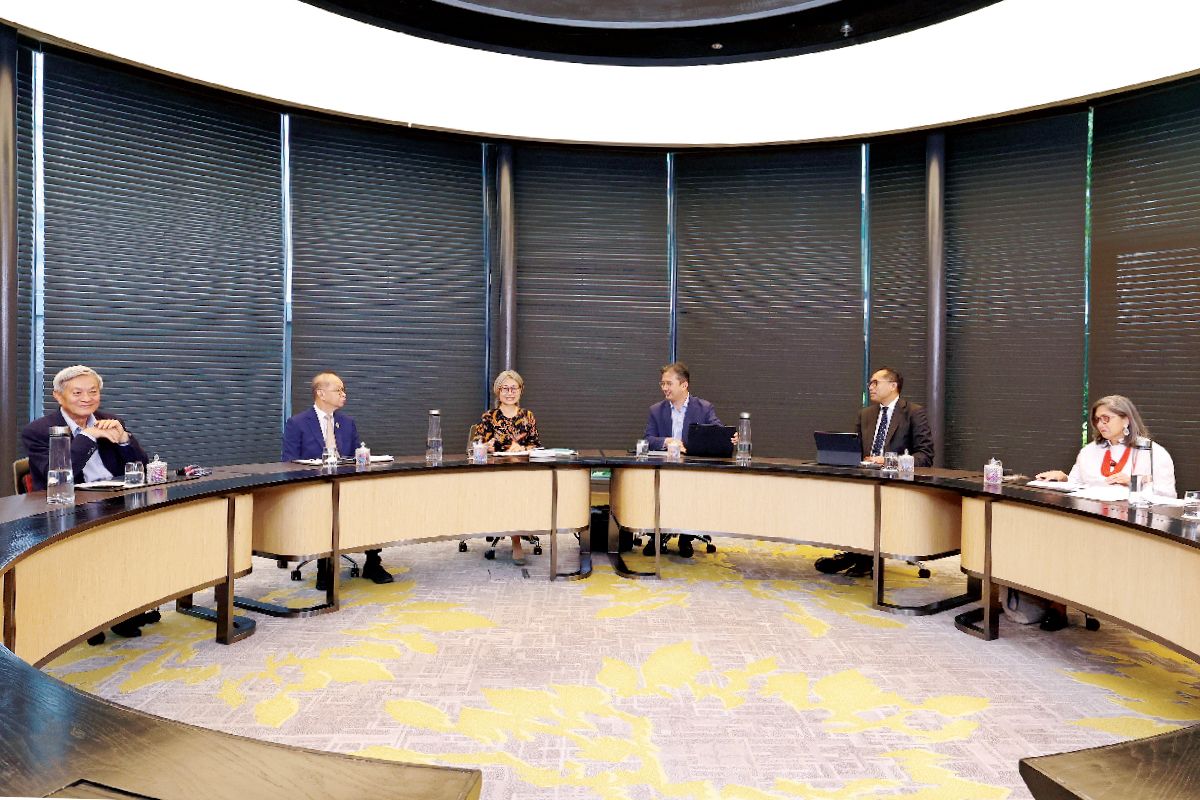
At The Edge-HSBC Pre-Budget 2027 Roundtable, prominent figures from the government, business community and academia came together to share their perspectives on these challenges and what they hope to see in the upcoming federal budget. The participants were Treasury secretary-general Tan Sri Johan Mahmood Merican; HSBC Bank Malaysia Bhd CEO Datuk Omar Siddiq Amin Noer Rashid; Federation of Malaysian Manufacturing (FMM) president Jacob Lee; American Malaysian Chamber of Commerce (AMCHAM Malaysia) CEO Datuk Siobhan Das; and Professor Dr Yeah Kim Leng, director of economic studies at the Jeffrey Cheah Institute on Southeast Asia.
The discussion covered the priorities and trade-offs facing policymakers, from measures that support businesses to policies on investment, human capital, productivity and Malaysia’s competitiveness.
Here are excerpts from the roundtable.
The Edge: Tan Sri Johan, can you share how difficult it is this time around to formulate the national budget, given the sea of uncertainty externally and domestically? What are the government’s priorities as far as the national budget is concerned?
Tan Sri Johan Mahmood Merican: Quite consistently, in the past four budgets and in the upcoming one as well, we are anchored on the Madani Economy framework, that is to ensure that Malaysia emerges among the leading economies in Asia. This covers the governance reforms that the prime minister emphasises, which includes, particularly in the Ministry of Finance context, ensuring we have a more sustainable fiscal framework.
Budget 2027 will have measures to further support the transformation of the economy.
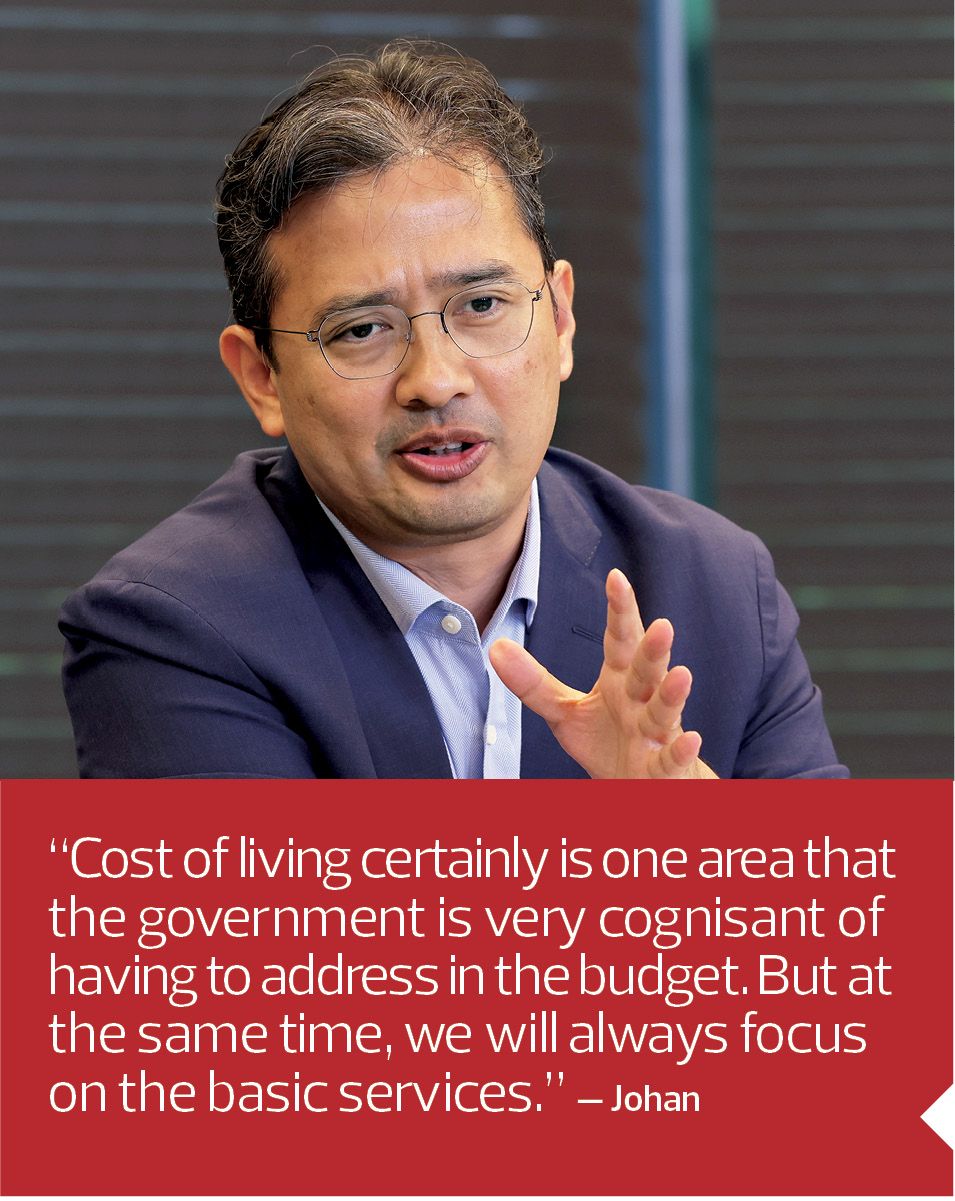
Cost of living certainly is one area that the government is very cognisant of having to address in the budget. But at the same time, we will always focus on the basic services, like fixing school toilets. The prime minister has always said that he won’t be remembered by yet another skyscraper.
Yes, it becomes more challenging to deliver on the expectations of the rakyat, especially when you have these global uncertainties. But to some extent, we remain on solid ground in the sense that the reforms that have been undertaken over the last three years have put us on a stronger footing, especially the government’s fiscal position.
In line with our Fiscal Responsibility Act, we continue to reduce our fiscal deficit. Back in 2022, it was 5.5%. We have brought it down gradually to 3.7% last year. And we remain on track in line with the Fiscal Responsibility Act to hit 3% by 2028.
This has been achieved, not necessarily popular, through the expansion of SST (sales and service tax), the targeted subsidies and e-invoicing. But these have obviously helped shore up revenue. To some extent, we are fortunate to have done things like SST, given that has enabled us to cushion, for example, the higher fuel prices.
Our macro numbers speak for themselves. I think even we in Putrajaya were surprised by the 6% GDP (gross domestic product) growth in the second quarter.
The Edge: The government has put a lot of effort into the reform measures. But unexpectedly, we are now dealing with the Middle East conflict that has pushed up fuel prices and other items. It has also increased the original fuel subsidy bill from RM15 billion to around RM40 billion. Will this offset the fiscal reform efforts that you have undertaken?
Johan: There are two parts to that. The good thing is that the government has taken some measures to better target subsidies prior to this crisis. It started off with better targeting of the electricity subsidy, then diesel and followed by RON95. And by targeting, we didn’t go with the conventional wisdom of the World Bank or OECD (Organisation for Economic Co-operation and Development), where they propose to let everything go to market price and only help the poor. I think that’s a recognition that even the middle class faces challenges in the cost of living.
When the government implemented targeted subsidies, it was very much about reducing leakages, especially leakages through smuggling or even leakages to those not intended to benefit from subsidies. If we didn’t have structures like Budi95 or the electricity subsidy, we certainly wouldn’t have been able to afford those subsidies if the blanket subsidy system had remained.
But at the same time, with the higher fuel prices and certainly the additional revenue from higher oil prices have not been sufficient to fully compensate. As mentioned, we originally budgeted for only RM15 billion for fuel subsidies. It is expected to hit RM40 billion. About half of it is already covered by revenues, but another part of it, some of it is having to be done through reprioritisation of expenditure.
Yes, it has affected some of our expenditure plans. But again, I guess it’s a case of — if there’s any crisis, we will need to respond, to reprioritise where necessary.
The core element is to safeguard economic stability, because what we were very focused on doing was to ensure that we didn’t see what we’ve seen in some neighbouring countries when the crisis first hit — petrol stations closing or long queues at the stations.
Earlier this year, the priority was to safeguard security of supply and economic stability. Some of the proactive measures that the government did then, certainly helped stabilise the situation, ensuring there’s also additional liquidity.
So much so that you ask the average Malaysian about the crisis and they say, ‘What crisis?’ That probably then helps support the relatively high growth and low inflation that we’ve seen relative to other countries. But of course, it has come at some cost, as you highlighted.
The Edge: The prime minister recently announced several revisions to existing measures. Do you think the government should take this opportunity to fine-tune certain policies or measures that did not get a good response from the business community?
Johan: The prime minister took the opportunity during his Ambang Merdeka 2026 speech to announce a few measures, and perhaps that, to some extent, could provide a flavour or teaser to some of the priorities of the government prior to the budget announcement.
I think it reflects that compared to the earlier stage of the crisis, when there was much greater uncertainty over the security of supply, PETRONAS (Petroliam Nasional Bhd) and given the structure of our subsidies, we have ensured that there is stability of supply.
It is a situation where the government felt it was possible to reinstate that quota. It was also a recognition that cost of living is still a top concern for the rakyat and this was a measure seen at addressing that concern.
Sometimes, some quarters tend to look at our budget as being very B40-centric. It’s important to highlight that the way we’ve approached subsidies, that is providing it to all Malaysians, irrespective of income. In fact, sometimes the measures we have, whether it’s subsidies or even tax relief, they’re very much targeted at the M40 and to some degree, the T20. So one message coming out of that measure is that the government, and through its budget, will always look at all Malaysians, irrespective of the segment, whether it’s B40, M40 or T20.
Second, the prime minister gave an example of increasing the allocation to schools. Beyond education being obviously a priority from a public service point of view is that while the Budi95 measure is talking about serving all Malaysians, irrespective of income level, the prime minister also wanted to highlight that this Madani government is a government for all communities.
So, when we increase the budget for school maintenance, we’ll make sure that the allocation goes to all types of schools, whether it’s the SK, Sekolah Agama, SJKC or SJKT. This is a government that has always said it doesn’t identify with race politics. It believes that it is not a zero-sum game where we can help give benefits to one community without taking away from others, and we should be able to continue serving every segment of the community. Then there are measures on AI and health. These are also extensions of looking at that.
There were also measures to broaden the exemption on e-invoicing [for companies with an annual revenue of RM1 million and above] from RM1 million to RM3 million, as well as some additional microfinance support for micro enterprises.
Showing again, keeping the theme, that this is a government for all segments. I think in a sense, it was a ‘trailer’ for Budget 2027 in signalling what this government continues to be about.
Headline growth not representative of underlying challenges
The Edge: Tan Sri mentioned that even Putrajaya was surprised by the 6% growth in 2Q2026. However, there is this view that the headline growth numbers mask the underlying concerns about the tougher operating conditions, especially among SMEs (small and medium enterprises) and local businesses. Mr Lee, do you agree with this? Is the local manufacturing industry facing a tough time?
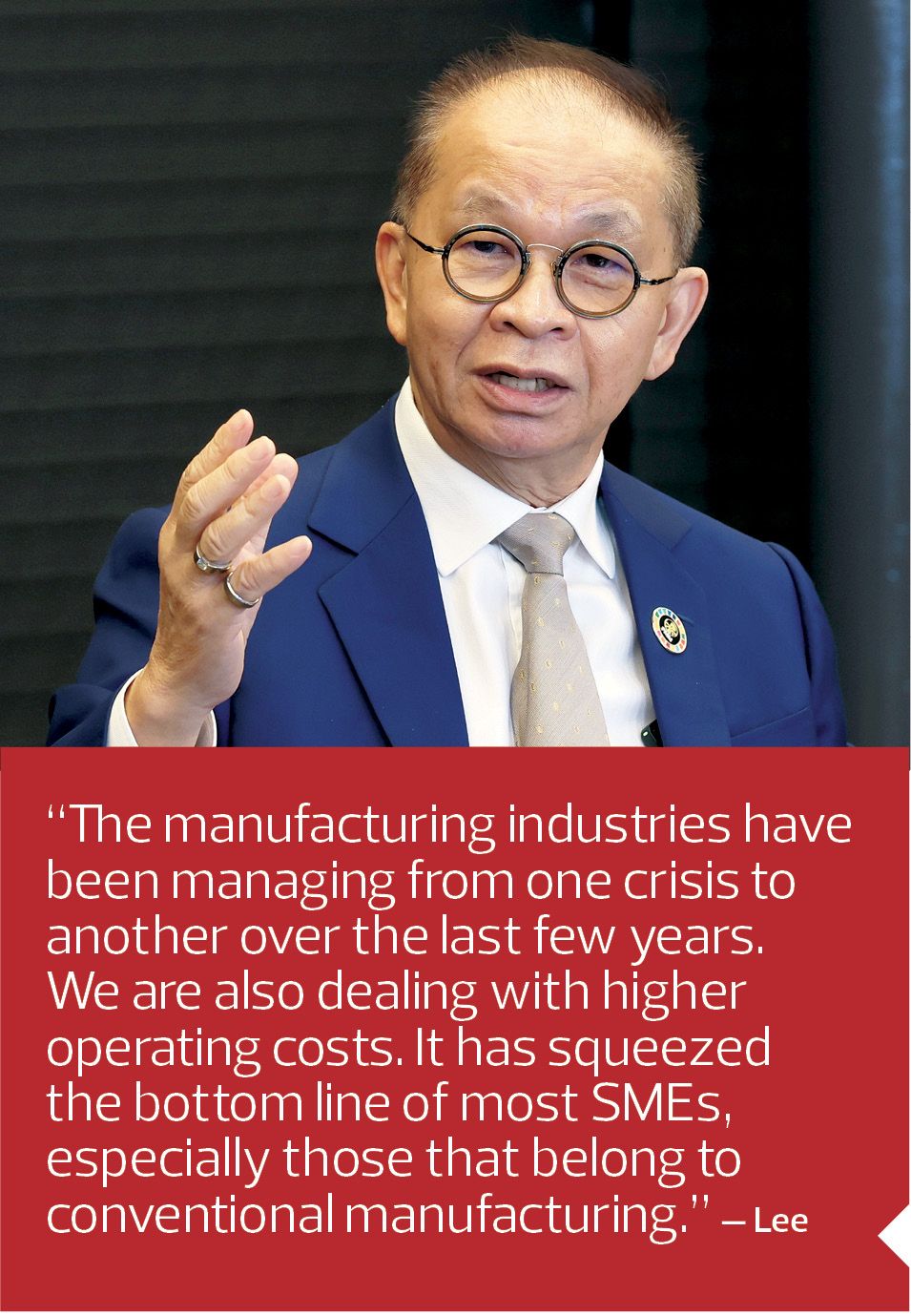
Jacob Lee: The manufacturing industries have been managing from one crisis to another over the last few years. We are also dealing with higher operating costs. It has squeezed the bottom line of most SMEs, especially those that belong to conventional manufacturing.
We have seen success in the implementation of the New Industrial Master Plan 2030 (NIMP 2030), where we want to build a high value and high technology economy. We have many advanced companies coming to Malaysia. However, what is shown on the macroeconomic numbers has not cascaded down to the rakyat. This can also be validated from the higher unemployment rate from January to July.
That is the factual evidence that we can see. Many of the SMEs are operating in survival mode, facing stiffer and serious competition from not just China but also our regional peers as well.
Datuk Siobhan Das: I would agree with what Jacob just said. But also, I think this is where businesses really kind of come to bear. To answer the question on the macro numbers, Malaysia needs to be applauded for the reforms that have actually taken place over the last two to three years that have given that momentum some energy. You don’t move up the IMD (International Institute for Management Development World Competitiveness Ranking) by 19 places without real reforms happening. We need to recognise that actually has taken place and there is reality in that.
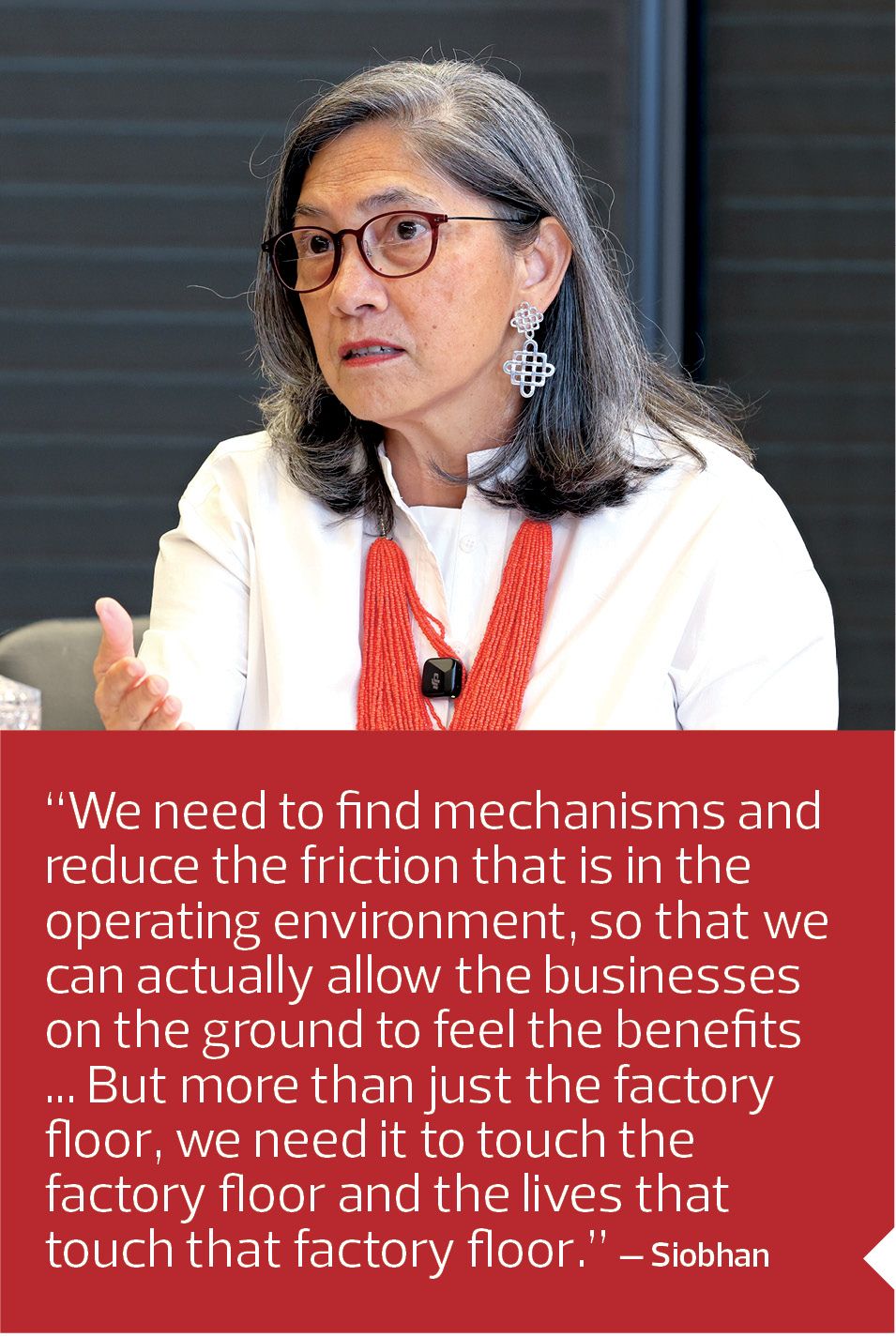
But yes, it hasn’t all trickled down into the places that we would like to see. But that’s where I think the collaboration between business and government needs to happen, that we need to find mechanisms and reduce the friction that is in the operating environment, so that we can actually allow the businesses on the ground to feel the benefits. But more than just the factory floor, we need it to touch the factory floor and the lives that touch that factory floor.
So we have the hard work of making the macro, micro. I think that’s something that organisations, the FMM (Federation of Malaysian Manufacturing), the chambers [of commerce], all need to work together with the government, to collaborate to see where, not in general terms, but where we really can have an impact and how we can bring it. So, the operating environment is very sketchy right now.
There are still a lot of things that need to be reformed. The acts still need to be kind of brought into the 21st century. Some of them are with technology, and the environment is moving so fast right now, there’s a new level of urgency. There is reality in those macro numbers, but we also have a lot of work to do.
The Edge: Datuk Omar, you deal with many industries across the board. What is the feedback that you hear from your clients, as well as your own observations of the headline growth figures and the operating environment on the ground?
Datuk Omar Siddiq Amin Noer Rashid: We are facing an extremely uncertain and volatile world. Geopolitics, like what’s happening in the Middle East, in Ukraine and so on, all have a tangible impact on the country now and into the future. We’ve seen supply chains being impacted, the supply of raw materials, intermediate goods being impacted severely. Eventually, all of these, the transmission mechanism-wise, will feed through in terms of higher costs and higher prices to the ordinary man in the street.
What the government has done — trying to shield the economy where possible, allowing the economy to demonstrate its resilience — has proved effective. So, no doubt that currently we see some small or micro industries being impacted.
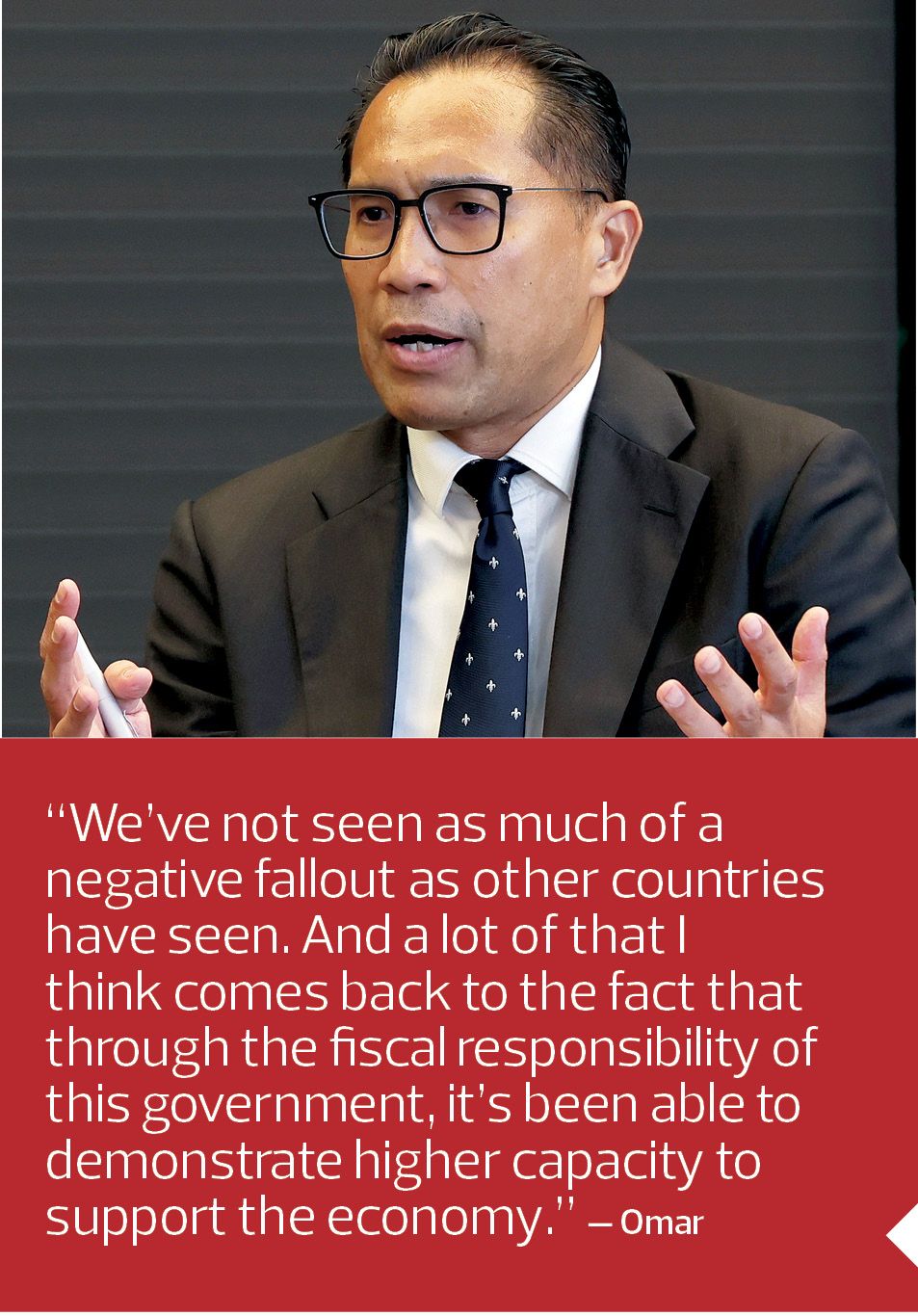
We’ve not seen as much of a negative fallout as other countries have seen. And a lot of that I think comes back to the fact that through the fiscal responsibility of this government, it’s been able to demonstrate higher capacity to support the economy. It has also been able to demonstrate clear and consistent policymaking, which positions Malaysia’s strength.
In that context, we continue to see domestic and foreign investment continuing to be mobilised. Admittedly, when we look at the high headline growth rate of 6% in the second quarter, some of that may not have been translated right to the bottom immediately. But again, similar to the price transmission mechanism, the growth transmission mechanism will also take time. I think the most important thing for us to take away is the fact that the government has placed Malaysia on a stable footing to be able to weather the current geopolitical conflicts and be able to position itself for the future.
Does influx of FDI drive DDI?
The Edge: No doubt that FDI (foreign direct investment) inflow has increased in the last two years. Datuk Siobhan, do you agree there is a need for additional incentives to continue attracting FDI?
Siobhan: I think the incentive structure needs to be looked at. It is no longer just a cost factor. Cost matters, but it’s not just about cost. It’s about what the actual environment looks like and whether those incentives can speed up productivity. Can we deliver on the talent base and pipeline that we need to generate growth and activities so that the investments that have been placed in the country can deepen their connections and grow?
It is those types of incentives that we’re looking for. Where are those incentives, what are they doing and what are they targeting? And how do we work to identify exactly where the government should spend their money and how they should spend it in order to generate that growth?
So it’s a real balance between incentives in the traditional sense versus incentives that move towards greater productivity and greater impact on the economy.
Johan: When it comes to incentives, we’ve also had to take a relook at our incentive framework. I think for a very long time, we tended to be very focused on capital investment. That’s when the nation was trying to transition to be more industrialised. So it focused on large investments, getting big factories. But increasingly, I think we’re wanting to engage with investors to ensure that the incentives really translate into greater direct spin-offs to the country.
We wouldn’t want, say, just large capital investment which doesn’t give employment or local business opportunities. Our new incentive framework, in line with the NIMP 2030, is to ensure that the sort of investments that we attract are the ones that help increase economic complexity.
Second, which would be important, is contributing to higher-income jobs for Malaysians. And third, does it really then create spillovers to local businesses?
We want to ensure that we have the presence of these world-leading companies, but we then need to see these spillovers happen. For example, Skyechip Bhd, which recently went for listing. We see these former employees of the large multinationals coming out on their own and doing high-value-added activities. I think that’s the way forward. Probably more important than the tax incentives is working with the investors to address the human capital side.
Lee: Let me share from a local business perspective based on our experience. I see a big gap where we can help the local SMEs to accelerate and build a local supply chain. Many FDIs are still buying a lot of components or materials from overseas. They always cite five very stereotypical answers for not buying from local suppliers — price is high, quality does not match with their standard, local companies are not big enough to take on their large capacity, delivery is too slow or simply those components are not available in Malaysia.
We also talk about technology transfer from the FDI. But the FDI will probably transfer to us the peripheral technology. The core technology is still very much their trade secret, their weapon for survival.
I do feel that in order for the Malaysian industry to truly benefit from the FDI, from acceleration to building the local supply chain, the government has to help the local industry to move up the value chain by having our own research, development and innovation talent pool in Malaysia.
The Edge: Datuk Omar, from your dealings with your clients across the industries, do you see a gap between the FDI and local companies where some of the local entrepreneurs face challenges getting into the ecosystems?
Omar: I think there’s sometimes a danger for us to just tell a story by painting with a broad brush. I think when you look at the numbers as it stands, there seems to be a situation where we don’t have enough Malaysian SMEs participating in international supply chains, given the number of international companies operating in Malaysia, particularly in Penang, particularly in parts of the Klang Valley, and so on.
But at the same time, there are many instances of successful Malaysian SMEs or medium enterprises that have spun off from these international MNCs (multinational corporations) and they are now qualified within international supply chains, and they operate on that basis.
What Tan Sri [Johan] was talking about earlier with the new incentive package, for example, now, where it does specify for foreign MNCs that come in to ensure that they are able to bring in qualified SMEs into their supply chains. I think that’s a great move. But there’s a danger, of course, that we don’t want to create a subsidised culture. We need people to be able to compete and compete well. I think from the bank’s perspective, we have, in Malaysia, for example, both local and foreign banks, we have absolutely been able to support a lot of these Malaysian SMEs that have come into global supply chains because they are bankable.
I would also like to say that is why it’s also important for the government to continue to enable both local and foreign banks to continue operating in Malaysia with some degree of freedom so that we’re able to then ensure that Malaysian companies can operate in global supply chains.
The fact that the current government is pursuing policies that are consistent and clear, that matters a lot to investors and Malaysian SMEs so that they can plan. What the government has done is create a stable runway where people can look five, 10 years ahead and be able to plan. So things like the NIMP 2030 and all, they’ve been very supportive for business in that sense.
Human capital incentives
The Edge: Prof Yeah, from your perspective as an economist, what is your assessment on private investments, looking at both FDI and DDI (domestic direct investment)?
Professor Yeah Kim Leng: One of the greatest, pleasant surprises over the last few years has been the surge in private investment. Private investment has been hovering below our potential for many years. We have been tracking that for a long time, especially since the 1997/98 Asian financial crisis. It had never crossed 12% to 13% to GDP until recently. It started to move up from 15% to 16% and now 17% to GDP.
Hopefully it can be sustained at the current level. The optimal level is 20% and above, because you want to ensure that private investment will lead to a greater pace of structural upgrading and importantly, the shift towards high value activities, and you require more investment to do that.
We are quite positive that the current AI investment-led growth will be sustained, and that will lead to much greater spillovers across all industries. Now, of course, we also need to do a lot of work in terms of ensuring that our resources are adequate to meet the requirements of a high-paced growth trajectory, especially if it’s driven by semiconductors and data centres and all that. So, this is where I think the budget needs to concentrate on.
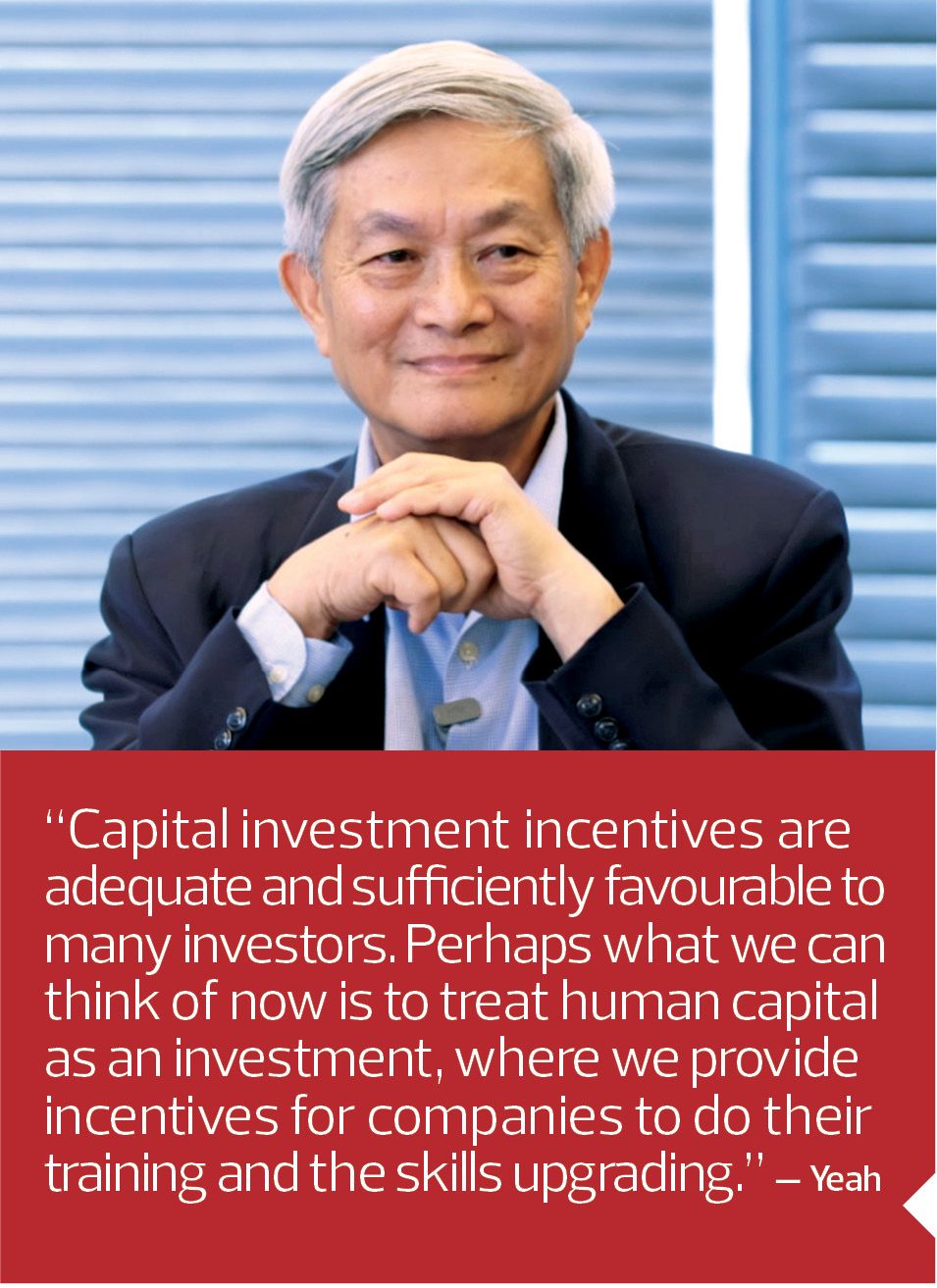
Capital investment incentives are adequate and sufficiently favourable to many investors. Perhaps what we can think of now is to treat human capital as an investment, where we provide incentives for companies to do their training and the skills upgrading. Perhaps a double deduction because human capital is also capital, but they are not receiving this kind of positive, favourable treatment, not from Malaysia nor the rest of the world. A push in that direction will help to tilt the current bias on capital investment towards human capital investment.
The Edge: Do you mean tax relief?
Yeah: Yes, it will cover tax relief, perhaps double deduction for spending on skills, upgrading and training. And maybe even subsidies for companies that raise their wages as well as the skill levels of their employees. I think that will likely give a big boost to our human capital development.
The Edge: Mr Lee and Datuk Siobhan, do you agree that human capital should be given some sort of incentive or tax relief?
Siobhan: The MNCs in AMCHAM (American Malaysian Chamber Of Commerce) membership has been doing a lot of investments in capital training and capital growth. It’s been going on for the last 50-plus years. I think recognition of that [training human capital] would be very helpful and also make the country more attractive to put more resources towards developing that skills base here as well.
But it’s not just the responsibility of the MNCs to do this, it’s the SMEs, with help from the government perhaps, to be able to do just like what was suggested, to help build and help the local companies invest in their own people as well. Our greatest resource is the people that we have in this country, and we need to find ways to support that. So, I say absolutely.
Right now, our competitors in the region are outpacing us. We may be doing well on certain rankings, but you can see in other rankings, like the World Bank rankings, that we are losing ground by countries leapfrogging us. That has to do with human capital. They’re putting capital investments in the people with the number of investments that are going into schools and education right from the 10-year-old onwards, not just at the TVET (Technical and Vocational Education and Training) level. We’re always looking at the upper level. I think we need to dive deeper.
Lee: The Malaysian SMEs are quite stagnant in value and in the technology level that we are doing. We don’t do much R&D (research and development). In fact, to many people, R&D is not in the budget at all. I think this has also been caused by the very tight bottom line that they have.
We are unable to pay attractive salaries to get good talents to work in SMEs. Most of the best talent will prefer to work in the MNCs or the large companies. We need to make that change. Many of our universities, as I understand, actually want the industries to work with them because they also need the industrial experience.
The government has to give incentives to them. There are so many infrastructures, laboratories that are available in the universities that they can also give the so called ‘lab voucher’ for the industries so they can make use of the existing facilities that are sitting in the university that are under-utilised during the semester break.
The other thing is to help the SMEs to move up the value chain as well. I do think that the government needs to have a bolder, talent policy as well. As FMM president, I do understand that much of the Malaysian company’s R&D is actually done outside Malaysia. It is a pity that people are tapping our talent, and I think we should also tap the talents from other countries to accelerate the transformation of Malaysian SMEs.
Johan: We do have an existing incentive, a double deduction incentive for upskilling, particularly in professional certification. Perhaps now it’s in the more traditional areas like professional accountancy or CFA and the like. Maybe we also need to start embracing some of the newer areas like AI certifications. I think that’s also part of helping SMEs to upgrade themselves. We’re also having the GLCs (government-linked companies) do their part, that is, Bakat Madani to help transition from academia to the workplace.
There are a couple of elephants in the room that probably need to be addressed. One is this issue on foreign workers. One policy idea that the government’s been championing is perhaps moving towards a multi-tiered levy, especially for sectors, like whether it’s construction or plantation.
The idea is that companies that require a high intensity of foreign workers will then have a higher tier of foreign worker levies. That incremental amount doesn’t need to come to the government’s coffers but can be used for upskilling or retraining, or even let’s say in the plantation sector, automation and mechanisation.
So, I think that’s one part as we aspire to move up the value chain. You can’t raise incomes without improving productivity and mechanisation, and automation is probably a big part of that. Again, there’s a conversation that needs to be held about income.
Low COE share of GDP, income not rising fast enough
Johan: If I can be a bit provocative, when you look at this measure of compensation of employees in Malaysia, it is at 34% of GDP. It’s relatively low compared with any other country, whether developed or even less developed. And like it or not, some would say there are some segments where they have been used to a higher return on capital as opposed to a return on employment.
So I think there’s something to be said that we do need to look at as we move towards a knowledge economy or more knowledge intensive. I think the shift of the GDP pie, some of it must shift necessarily from just returns on capital to also providers of talent.
When people talk of cost-of-living challenges, I think part of it is the issue where our incomes are not rising fast enough. We need to see how we can work together. Maybe it’s the education system, maybe it’s also high levels of automation and mechanisation.
Incomes certainly are another agenda that the government probably needs to look at if we want to continue along this path to be a developed nation.
Little wiggle room with high opex
The Edge: Prof Yeah in your opinion, what are the three things that the government should look into in terms of increasing prudence in spending so that the government can be on track to meet the fiscal target?
Yeah: I think a cardinal rule in the budgeting is that your current expenditure, your operating expenditure (opex) should not be greater than your revenue. I think we have some room there, a couple of billion there. And then from there, of course, the deficit spending will be largely on the development budget.
The fiscal space has been reduced, but we also have to look at the current debt level, which is around 63% to 64% of GDP. But taking into consideration that these next few years, if we manage to sustain a growth of 4% to 5%, the nominal GDP will likely reach RM2.3 trillion. So a 1% deficit will be just RM23 billion, or 1% of GDP. So, I think there is sufficient room there, that the debt level, because of the increase in the denominator, we can maintain that, the fiscal deficit target and [debt-to-GDP ratio] at below 65%.
But of course, the risk is that going forward, if the fuel subsidies continue to grow, especially in the light of the current uncertainties, then of course, the fiscal slippage will be larger, but hopefully that does not happen. If the geopolitical tensions diminish over the coming months, then we are more hopeful that the growth, together with the fiscal sustainability, will be less of an issue compared to growth, as well as inflation.
Having said that, the current growth momentum gives us hope that we should have enough revenue generation for next year because of the growth to actually provide a more balanced budget that is in line with the fact that we are on a fiscal consolidation trajectory. It would not deviate too much. A one-off deviation is likely to happen, but not a serious concern, given that growth is maintained with low inflation and full employment.
Omar: Sometimes we always focus on the expenditure portion. You talked about 50% of the government budget is emoluments. But within that, I think there’s also this hidden subsidy that we don’t give the government credit for. The fact of the matter is that, yes, the Ministry of Health and the Ministry of Education have the highest expenditures within the government segment. It accounts for almost, I think, 700,000 to 800,000 people out of the 1.6 million people employed by the government, and these are teachers and doctors and nurses and so on.
Of course, it’s not a perfect system. But there must be credit given to the government to continue to commit towards paying for education and healthcare on that basis for the whole country.
But I would like to make a point that if we look at the share of GDP between labour and capital, that is a real issue. Labour only has 34% to 35% of GDP compared to even less developed countries where it can be higher at 37% to 38%, compared with developed countries at 40% to 45%.
That’s something we have to address. We have to rebalance between capital and labour so that we can then have that wage growth and we have that sort of ability for people to pay for themselves and so on.
And part of that, I think, is what the government has done, what they have kept doing in these last couple of years — being fiscally responsible, ensuring that we have the right amounts of funds being allocated to education, to human capital. I do feel the government is moving in the right direction. The government has to balance, on the one hand, the social and welfare elements of the ordinary folks and, at the same time, be able to take care of the business community to ensure that we have been able to raise ourselves with ease of doing business, competitiveness and so on, but also ensure that Malaysia remains as an attractive destination for investments.
The Edge: The prime minister has mentioned that the finance ministry is looking into reviewing elements of GST (goods and services tax) to be included in SST. How far along is that study? What are some of the elements that are being looked at? And what sort of weaknesses or issues are you trying to address within SST?
Johan: As you have heard from the prime minister, many have called for GST, and I think he has always said that it’s obviously the most efficient, broad-based, but at the same time, it means that it is also regressive. And it means that every single rakyat pays for it, and especially when we have a conversation of income levels and the cost of living challenge faced by Malaysians.
The prime minister chose that this is not something that we want to impose on the rakyat. It’s interesting that now GST seems to be a very popular thing to champion for. But I think that’s part of the reason why the prime minister chose not to reintroduce GST — it’s important for incomes to rise before we do GST.
But having said that, the need to raise revenues is important. As you know, our tax-to-GDP ratio, I think, is still under 30%. It’s probably, we’re in the same neck of the woods as Indonesia. All our other regional neighbours are high, so there was scope to expand it.
But we chose to do SST. It’s something that was relatively quick because we already had that structure. And to some extent, we were very fortuitous in the timing because it certainly helped us, particularly this year.
Certainly, we benefited from some of the extra revenue to help buffer the subsidy costs. But of course, SST has its weaknesses, and of course, one of the issues which the industry often highlights is this issue of tax on tax.
And this is obviously something that’s avoided in the GST structure. So, what we have been doing is trying to see how we can incorporate some elements of GST within SST. So, that’s an ongoing process.
You have it, for example, in advertising costs.The sub advertiser, when it charges, they are not subject to SST. We’ve done it for rental as well, and construction.
I think FMM has submitted a recommendation. So we are also trying to see how we can incorporate, or at least feature, to avoid this element of tax on tax. I think that’s an ongoing work. And while I say there’re no new taxes or increase in taxes, certainly, we will be looking at how to better clarify elements of SST to be more business-friendly.
The Edge: Will we see that in the upcoming budget, or do you think it’s further along?
Johan: As I said, it’s an ongoing process, so we will try to see what elements we can improve, including in Budget 2027.
Siobhan: Just to build on that, just a request, I think, from industry is to make sure that any rollout has a decent track, the transition period so that strategic planning can be done and there’re no major shocks as we have experienced in the past. So, I think it would be a request. We understand there’s no new tax, but within the rolling out of or the implementation of taxes that might be on the books but not necessarily implemented, you know, to give industry sufficient time to adapt or plan for and adopt.
Wish list for Budget 2027
The Edge: What is your Budget 2027 wish list, Datuk Siobhan?
Siobhan: We want to focus on productivity. How do we move the needle to make sure that the whole economy is stimulated, the catalysing factor that you’re putting in there, not necessarily the full government support behind something that becomes a subsidised economy, but that catalytic piece, driving capacity building, capability building, because that’s what I think the FDIs come to look for.
The competition is fierce. So, how do we make sure that Malaysia attracts the best of those companies to be placed here, which is the high value systems, the high complexity? We want to make sure these types of companies come here so that our workers are stimulated by that level of engagement, so they can command higher incomes. So, can we give them access to the expatriates that will grow them and let the company grow with you?
And on sustainability, we have the ability to be able to provide green power. Green, you know, subsidised or not subsidised, but a supported green economy, whether it comes from different parts of not just government, but also how we’re actually working it with financing, green financing.
This is something that I think will help companies grow here. But again, frictionless [means lowering] the friction in tax, in collection, in customs, in energy, in pricing.
Lee: We hope that the budget will leave more money in the pockets of the rakyat, so that when we can spend more, we can hire at higher salaries, we can invest in new technologies, invest in R&D, and also the compliance with the ESG (environmental, social and governance) requirements.
With these kinds of investments, I think there will be more productive cycles in our economy. So instead of the government taxing the industry more, they should let the industry make their own profit and they will pay more taxes.
Second is that we do see a lot of untapped potential in the region and in new markets. The government can help the SMEs especially, so that they can reach out to the global market as much as possible.
Third is also to build the domestic industrial ecosystem. We are still not out of the West Asia conflict. In our recent survey on our members, it shows that we’re still encountering supply chain disruption, petrochemical feedstock disruption. Many of these increasing costs are unable to be passed on to our consumers. So, we hope the government can provide RM100 million to a national supply chain resilience fund to help manufacturers secure critical input, diversify concentrated overseas sources and develop alternative suppliers.
Yeah: I think we may want to take note of the potential second digital divide. This is where I refer to within the internet generation, the current digital users, we have now the AI users that potentially can create a divide between those non-AI and AI users, and that gap will likely lead to a huge difference in terms of knowledge, skills and all your competitive capabilities.
Perhaps we should look at some initiatives to promote greater adoption of AI among users, among students. Universities are already thinking of how they can provide the paid [AI] subscriptions for students and staff with it. So, widening the access, especially to the more competitive AI platforms. That incentive probably can be extended to ensure that we are able to leverage the potential opportunities created by AI.
The second area is concerning the underdeveloped collaboration between university and industry. We need to look into how we can deepen it further. We need to have sustained fiscal focus on developing that linkage. We know that education receives the highest, largest budget. I think perhaps some KPI (key performance indicators) could be placed on developing industry linkages in a more systematic manner.
Omar: We do hope for more of the same that the government continues to commit itself to fiscal responsibility as it has with the Fiscal Responsibility Act, to continue also to take out the concerns or the socioeconomic and welfare concerns of the ordinary man in the street, but also at the same time to continue to advance the needs of the business community as well as investors in terms of whether it is ease of doing business, whether in the context of building capacity, helping develop the education and qualifications of the people, but generally keeping an overall environment whereby Malaysia continues to be able to be, as Datuk Siobhan was talking about, this very attractive investment destination.
Read also:
Special Report: Pre-Budget 2027 Roundtable | Fiscal commitments challenged by mounting external uncertainties
A snapshot of Malaysia's economy and fiscal position
Save by subscribing to us for your print and/or digital copy.
P/S: The Edge is also available on Apple's App Store and Android's Google Play.