

(Sept 14): Germany is preparing a far-reaching package of economic-security measures to shield strategic industries from China that may include new tariffs on hybrid electric vehicles.
German ministries are mapping vulnerabilities to China and assessing countermeasures, with potential proposals including new tariffs, mandatory joint ventures, strengthened inbound and outbound investment screening and a bolstered export controls regime, according to people familiar with the plans. Chancellor Friedrich Merz’s government is targeting cabinet approval on Oct 14 before seeking broader European Union support.
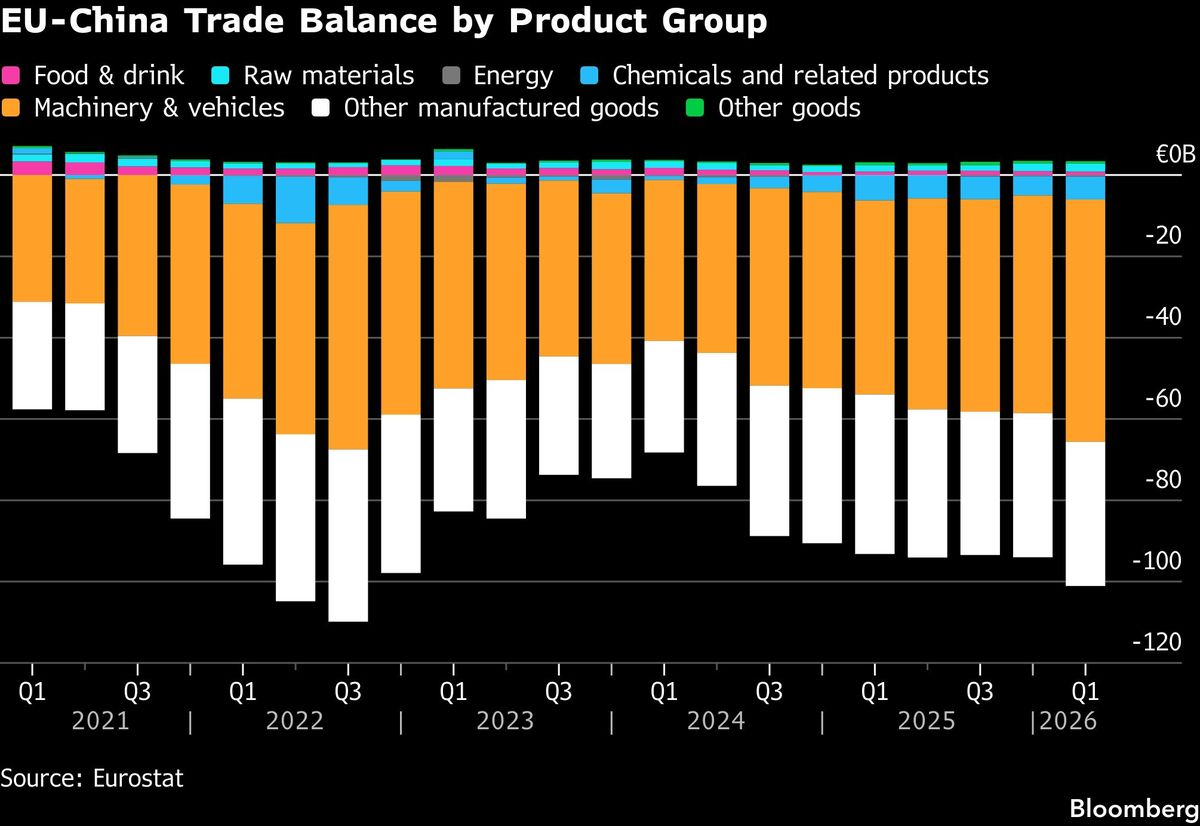
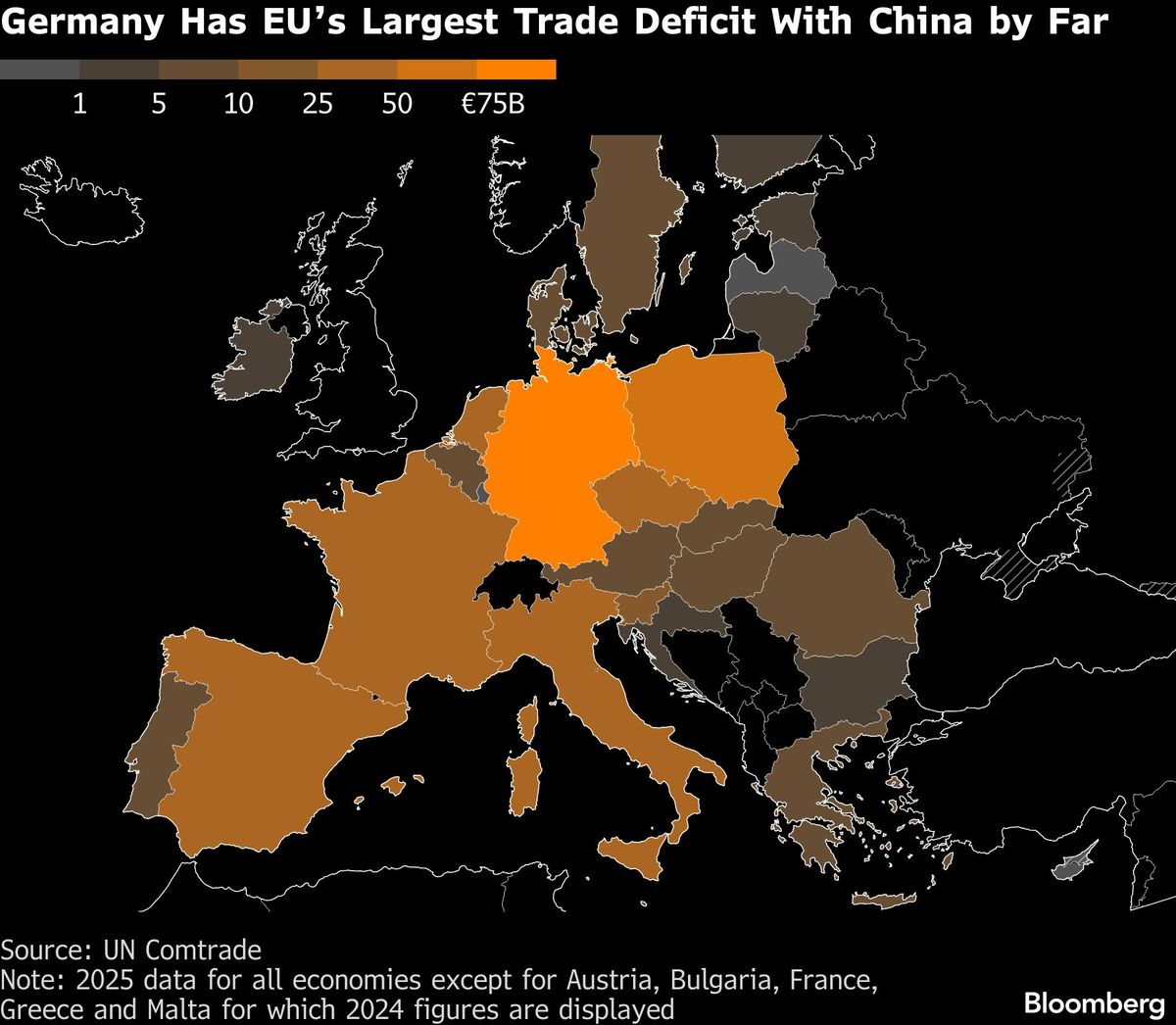
The work is an indication of the hardening shift in Germany’s China policy, which has traditionally been cautious given Berlin’s export-driven economy and deep commercial ties with Beijing. The EU’s trade deficit with China now exceeds €1 billion (US$1.2 billion or RM4.71 billion) a day and Germany’s industrial downturn has produced tens of thousands of announced job cuts, with Volkswagen AG planning to increase global cuts to 100,000.
The new plans are a concrete indication of the tougher German stance that seeks to create a more reciprocal relationship after Merz said earlier this year that “we underestimated China’s power and economic strength”, adding that Europe is facing “a major strategic turning point”.
Berlin is working with Paris to build support among other EU members at a summit in Brussels in October and ahead of talks with Beijing later that month, said the people, who spoke on the condition of anonymity. The two capitals are working to finalise a joint position paper, which will be shared with the EU as a basis for bloc-wide measures.
A spokesperson from the economy ministry didn’t respond to a request for comment. The measures have yet to be brought together in a single draft, and cabinet agreement isn’t assured.
Germany’s position has toughened as Chinese companies move rapidly up the value chain, challenging European manufacturers in industries including autos and machinery. German exports to China fell 9.7% to €81.3 billion in 2025, while imports rose 8.8% to €170.6 billion, according to Germany’s Federal Statistical Office.
European sales of Chinese plug-in hybrid models have gathered pace in recent years, with a record third of such vehicles registered in July made by brands like Chery Automobile Co’s Jaecoo, according to figures from Dataforce. Chinese carmakers have been winning over consumers with more affordable hybrids at a time when household finances remain under pressure and gasoline prices have surged due to the Middle East conflict.
Merz has accused China of keeping the yuan artificially weak, saying it’s undervalued by 25% to 30%. Vice Chancellor and Finance Minister Lars Klingbeil has publicly floated extending EU tariffs to China-made plug-in hybrids, as well as requiring some Chinese companies to establish operations in Europe to form joint ventures under European majority control. He has also backed “Buy European” preferences.
The package under review spans trade defence, procurement, corporate supply chains, critical raw materials, investment screening and technology controls, according to the people. Options include stronger local-content incentives and procurement preferences, more forceful use of instruments such as the EU’s International Procurement Instrument, and stricter requirements for companies to diversify suppliers and their sourcing of critical minerals.
Officials are also considering tighter export controls, including on advanced artificial-intelligence technologies and semiconductor-manufacturing equipment, said the people. The push reflects concerns that China has used some products for military purposes even though they aren’t covered by existing dual-use restrictions, one of the people said.
Another strand would broaden inbound foreign-investment screening, according to the people. German law currently allows the government to intervene when an acquisition is likely to impair “public order” or “security”. The proposals would add considerations such as “economic resilience” and “strategic dependencies” or “asymmetries”. A new investment-screening law is already being prepared.
Outbound investment screening would be more contentious. Some officials want a regime that could review or restrict German investments in China in sensitive fields, they said. Such a step would go beyond the EU’s non-binding review framework, which has focused on semiconductors, artificial intelligence and quantum technologies, and would likely face resistance from free-market conservatives in Merz’s Christian Democratic Union.
Industrial state-support programmes could also be redirected toward vulnerabilities along value chains, including financing alternative sources and processing capacity for critical raw materials, according to the people. One example cited is tungsten, which is used in cemented carbides by machinery manufacturers and where officials see heavy exposure to Chinese supply.
Germany has already moved to reduce its reliance on Chinese suppliers in telecommunications. Operators must stop using all critical components made by Huawei Technologies and ZTE in their 5G core networks by the end of 2026. They must also replace the critical functions of the companies’ 5G network-management systems in access and transport networks with technology from other suppliers by the end of 2029. Officials are considering extending that approach to other critical areas of digital infrastructure, the people said.
Many of the proposals are also expected to feed into a broader national economic-security strategy due later this year, according to the people. That would go beyond the economic-protection strategy adopted in March, which focuses chiefly on defending companies and research institutions from physical, digital and hybrid threats such as espionage, sabotage and cyberattacks.
Uploaded by Chng Shear Lane