

This article first appeared in The Edge Malaysia Weekly on September 14, 2026 - September 20, 2026
In a world focused primarily on serving humans, homeless dogs and cats are forced to suffer the consequences.
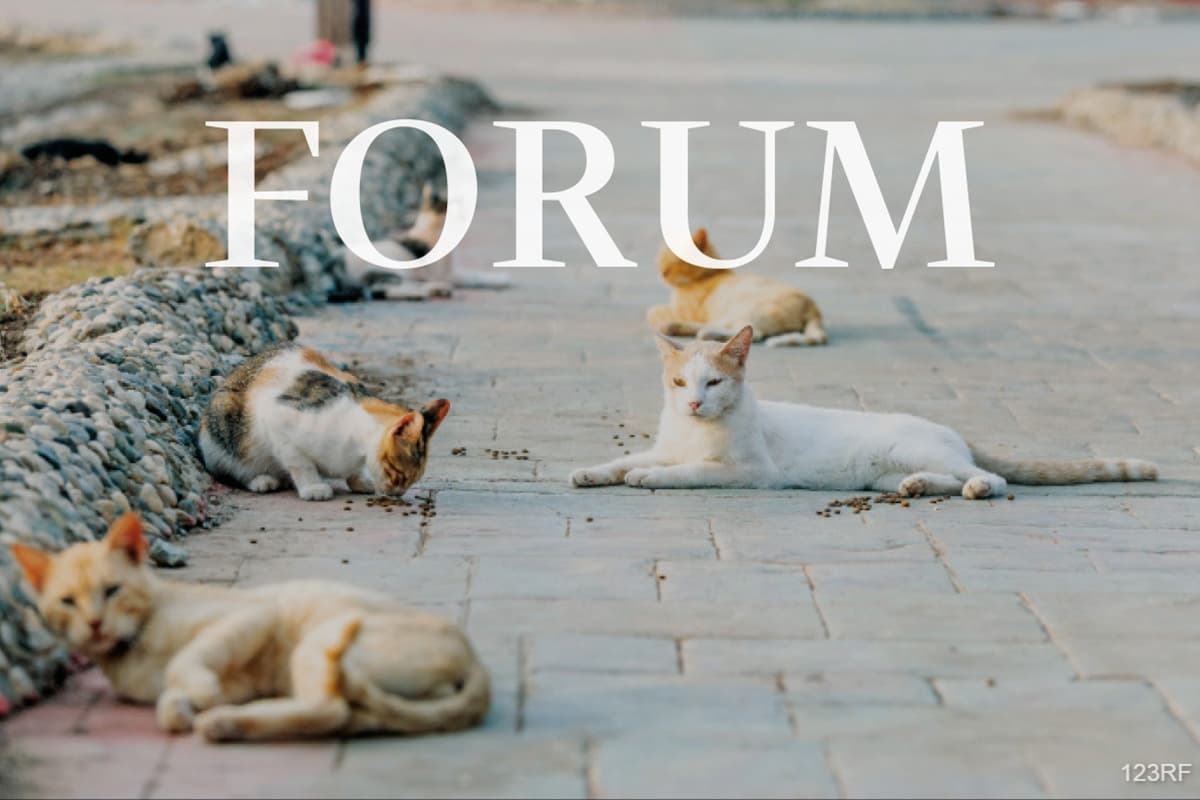
As they navigate our environment, hiding under rubbish or licking the scraps off of plastic bags, their story is the same: born into a litter, barely scraping past six months, then scouring for food and water.
According to a 2023 Public Health Survey in the Klang Valley, an estimated six million dogs and four million cats roam our streets. Another report by the World Health Organization in 2023 estimates there are nearly 200 million stray dogs worldwide and an even higher number of stray cats.
Though these were recorded three years ago, we can only imagine how many more there are today.
If there is one thing I have recognised consistently in Malaysia, it is the dangerous situation strays are always in. During a short visit to Genting Highlands in Pahang, I witnessed a mother dog and her puppies traverse a steep, busy road, which I later realised was a regular sight. More recently, a message about two young puppies found in a drain in Kuala Lumpur — born to the same mother as my own rescue dog — only emphasised how deep this problem runs.
Strays are formed as a result of abandonment and uncontrolled breeding. While some are left on the streets, others resort to throwing away “excess” newborn cats and dogs like rubbish.
Following this, abandoned pets remain banished to a life on the streets, unneutered, only to reproduce more. To put simply, one cat can produce multiple litters (one to eight), and kittens can begin reproducing as early as four months old, leading to an unimaginable number of strays.
In 2015, Malaysia recognised this problem and created the Animal Welfare Act. The Act states that violence, abandonment, neglect or ungoverned testing were to be fined between RM20,000 and RM100,000. In extreme cases, the harshest sentence is only three years in jail.
Many people ask, “Why are strays an issue?” and believe they have total freedom; however, that is not the case. They roam in terrible conditions, burdened by diseases, infections and injuries. Ultimately, strays become aggressive and caught up in fear, which is then intensified by human cruelty.
Multiple cases report kittens being thrown from high buildings and street dogs being maimed alive. In October 2024, a beloved local stray dog named “Kopi” was shot to death during a culling operation.
More recently, in March 2026, Bernama reported a case of two young children abusing a cat. An 18-second video was recorded where one child pulled a rope tied around the cat’s neck, while the other child kicked and hit its head with a slipper. As they were both younger than 10, no legal action could be taken.
Sadly, these are only a minority of the stories recorded in Malaysia. More must be done to spread awareness so people can be held accountable for their horrific crimes.
Persatuan Haiwan Terbiar Malaysia (SAFM), a non-governmental organisation founded in 2020, advocates against animal cruelty and promotes compassion towards animals. What they do speaks volumes.
Regarding the cruelty against Kopi, SAFM proposed a collaboration with government agencies to strengthen the impact of their efforts. They call for tougher penalties on crimes against animals to deter future incidents and more public awareness campaigns to promote empathy for animals. They also advocate for a proper, streamlined reporting system.
Moreover, we must act now to manage the stray population. The most straightforward answer: adoption gives street animals a chance to experience the comfort of a home; however, it is not always possible for everyone. Another method — trap, neuter and release (TNR) — is ethical and successful.
TNR is a simple but tedious process. The steps follow exactly as the name suggests, with a slim chance for the animals to be vaccinated or rehomed. Unfortunately, these initiatives usually run purely on volunteers and donations — and since spaying requires care and expense, it does not happen as often as it should.
Neglecting this problem any further will only make it worse. If cruelty and violence have no place among people in Malaysia, it should not be for animals either.
Syuen Mak is pursuing the International Baccalaureate at Marlborough College Malaysia. She was recently an intern at The Edge.
Save by subscribing to us for your print and/or digital copy.
P/S: The Edge is also available on Apple's App Store and Android's Google Play.