

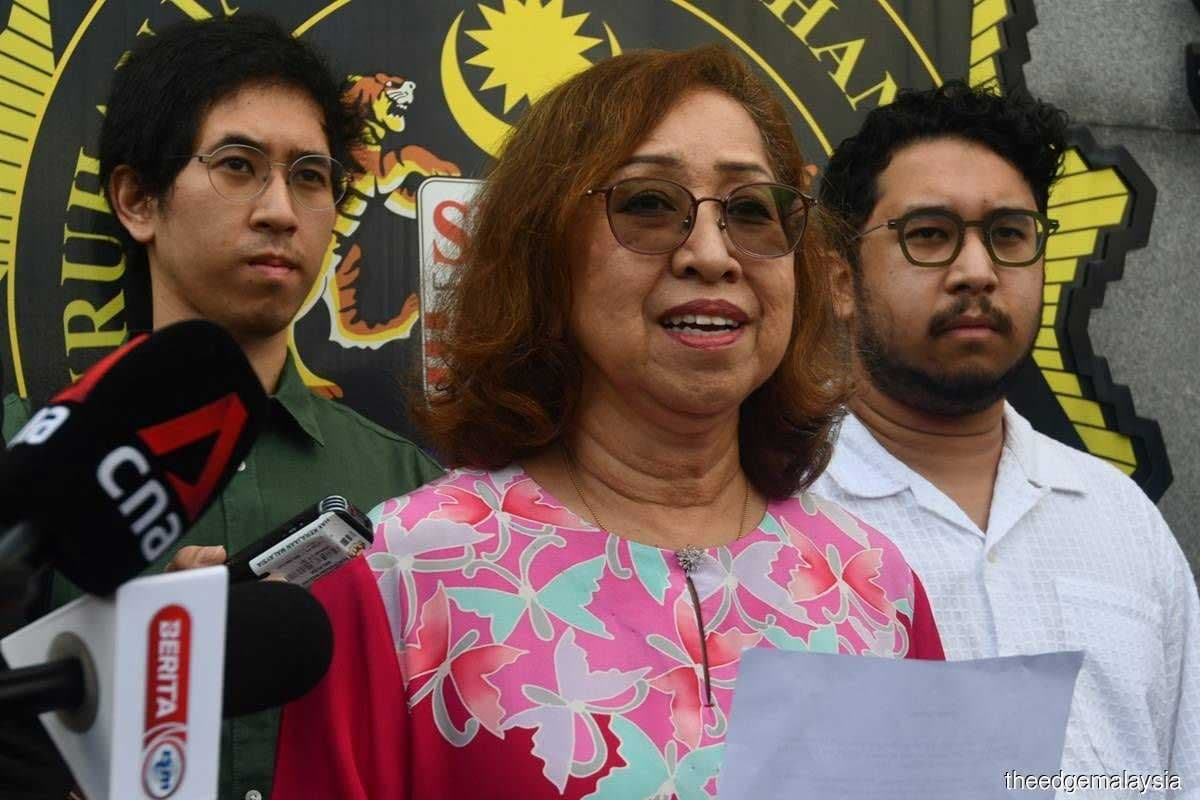
KUALA LUMPUR (Sept 14): Prime Minister Datuk Seri Anwar Ibrahim and Inspector General of Police Tan Sri Mohd Khalid Ismail are challenging a bid by Toh Puan Na’imah Abdul Khalid, her two children and two lawyers to stop a probe into them for allegedly trying to topple the government.
Senior federal counsel Mohammad Salehuddin Md Ali, appearing with federal counsel Mohd Solihin Md Zaki, told High Court judge S Indra Nehru that the court should not stop an ongoing investigation as it could set a precedent for halting other probes.
“Any criminal investigation is not open to review by the court as it would result in exposing the criminal investigation process,” he said.
The government lawyer cited several Federal Court decisions that dismissed applications to challenge ongoing investigations.
Mohammad Salehuddin said for the court to allow the challenge, the applicants must show there was mala fide (bad faith) in the investigations.
“To prove mala fide there must be cogent evidence. There must be evidence that the notice issued on them was mala fide. They cannot act on mere suspicion as there must be evidence.
"In the present case, it is only affirmed via an affidavit in support.
“Whereas the investigating officer has averred that the investigations on them are done in good faith under Section 124B Penal Code for activities detrimental to parliamentary democracy.
"There is no proof mala fide applies in this case and their claim the government acted mala fide in commencing investigations is not proven,” he said.
For these reasons, Mohammad Salehuddin sought to strike out the originating summons that was filed in March
Na’imah, who is the widow of former finance minister Tun Daim Zainuddin, and her two children, Muhammed Amir Zainuddin Daim and Muhammad Amin Zainuddin Daim, along with lawyers Amir Zharif Abdullah and Muhammad Nizamuddin Abdul Hamid, had named Anwar, Khalid and the Malaysian government as respondents in the originating summons.
They are seeking a declaration that the investigation into them is unconstitutional, in bad faith and an abuse of statutory powers.
The suit also seeks a declaration that the investigation violated the plaintiffs’ constitutional rights.
They also want the court to declare Section 124B of the Penal Code unconstitutional, as it is "vague, overboard, ambiguous and disproportionate in its scope".
Section 124B states that whoever, by any means, directly or indirectly, commits an activity detrimental to parliamentary democracy, shall be punished with imprisonment for a term which may extend to 20 years.
Lawyer: Let plaintiffs' adduce evidence
Datuk Dr Gurdial Singh Nijar, appearing for Na’imah and the other plaintiffs, said the court should hear their application to adduce evidence first and not allow the respondents to strike out the originating summons.
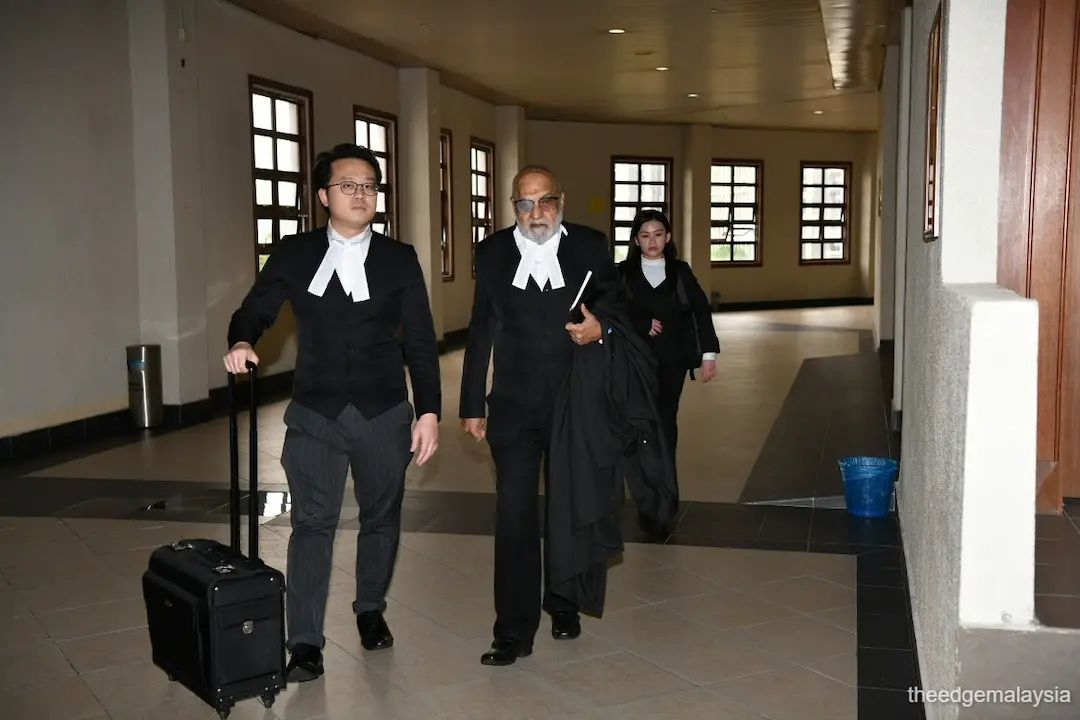
Gurdial said while the government claims investigations cannot be challenged, it had not addressed the argument of mala fide.
He added there were several cases to show that investigation powers can be challenged.
This included instances of mala fide, such as when the High Court found there was an abuse of process in the investigation into aid group Aman Palestin.
Gurdial said the government had argued that his clients had to show facts of bad faith.
“Precluding (a trial) without complete evidence is improper. The government cannot say that you must provide evidence first, and without it your application must be struck out,” he said.
He added that Na'imah had made some presentation to the international media over the allegations against her late husband.
Gurdial said claiming that these remarks undermined parliamentary democracy violated Na'imah's constitutional right to freedom of speech.
He said the two lawyers present at the discussion with the international media were there as their clients' counsel and yet they are also investigated under Section 124B.
“This violates lawyers and client privilege and this raises questions whether you can extend investigations to solicitors appearing for their client. These are issues which cannot be summarily struck out,” he added.
Gurdial said the introduction of Section 124B as tabled by then law minister Datuk Seri Nazri Aziz was not meant to stifle dissent.
"It applies when there is an attempt to overthrow the government via violent means," he said.
Besides Gurdial, Abraham Au, Sachpreetraj Singh Sohal and Rajesh Nagarajam appeared for the plaintiffs.
After hearing submissions, Indra Nehru fixed Nov 3 to deliver her judgement.