

This article first appeared in The Edge Malaysia Weekly on September 14, 2026 - September 20, 2026
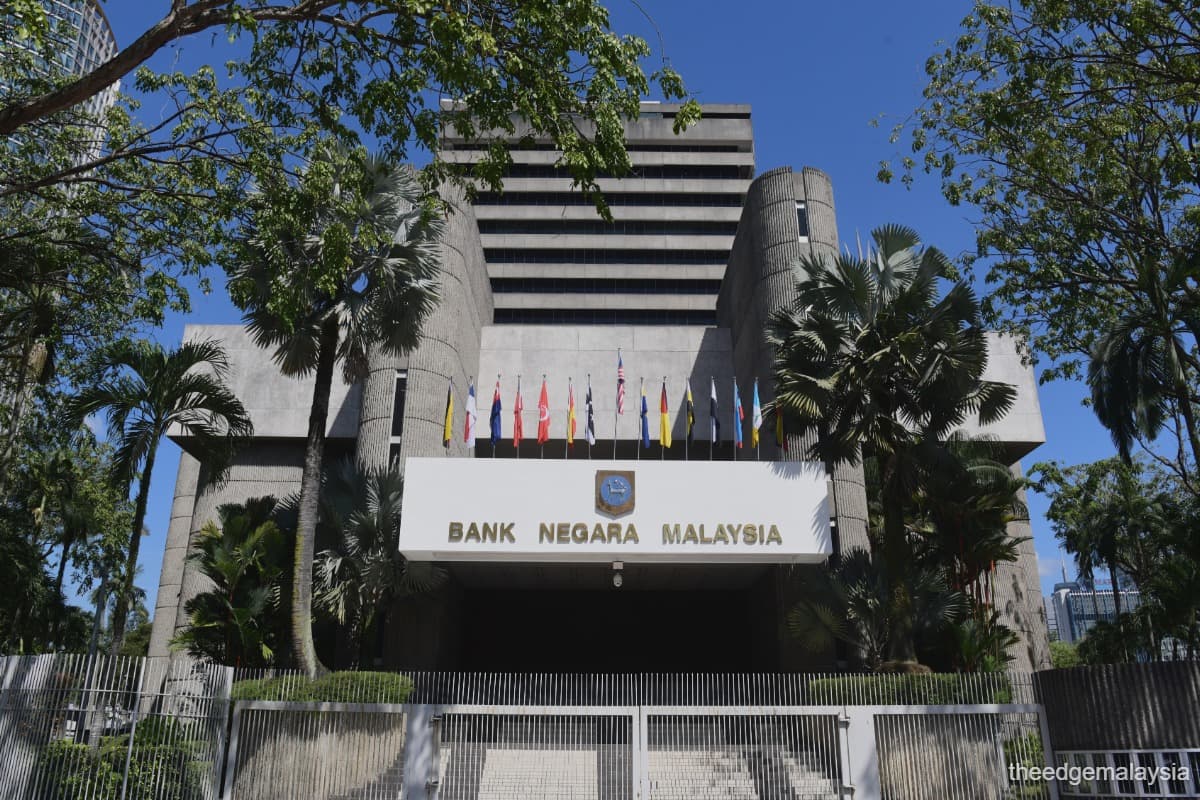
IT does not happen often, but the latest Monetary Policy Committee (MPC) statement on the overnight policy rate (OPR) generated some buzz.
The reason? The omission of a single word: “appropriate”.
Its absence from the Sept 3 statement has led many economists to believe that the central bank’s tone has turned slightly hawkish.
While Bank Negara Malaysia kept the key rate at 2.75%, as expected, economists scrutinised the shift in tone of its statement. The central bank dropped the word “appropriate” when describing its monetary policy stance, saying instead that the stance was “consistent with” continued price stability and sustainable growth. The change suggests a more flexible approach to monetary policy.
CIMB Research, in a Sept 3 report, noted the slightly “hawkish” tilt to the statement, but said it did not interpret the wording change as a clear signal of an imminent policy move.
“Rather, we see it as pointing to greater data dependence and less commitment to characterising the prevailing stance as definitively appropriate. In the current context, this gives the MPC greater flexibility to respond, should stronger growth or higher cost pressures translate into more persistent inflation,” it said.
Similarly, HSBC observed in its report that Bank Negara sounded “slightly hawkish” in its latest statement, but interpreted the change as signalling a flexible approach to potential monetary policy normalisation rather than a commitment to a fixed rate-hiking cycle.
Economists also pointed to the MPC’s updated growth outlook for 2026, which now stands at roughly 5%, compared with its earlier projection that growth would remain “firmly within the forecast range of 4% to 5%”.
The revision comes after second-quarter GDP growth surprised on the upside at 6%, bringing growth for the first half of 2026 to 5.7%.
Economists also noted a shift in tone in the MPC’s inflation outlook. The committee omitted its previous forward-looking assessment that the impact of higher global commodity prices on headline and core inflation in 2026 was expected to remain contained.
Instead, it added that elevated global commodity prices had continued to exert upward pressure on costs. CIMB Research said this likely reflects the prolonged Middle East conflict, compared with earlier expectations of a quick resolution.
The MPC also said it would remain vigilant to cost pressures and domestic demand conditions — implying that there is upside risk to inflation.
It is notable that crude oil prices breached US$100 a barrel again last week amid heightened geopolitical tensions in the Middle East, raising concerns about inflation.
For now, most economists do not expect any change to the OPR this year. However, the majority anticipate a 25-basis-point hike in the first half of 2027, while others expect the rate to remain unchanged throughout 2027.
As markets debate Bank Negara’s next move, here are four charts offering a snapshot of the Malaysian economy today.
Consumer Price Index
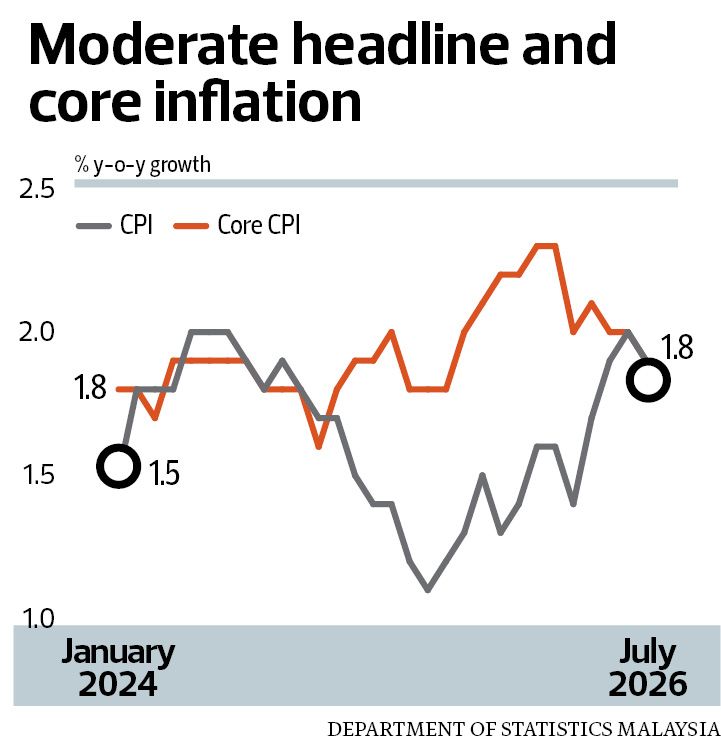
For the first seven months of 2026, inflation climbed steadily to hit a peak of 2% year on year in May. But the Consumer Price Index (CPI) appears to have trended downwards thereafter, with growth easing to 1.9% y-o-y in June before inching down further to 1.8% y-o-y in July. Core CPI growth has largely moderated throughout the year, from 2.3% y-o-y in January to 1.8% y-o-y in July.
In the latest July CPI data, inflation was attributed mainly to the 1.8% y-o-y increase in food cost. The food and beverage (F&B) category, which makes up 29.8% of the CPI weight, bears watching.
After F&B inflation trended downwards for the first four months of 2026, from 1.5% y-o-y in January to 1.2% y-o-y in April, it started to inch up again to reach 1.8% y-o-y in July. In particular, inflation for the food-away-from-home sub-component rose slightly to 2.5% in July from 2.4% in June. The growth in food away from home has ranged between 2.3% and 2.6% in the first seven months of this year.
The ongoing Middle East conflict has raised concerns about its impact on food prices. Costs associated with food production, from feedstock to fertiliser, have surged since the war began. Meanwhile, El Niño-related weather disruptions and prolonged dry conditions could further affect harvests and yields.
Nevertheless, Maybank Investment Research Bank said in an Aug 17 report that while inflation risks remain tilted to the upside amid uncertainty surrounding the Middle East conflict, its impact on Malaysia has been relatively contained so far, as reflected in moderate headline and core inflation.
The moderate inflation can be largely attributed to the targeted fuel subsidy in Malaysia, which has helped put a lid on inflation this year despite the prolonged war.
RHB Research believes the inflation trajectory for the rest of the year will be shaped by global commodity price movements, changes in domestic policies as well as potential upside from food inflation.
Household debt
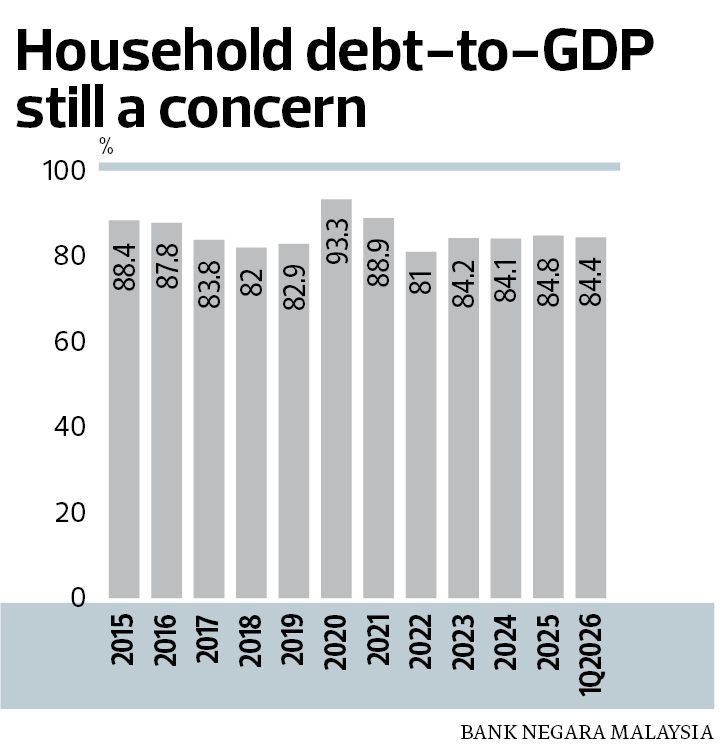
Malaysia’s persistently high household debt remains a major concern. At 84.4% of gross domestic product (GDP) as at end-March 2026, or about RM1.73 trillion, Malaysia has one of the highest household debt-to-GDP ratios in Southeast Asia, second only to Thailand at 85.9%.
To be fair, Malaysia’s household debt-to-GDP ratio has declined from a record 93.3% in 2020, when the Covid-19 pandemic hit. It fell for two consecutive years to 81% in 2022, before edging back up to around 84% the following year, where it has remained stubbornly high.
The three main sources of household debt among Malaysians are residential property, car loans and personal financing. Slightly more than 60% of household debt is tied to residential property, while car loans account for nearly 14% and personal financing 12%.
In its 2H2025 Financial Stability Review, Bank Negara highlighted that household debt growth has been supported by income growth, reflected in the relatively stable median debt-to-income ratio of 1.3 times as at December 2025. The debt service ratio for outstanding household loans also remained steady at 33%, indicating that households continued to have the capacity to meet their loan repayment commitments.
The central bank’s data also showed that lending to household borrowers deemed higher risk remained limited, accounting for 7.9% of new loan approvals as at end-December 2025, while their share of total household debt stood at 8.9%.
However, newer credit schemes such as buy now, pay later (BNPL), which are particularly popular among younger consumers, are being closely monitored. As at end-March 2026, Malaysia’s BNPL loan balance had risen to RM5.3 billion from RM4.9 billion at end-December 2025. Even so, BNPL accounted for only about 0.3% of total household debt.
Given its rapid growth in popularity, the government has moved to regulate BNPL providers by bringing them under the Consumer Credit Commission, which derives its regulatory and enforcement powers from the newly enacted Consumer Credit Act 2025.
GDP growth
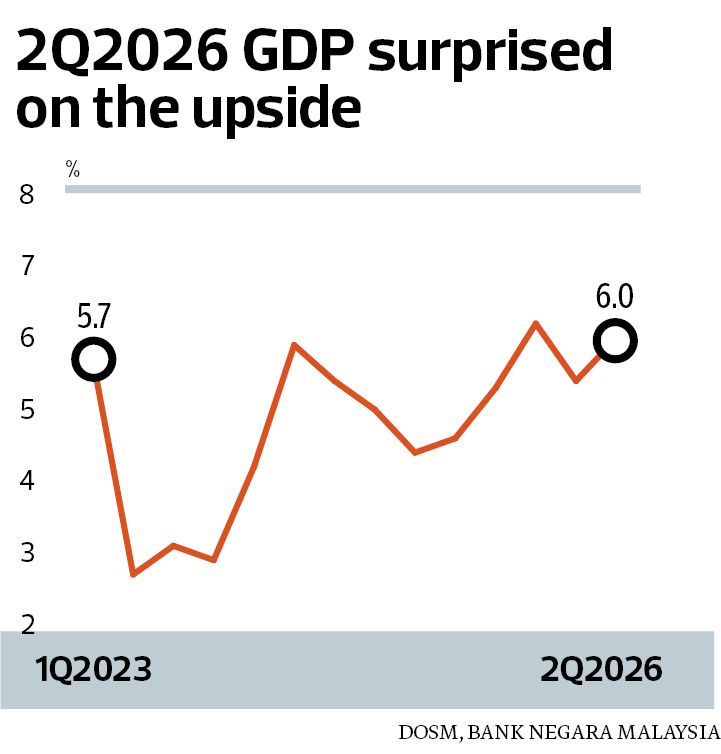
Malaysia’s economic growth in 1H2026 has surprised on the upside, with GDP expanding 6% in 2Q2026 and 5.7% y-o-y in 1H2026. According to UOB Global Economics & Market Research in an August report, the stronger performance was supported by spillover from artificial intelligence (AI)-related investments, supply chain reconfiguration amid the Middle East conflict, a stable labour market and contained inflationary pressures.
The consensus estimate for 2026 GDP growth is now above 5%, with some economists revising their forecasts after the advance estimates came in stronger than expected.
The strong first-half performance means Malaysia is entering the second half on a firm footing — a clear advantage as geopolitical uncertainty remains elevated.
Domestic demand is expected to remain an important anchor for growth. In a Sept 2 report, TA Securities said household spending continues to benefit from income growth and policy support, while investment activity remains underpinned by spending on structures, machinery and equipment.
Meanwhile, the continued realisation of approved investments, infrastructure projects and tourism activity should help cushion any moderation in external demand, while low unemployment should continue to support household spending.
“Nevertheless, the durability of private consumption will increasingly depend on improvements in real income and productivity, alongside the effectiveness of targeted assistance,” it said.
Ringgit
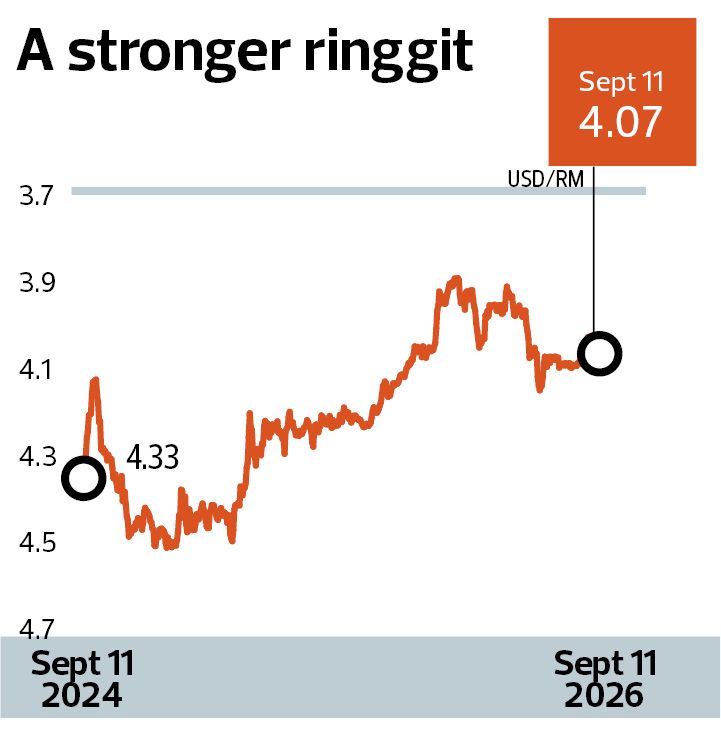
The ringgit has strengthened considerably against the US dollar, rising from RM4.80 to US$1 in mid-2024 to RM4.07 as at last Friday.
While the ringgit has weakened against the greenback in recent months, it is worth noting that it has slipped just 0.4% year to date. The currency pair peaked at 4.1483 on June 22 before strengthening to 4.0705 at present.
On a weekly basis, the ringgit weakened 0.63% against the US dollar, making it one of the weakest-performing Asean currencies last week.
Part of the weakness can be attributed to stronger-than-expected US economic data, as indicated by the Producer Price Index (PPI), which rose 5.4% y-o-y in August, up from 4.8% in July and above the 5.3% consensus estimate.
U.S. CPI rose 3.4% y-o-y in August, unchanged from July, while core CPI rose 2.4%. The persistent inflation reading has strengthened expectations that the Fed will raise rates at this week’s Federal Open Market Committee (FOMC) meeting.
“The positioning gap is stark. Futures price in above 70% odds of a 25bps hike, yet fewer than a fifth of Bloomberg survey respondents expect one. That divergence, not the print alone, defines the ringgit’s risk,” Kenanga Research noted in its weekly ringgit update on Sept 11, issued ahead of the August CPI release.
The research house expects the Fed to keep interest rates unchanged at its FOMC meeting this week, with its first rate cut coming only in 2Q2027.
Save by subscribing to us for your print and/or digital copy.
P/S: The Edge is also available on Apple's App Store and Android's Google Play.