

_0_3.jpg&w=1920&q=75)
(Sept 14): Haidilao International Holding Ltd’s sudden slump after its co-founder sold about US$350 million (RM1.42 billion) worth of shares is putting the spotlight on other stocks that may be vulnerable to similar selling.
While the hotpot chain didn’t give a reason for co-founder Shu Ping’s share disposal last week, it came after China moved in late July to tax offshore trusts held by its citizens, closing a loophole wealthy families have used to protect and pass on their fortunes. Owners have a 90-day grace period ending Oct 22 to settle what they owe without late-payment surcharges.
“Business owners will view the current period as a rare transitional phase, when conditions are likely to be most favourable, giving them an incentive to settle tax obligations sooner rather than later,” said Dong Yizhi, a lawyer at Joint-Win Partners, a Shanghai-based law firm.
That’s drawing attention to other founder-controlled companies, including Li Ning Co, Xiaomi Corp and Sunac China Holdings, where large stakes are held through offshore trust structures, according to data compiled by Bloomberg. There’s no indication their founders are planning similar share sales.
The tax issue could add another overhang for Hong Kong stocks, where many major listed companies remain founder-controlled, often with sizable stakes held through offshore trusts. The Hang Seng Index is down about 3% this year, largely missing out on the artificial intelligence (AI) hardware boom and dragged lower by sluggish consumption and a lacklustre earnings outlook for its internet companies.
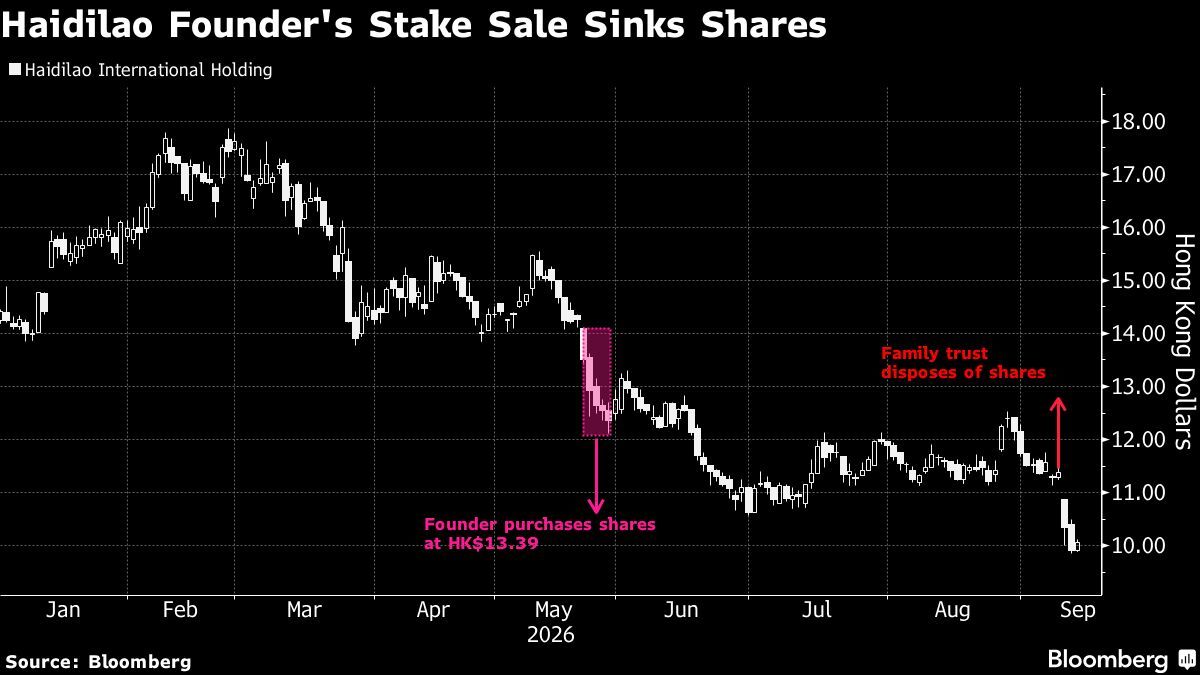
The Haidilao sale stood out because Shu’s husband, chief executive officer Zhang Yong, had bought shares in the company just months earlier at prices more than 20% above where she sold. The stock fell as much as 2.9% on Monday to the lowest since March 2022, taking losses since the latest announcement to about 13%.
More broadly, investors are grappling with the impact of China’s stricter tax enforcement as the government seeks to boost revenue. Goldman Sachs Group Inc analysts said their recent clients meeting showed concerns over potential growth impact.
Haidilao didn’t immediately respond to a request for comments. It said in a filing that the sale was for the shareholder’s funding needs and would have no impact on its business or financial position.
“If you’re holding Hong Kong stocks, you could do worse than screen for companies where founders control large stakes through offshore trusts, those that have paid out substantial dividends and set up their trusts early on,” said Yang Ruyi, a fund manager at Shanghai Prospect Investment Management Co.
“As the compliance deadline approaches, those stocks could be more vulnerable to founder-selling and heightened volatility,” she added.
Other firms
Several prominent Hong Kong-listed firms fit that profile. At Li Ning, Viva Goods Co — a trust vehicle ultimately controlled by the founder’s family — owns about 19% of the company. The stock has dropped about 9% since the Haidilao announcement, with Morgan Stanley saying the market may have overreacted to concerns that the offshore-trust tax changes could spur selling. Viva has continued buying shares despite the new rules, the bank noted.
Other examples include Guming Holdings, where family-trust vehicle Modern Leaves Ltd holds 41%, and Xiaomi, in which Smart Mobile Holdings Ltd, an entity controlled by founder Lei Jun, owns 8.9% of Xiaomi.
Li Ning, Guming and Xiaomi didn’t immediately respond to requests for comments on the potential impact of China’s tax changes.
Holding shares through an offshore trust doesn’t mean a founder will sell. Depending on the income and accumulated gains involved, tax bills may be relatively small compared with the wealth of many controlling shareholders, reducing any need to raise cash.
Citigroup Inc analysts including Xiangrong Yu said founder-controlled Chinese companies with offshore ownership structures could nevertheless face a near-term overhang if the tax regime prompts some shareholders to monetise assets, with block trades offering one of the most liquid ways to do so.
Given the prevalence of offshore trusts among founder-controlled Hong Kong firms, some investors see Haidilao’s sale as a potential sign of more to come.
“I think we will see more situations like this going forward,” said Chen Da, the founder of Dante Research. As China shifts away from land-sale revenue and relies more heavily on taxes, he expects enforcement to tighten. “Many wealthy entrepreneurs are looking over their shoulders right now,” he added.
Uploaded by Tham Yek Lee