

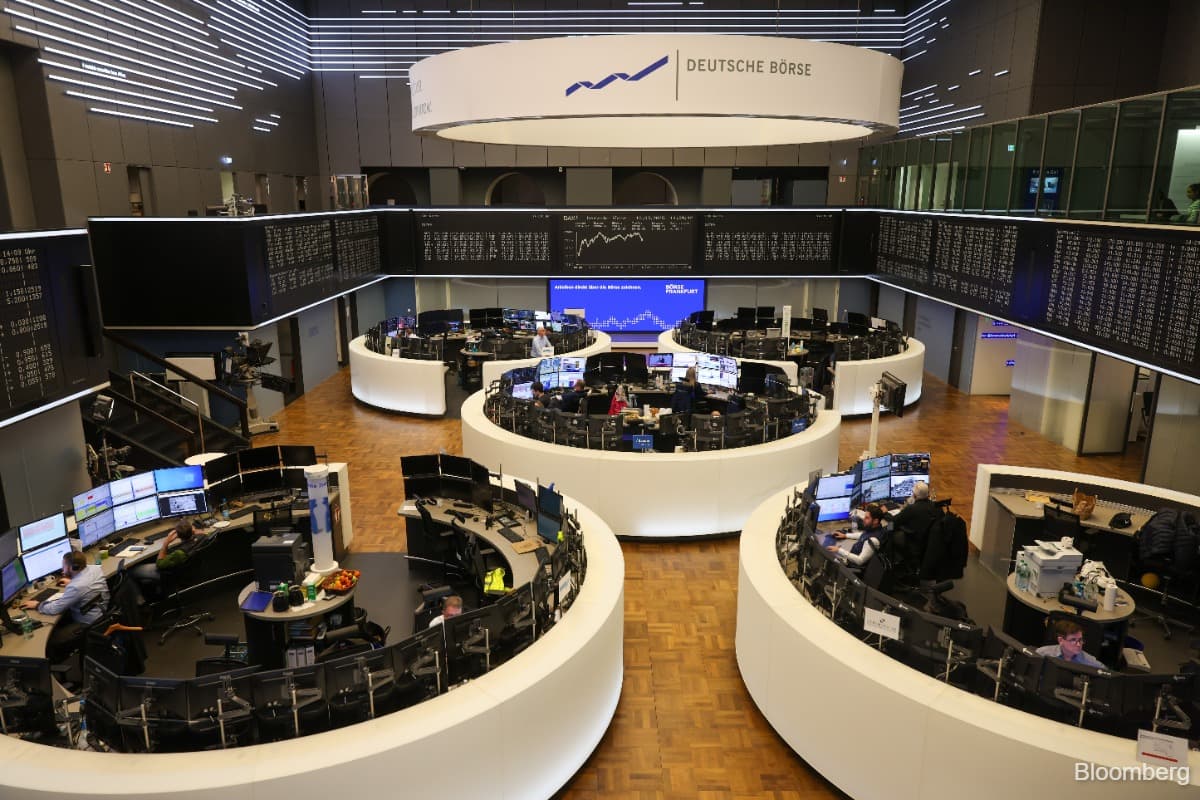
(Sept 14): Europe’s protracted efforts to turn its much maligned markets into a more attractive proposition for investors reach a momentous juncture Monday: the arrival of a consolidated tape.
The fragmentation of trading across venues is often blamed for the view that markets in Europe have lower liquidity versus the US, which introduced a country-wide tape five decades ago. Regulators hope the rollout of a unified feed of prices and trading across 29 countries’ markets will start changing perceptions.
Besides issues like diverging legal systems and patchy settlement infrastructure, the European Union has identified piecemeal trading data as one reason investors see the bloc as multiple different markets rather than a single unified one. The tape aims to counter that view by displaying supply and demand data for company shares and exchange-traded funds across the region.
The tape, run by EuroCTP BV, a body backed by Europe’s exchanges, will not be just for professional investors and traders. Retail investors can also subscribe via a website, helping to level the playing field with larger institutions.

“Am I excited for Monday? Yes, from a symbolic standpoint,” said Alexandre Roubaud, head of ETF markets at BlackRock Inc in Europe, the Middle East and Africa. “Will we see the benefit of the tape overnight? Certainly not.”
No quick fix
It has been a slog getting here, almost 20 years since the EU broke up stock exchanges’ grip on trading. In that time, there have been plenty of delays and arguments as countries and industries fought to protect their corners in the change.
While Monday’s unveiling marks a moment, it is not like flicking a light switch. EuroCTP needs to get people to sign up to and trust the product, and only time will tell whether it can shift perceptions of Europe’s capital markets and lead to better outcomes for investors and companies.
Unlike the US tape, the EU’s will offer best bid and ask prices for a particular security without disclosing the trading venue that generated the quotes. Instead, market participants will see more granular data after a transaction has taken place.
That has sparked criticism from banking and asset management associations, who argue that will not be good enough for members to trade on.
Just over half of respondents to a recent Bloomberg Intelligence survey of 108 senior buyside traders said they planned to access the EU tape either directly from EuroCTP or third-party providers. Only a fifth thought it could reduce their reliance on direct data feeds from stock exchanges.
Eleanor Beasley, CEO for Goldman Sachs’ EMEA equities business, says the fastest-moving investors may not use it for trading at first as they assess the data but there are still benefits.
“It is a really useful tool to improve the understanding of the total traded volume,” she said. “If you’re a company looking to list or are listed in the region and you think the only volume that trades in your name is on the primary market, I think that this will give you a much better idea as to the total traded volume.”
Goldman Sachs will contribute to the tape by supplying data from its Sigma X Europe trading venue as well as consuming data from the feed through its trading operation. Bloomberg LP, the parent of Bloomberg News, aggregates and distributes trading data throughout Europe.
What is consolidated tape?
A consolidated tape is a single feed that aggregates data across multiple execution venues for equity trading.
In Europe, trading is split across different venues, including primary exchanges like Euronext, alternative venues like Cboe Europe, investment bank trading desks known as systematic internalisers and so-called dark pools.
Currently, it is difficult to see the total volume of trading across all of these venues, a problem the consolidated tape is intended to rectify.
Within the tape there are two types: pre-trade and post-trade. A post-trade tape collects all of the data about trades after they have been executed. A pre-trade tape, however, shows the offers to buy or sell a security before they are made.
A pre-trade tape may have different levels of depth to it. The most simple will show an aggregated feed of buy and sell orders across all venues. This is the type that will go into effect on Monday.
A more complicated version being discussed in Brussels would show on which venue the shares are being bought and sold. This could allow traders to choose the most liquid venue or the venue where the costs of execution are lowest.
According to Roubaud, that could “have a knock-on effect because liquidity pools will have to compete more for order flow,” he said.
Industry groups are at odds over the speed and extent to which the tape should evolve, with stock exchanges that make a significant portion of their revenue from selling data reticent to move at the pace banks and asset managers are calling for.
But even in its initial form, the tape could help unlock more capital into European equities, according to Eglantine Desautel, CEO of EuroCTP.
For example, how big a position an asset manager can build in a single instrument according to their internal rules is at times a function of the average traded volume in that security. If the tape can provide a more comprehensive view of volumes, investors would be able to commit more capital, she said.
How did we get here?
The origins of consolidated tape stem from Europe’s MiFID I regulation in 2007, which broke up the national monopolies over stock exchanges and allowed alternative trading venues. That increased the fragmentation of Europe’s stock markets and led to a situation where there was not a single clear view of equity prices.
Then MiFID II, the follow-up legislation in 2018, allowed for consolidated tape providers to service the market. Over the next few years the EU made progress toward establishing a tape backed by Brussels. A tender was launched, which was won by EuroCTP.
“The launch of the consolidated tape is a major achievement,” said Pete Tomlinson, managing director of equities and post-trade at banking association AFME. “Europe should now build on this foundation by enhancing the depth and quality of the data available through the tape, making it an even more valuable tool for investors.”
Uploaded by Arion Yeow