

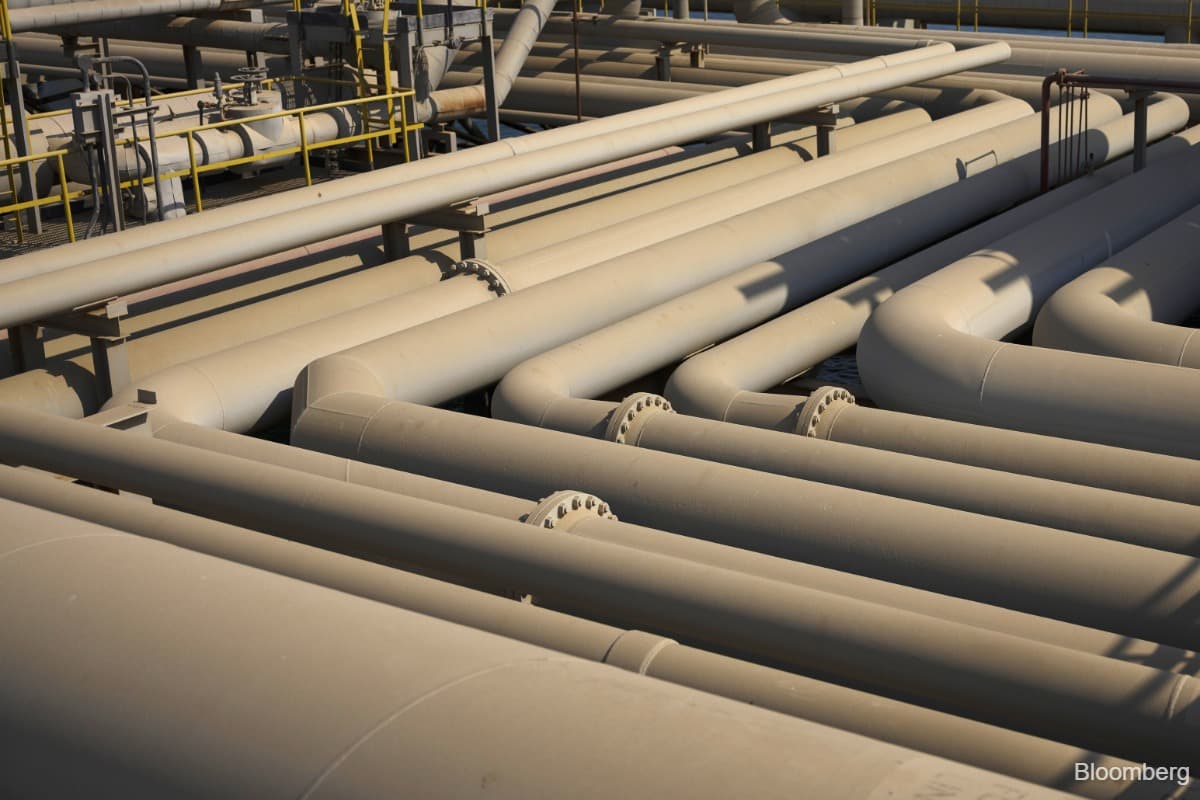
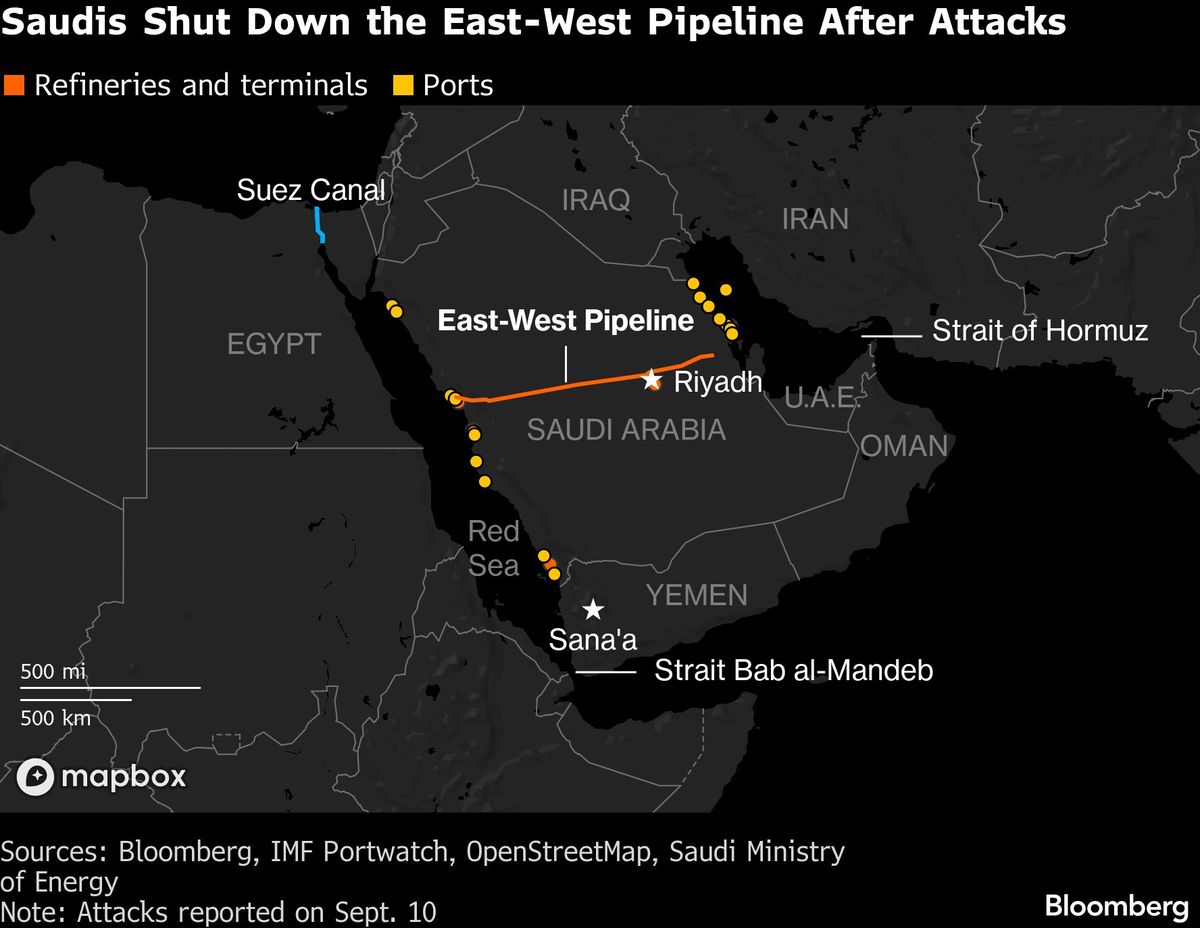
(Sept 12): Saudi Arabia closed its East-West pipeline, a key alternative to the Strait of Hormuz for its oil exports, following multiple attacks on Thursday.
The conduit was shut as a precautionary measure, the Ministry of Energy said Friday in a post on X. The attacks caused several injuries and emergency teams are taking steps to secure the pipeline and assess its safety, the ministry said.
Several drones launched from Iraq attacked the pipeline in the Riyadh and Madinah regions, Saudi’s Ministry of Foreign Affairs said in a post on X.
Fighting has intensified across the Middle East in recent days, with the Yemen-based Houthis saying they targeted Saudi’s energy facilities in Abha, Najran and Jazan while the US conducted strikes against Iranian oil tankers.
The East-West pipeline has proved to be a critical lifeline for Saudi Arabia’s oil exports amid disruption from the Iran war. The seven million barrel-a-day conduit quickly reached full capacity earlier this year after tanker traffic came to a near standstill in the Strait of Hormuz.
The pipeline moves oil away from the Persian Gulf towards the Red Sea, where it can be loaded on tankers. However, that route has come under pressure in recent weeks from strikes by the Iran-backed Houthis.
Thursday’s attacks are “a pretty clear demonstration that both Iran and its allies have both the capability and the will to strike regional energy infrastructure, and that infrastructure is vulnerable to ballistic missile or drone attacks”, said Gregory Brew, a geopolitical analyst at the Eurasia Group.
Oil prices were little changed after the ministry’s statement, with Brent futures trading at about US$105 (RM427) a barrel. Brent surged on Thursday, almost reaching US$110, on speculation about the impact of the latest violence on energy supplies in the region.
“The size of the disruption has already been priced in,” Brew said.
The kingdom’s oil exports slumped to just about three million barrels a day in August, the lowest in records going back to early 2017, as ships came under attack in the Red Sea from Houthi militants.
The threat from the Houthis comes as the flow of oil via the Strait of Hormuz continues to be constrained. The US has imposed a blockade on loadings from Iranian ports, while Tehran continues to target shipping in the strait.
About one million barrels a day of oil products is being shipped through the contested waterway, according to industry executives and data from tanker-tracking agency Vortexa, down from a prewar level of about four million barrels.
As a consequence, it’s not just oil prices that are rising. Global fuel prices are also elevated. The average US retail price for gasoline is hovering above US$4 a gallon, a seasonal high, while average US retail diesel prices have skyrocketed to a record US$6 a gallon.
Several buffers that helped cushion energy supplies in the war’s early days are wearing thin. US oil stockpiles have plunged, while most emergency reserves released by governments have already reached the market.
Houthi forces have pushed south along Yemen’s Red Sea coast towards the Bab el-Mandeb Strait this week while continuing their missile and drone attacks on Saudi Arabia, forcing the country to halt operations at some energy sites.
The advance now presents a stark choice for the kingdom: escalate a military campaign, which for years has failed to defeat the militants, or tolerate greater leverage by the Houthis over the Red Sea.
“Riyadh is in a difficult position,” said Fernando Ferreira, an analyst at Rapidan Energy Group. “As the US maintains the blockade and succeeds in escorting more tankers out of the region, Iran will pivot towards increased attacks on Gulf energy facilities.”
Uploaded by Tham Yek Lee