

This article first appeared in Digital Edge, The Edge Malaysia Weekly on September 14, 2026 - September 20, 2026
Just a year ago, most manufacturers experimenting with artificial intelligence (AI) were still in the pilot stage, testing the technology in controlled environments to better understand its potential. That phase is now largely over, says Samson Khaou, executive vice-president for Asia-Pacific at Dassault Systèmes.
“The question now is not whether to adopt AI, but how to deploy it at scale in a way that delivers real industrial outcomes,” Khaou tells Digital Edge.
Dassault is a French software company specialising in 3D design and digital twin technology. It is expanding its footprint in Malaysia, working with local manufacturers on digital platforms and talent development.
There is growing recognition that general-purpose AI models such as Gemini and ChatGPT are not good enough for manufacturing environments, where physical constraints, engineering precision and safety-critical decisions determine success or failure, says Khaou.
Instead, the industry is increasingly looking towards agentic AI, which can autonomously perform tasks and make decisions within defined objectives, and is where Dassault sees the strongest adoption among its customers.

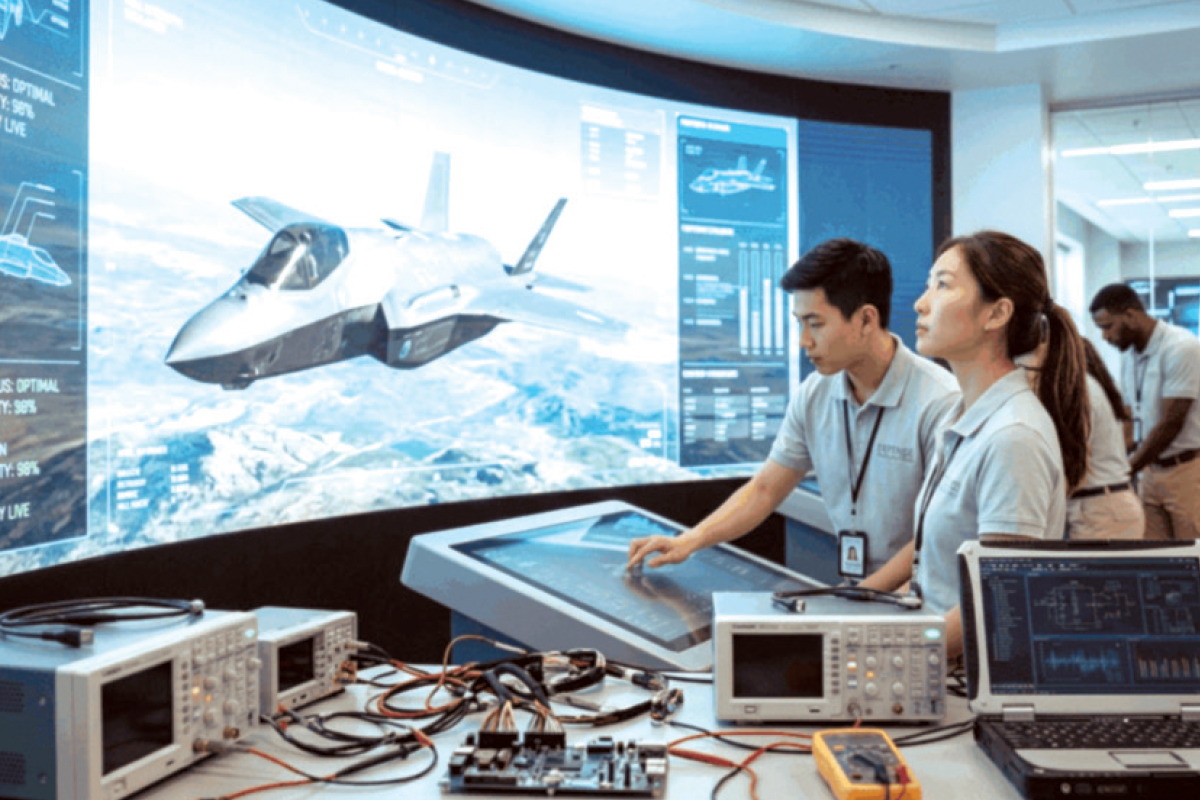
The most significant area of AI adoption today is in design and engineering productivity, notes Khaou. AI-driven simulation is allowing manufacturers to rethink the traditional design-and-testing cycle.
“The traditional workflow of having designers create a shape, then having a separate team test it to reiterate the designs in a back-and-forth manner, is slow, expensive and rarely delivers an optimal result,” he says. “Instead, we can use AI to build the simulation model, and that model drives the design process.”
Khaou explains that this AI-driven simulation enables manufacturers to optimise products from the outset, with engineering requirements and compliance considerations incorporated into the process, significantly reducing both development time and costs.
The second major area in which AI is reshaping manufacturing is maintenance.
Khaou says instead of relying on scheduled servicing or reacting after equipment failures occur, AI-powered tools — combined with industrial sensors — can monitor component performance, estimate remaining operating life and recommend maintenance before breakdowns happen.
This is shifting manufacturers from reactive to predictive maintenance, reducing the risk of costly operational downtime.
Because of these applications, AI is creating the greatest impact in industries where the cost of failure is exceptionally high. This includes aerospace, defence, automotive and semiconductor manufacturing, all sectors that are among Malaysia’s key economic drivers, says Khaou.
“These are industries where getting it wrong is expensive, compliance is non-negotiable and the expertise to operate at that level took decades to build. That is precisely where industrial AI and virtual twin technology make the most sense.”
Khaou points to aerospace, in particular, as a sector where AI could have a significant impact. He says the average age of employees is 50, with many approaching retirement.
As experienced engineers leave the workforce, companies face the difficult task of preserving decades of accumulated technical knowledge. Replacing that expertise through conventional hiring alone is unlikely to be sufficient.
Instead, manufacturers are increasingly turning to AI tools that can learn from historical engineering data and support younger engineers by making institutional knowledge more accessible.
Beyond the myths of AI adoption
For Khaou, a major sign of the manufacturing industry’s growing maturity in AI adoption is reflected in how manufacturers think about AI today compared with the past.
One misconception that persists among many businesses, but is less common among high-value manufacturers, is treating AI as simply another technology layer that can be added onto existing systems, similar to previous waves of automation.
“Manufacturers that see real transformation are those that have embedded AI into the core of how they design, simulate and produce, not those that have added a conversational interface to a legacy process,” says Khaou.
Another misconception is underestimating the organisational changes needed to fully realise AI’s benefits. These changes extend well beyond software deployment and include workforce readiness, change management and redesigning existing business processes.
“These tend to be underestimated until [the cost of not addressing them becomes too high],” Khaou says.
He says while Malaysia has achieved a relatively high level of AI awareness in terms of its strengths and limitations, awareness should not be mistaken for capability.
“There is a gap between knowing what AI is and knowing how to deploy it effectively,” says Khaou, adding that, adoption across Asean is progressing fastest among manufacturers integrated into global supply chains.
“When digital capability becomes a condition for competitiveness, the conversation about transformation becomes very concrete more quickly.”
Khaou sees Malaysia as occupying a distinct position among Asean markets, with different countries taking different approaches to AI adoption.
“Compared to other markets in Asean, Malaysia sits in an interesting position. Singapore moves the fastest, with strong infrastructure and regulatory clarity. Indonesia and Vietnam are accelerating rapidly but face more significant skills gaps,” says Khaou.
“Malaysia’s advantage is a combination of digital skills, English proficiency and genuine government commitment, factors that together create a more receptive environment for industrial AI adoption.”
Save by subscribing to us for your print and/or digital copy.
P/S: The Edge is also available on Apple's App Store and Android's Google Play.