

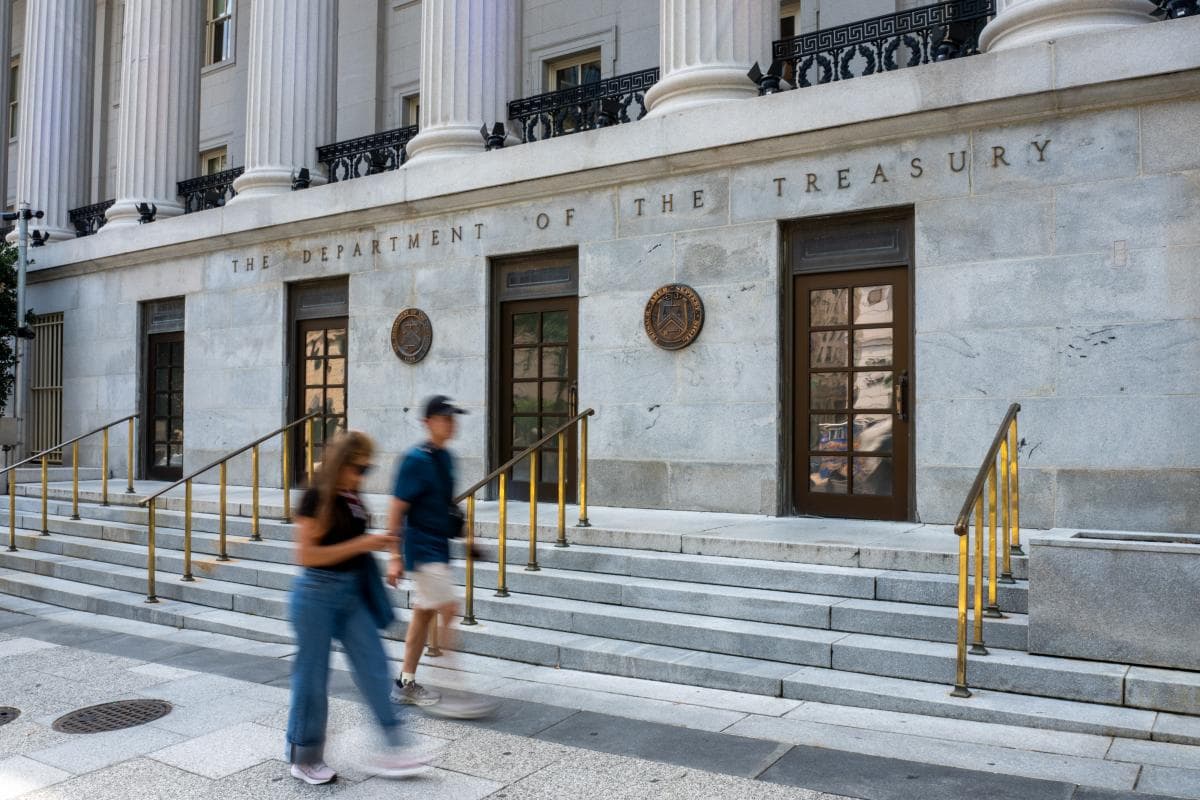
(Sept 11) : The US bond-market selloff accelerated on Thursday as spiking oil prices fanned inflation fears and the Treasury Department bought fewer bonds than expected during its first expanded buyback operation.
The drop, which sent two-year yields surging by the most since the market’s April 2025 meltdown, began early in the session, after escalating turmoil in the Middle East drove oil to a four-month high and a gauge of wholesale prices showed inflation pressures are building.
The move has also been fueled by doubts about the effectiveness of Treasury Secretary Scott Bessent’s unusual intervention aimed at stabilising the market and curbing the jump in long-term yields. Those questions built on Wednesday when he underwhelmed traders with the size of his amped-up buyback operation, and then again on Thursday when his department followed up by purchasing just US$5.19 billion of 10- to 20-year debt — less than the US$6 billion maximum he announced.
The operation stoked skepticism about the Trump administration’s ability to ease a selloff that’s been building over the last six months. With no end to the Iran war in sight or any plans for taming the government’s deficit, investors say his moves are likely to have only limited impact.
“Bessent is bringing a squirt gun to a firefight,” said George Catrambone, head of fixed income at DWS Americas. “It’s not enough to quell the premium investors want to receive to buy US 30-year debt, given current debt, deficit and inflation concerns.”
The rise in yields was lead by shorter-maturity securities that are more sensitive to monetary policy changes by the Federal Reserve, with traders wagering that the central bank may start raising interest rates as soon as next week.
Two-year Treasury yields jumped 16 basis points to 4.59%, the biggest one-day rise since the market meltdown unleashed by President Donald Trump’s tariff rollout in April 2025. Ten-year yields climbed 12 basis points to the cusp of their late 2023 peak, while those on 30-year bonds rose 8 basis points to 5.37%, a fresh 19-year high.
“Crude oil drives inflation, and if it starts getting into the system it’s going to be hard to contain it,” said Tony Farren, managing director in rates sales and trading at Mischler Financial Group. “There’s no reprieve for yields to go lower if inflation remains elevated.”
Brent oil rose over US$107 a barrel as deteriorating conditions in the Middle East stoked concerns over global supplies. Traders have been rattled by an uptick in attacks around the Strait of Hormuz, the critical waterway that’s become the focal point of the conflict, and by the lack of any signs that the US and Iran are moving toward de-escalating the conflict.
The rise in energy costs has driven up bond yields worldwide steadily since Trump started the war in February as the president’s early confidence in a swift victory has given way to a protracted stalemate. The swelling supply of new debt has also played a role, as well as a resilient US economy and massive capital investment from artificial intelligence firms.
Bessent, a former hedge-fund manager, has sought to ease the pressure as it ripples through to Americans’ borrowing costs ahead of the November Congressional elections.
Last month, he surprised the market by announcing that he was boosting the size of the department’s bond buybacks, characterizing it as a way of steadying a market that had gotten out of sync with its fundamentals. But yields have only marched higher, in part because of the somewhat limited tools at his disposal.
On Wednesday, the maximum size he announced for the initial operation fell short of market expectations. Then on Thursday the department’s buying fell below that cap, even though it received US$10.5 billion of offers.
Analysts cautioned against reading too much into that, saying it likely resulted from a decision to reject unfavorable bids from sellers instead. Bessent himself echoed that explanation.
“We only buy the bonds back cheap,” Bessent said Thursday on Real America’s Voice show. “People seem to want to keep their long-term bonds.”
Even so, the results pressured the market. US government bonds cheapened versus interest-rate swaps, with the move at the 20-year tenor which was the focus of the operation the most pronounced.
“This signals that Treasury was more selective than they usually are in the space,” said Molly Brooks, a strategist at TD Securities. “If Treasury wants to match market expectations and fill the entire buyback amount to keep long-end rates lower, they may need to accept less competitive bids in future buyback operations.”
The buyback increase has fanned chatter of a more activist style of US debt management that would break with the Treasury’s practice of making auctions “regular and predictable.” That could include a decision to dial back the size of longer-term bond sales and rely more heavily on shorter-dated debt to finance the deficit.
Ben Emons, managing director of fixed income at Highline Asset Management, said some may be looking to see if Bessent will start ratcheting up his operations.
“Bessent is keeping the market guessing,” he said. “The market is pushing Bessent to show his full hand by pushing yields higher.”
Uploaded by Isabelle Francis