

This article first appeared in The Edge Malaysia Weekly on September 14, 2026 - September 20, 2026

For MISC Bhd (KL:MISC), the transition to lower-carbon shipping is no longer only a long-term ambition. In 2025, the maritime and energy group reduced its fleet greenhouse gas emissions intensity by 36% from its 2008 baseline, putting it on track to meeting its target of a 50% reduction by 2030.
It is against that backdrop that MISC was recognised as the Best Performing Company by Sector for transportation and logistics at The Edge Malaysia ESG Awards 2026. The company is no stranger to the awards, having secured silver in the sector for three consecutive years from 2022 to 2024.
“One of MISC’s proudest achievements in 2025 was demonstrating that large-scale maritime decarbonisation is not a future ambition, but a reality today,” says Datuk Zahid Osman, president and group CEO of MISC.
He attributes the reduction in emissions intensity to fleet rejuvenation, the adoption of liquefied natural gas dual-fuel vessels, operational improvements and investments in lower-emission technologies.
At the same time, MISC is expanding into businesses that could benefit from the energy transition. These include carbon capture and storage infrastructure, vessels designed to transport captured carbon dioxide, ammonia-fuelled shipping and offshore wind projects.

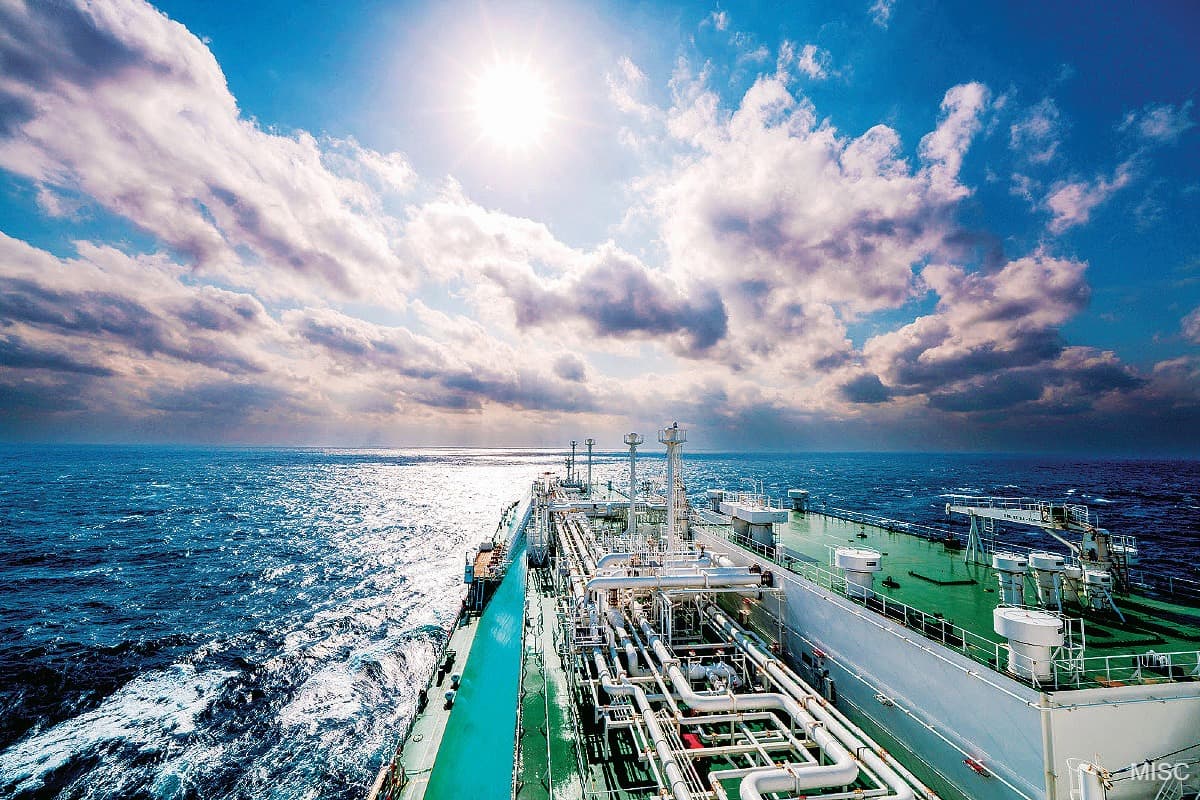
(Photo by MISC)
In FY2025, its carbon capture and offshore wind services generated RM700 million in revenue, or about 6.5% of group revenue, providing tangible evidence that its sustainability strategy is also opening new avenues for growth.
“For MISC, ESG is not a parallel agenda. It is how we create long-term business resilience and competitiveness in a rapidly changing energy landscape,” Zahid says.
Its ESG efforts extend beyond decarbonisation. Since 1977, MISC has invested about RM400 million through the ALAM Cadet Sponsorship Programme, developing more than 15,000 maritime professionals. In 2026, it also launched Yayasan Maritim to support education, environmental stewardship and community resilience.
The group’s performance on several ESG benchmarks has improved since 2021. Its S&P Global Corporate Sustainability Assessment score rose to 61 from 54 in 2025, while its FTSE4Good Bursa Malaysia score increased to 4.3 from 3.6, while its Carbon Disclosure Project (CDP) sustainability rating moved to C from D.
Even as its ESG indicators improved, MISC acknowledges that some areas require further attention. Zahid says the group’s biggest ESG challenge in 2025 was recognising that strong injury-rate metrics alone did not define the level of safety performance it expected of itself.
MISC responded by strengthening oversight, reviewing critical safety controls and intensifying preventive measures. It also achieved a 100% pledge to its Life-Saving Rules across the group and among ALAM cadets, while extending its leadership programme to 50 business partners and contractor companies.
Looking ahead, MISC’s 2026-2030 Sustainability Strategy is built on three pillars — Impact, Inclusion and Integrity. These encompass its decarbonisation targets, workforce safety and skills, human rights, governance, compliance, digital maturity and cybersecurity resilience.
Zahid stresses, however, that progress in maritime decarbonisation cannot be achieved by shipping companies alone.
“For the maritime sector, decarbonisation cannot happen vessel by vessel. It requires alignment across policy, infrastructure, technology providers, financiers and customers.”
Greater policy certainty and investment in infrastructure for alternative fuels such as ammonia and methanol, he adds, could also help Malaysia position itself as a regional hub for the low-carbon maritime economy.
Save by subscribing to us for your print and/or digital copy.
P/S: The Edge is also available on Apple's App Store and Android's Google Play.