

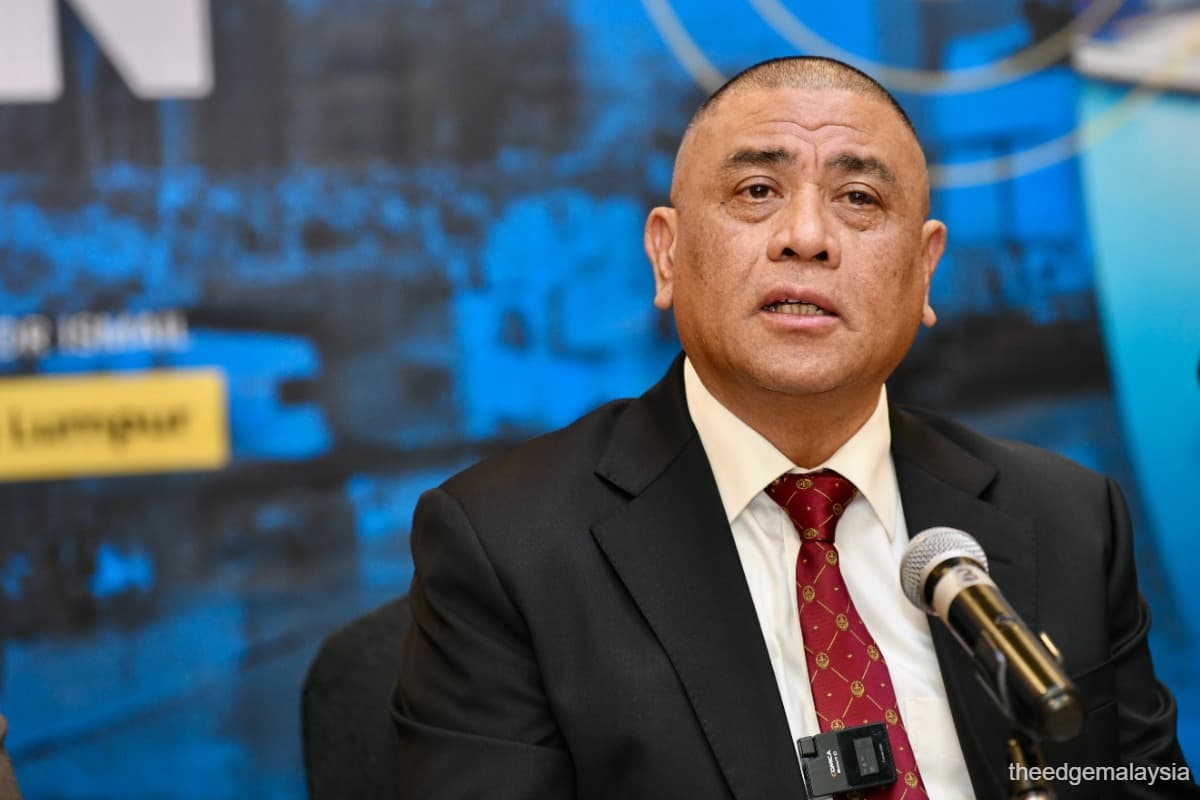
IPOH (Sept 9): The Perak State Legislative Assembly on Wednesday passed the Islamic Religious Administration (Perak) (Amendment) Enactment Bill 2026, which aims to ensure that the legal framework governing the administration of Islamic affairs remains clear, orderly and effective in meeting current needs, without affecting the principles and status of Islam or its institutions.
Menteri Besar Datuk Seri Saarani Mohamad, when tabling the bill, said the amendments also sought to strengthen governance, avoid overlapping legislation and provide the necessary legal basis for several current administrative requirements.
“Overall, the proposed amendments cover several key areas, including the streamlining the functions and jurisdictions of religious institutions, strengthening the professional framework for shariah lawyers, providing a legal basis for the registration of mosques and surau, as well as several other adjustments,” he said.
Saarani, who is also the Perak Islamic Religious Affairs Committee chairman, said the bill, which replaces the Islamic Religious Administration Enactment 1992, contains 16 clauses covering amendments to various aspects of Islamic religious administration in Perak.
“Among the key amendments is the provision of a legal basis for implementing the shared services policy between the state and federal governments, which has been approved by the state government.
“It involves certain positions in the administration of Islamic affairs, particularly the director of the Perak Islamic Religious Department, shariah prosecutors, religious enforcement officers and mosque officers.
“It should be emphasised that the implementation of the shared services policy does not alter the state’s position or jurisdiction over the administration of Islamic affairs. Instead, it provides a legal framework that enables the state to draw on human resources, experience and expertise from both services in a more structured manner, according to administrative needs,” he said.
He said another amendment involved revising the definition of a “mosque officer” by removing the position of “assistant bilal” (siak) from the definition.
However, he said this does not mean that the position of assistant bilal is being abolished, but is intended to clarify the distinction between mosque officers appointed by the Perak Islamic Religious and Malay Customs Council (MAIPk) and support positions established at the kariah level.
“Under the existing enactment, the council only appoints imam and bilal, while assistant bilal are selected and managed at the kariah level according to local needs.
When winding up the debate, Saarani stressed that removing assistant bilal from the definition of a mosque officer would not affect their allowances, functions, responsibilities or status.
He said the bill also provides for several terminological changes, including replacing the term “National Fatwa Committee”, currently used in the enactment, with the “Muzakarah Committee”, in line with the terminology used under the National Council for Islamic Religious Affairs Regulations 2022.
“This terminological adjustment is not merely a change of name. It is important to clarify the committee’s role as a platform for muzakarah and the coordination of Islamic affairs at the national level, while avoiding confusion over the jurisdiction to issue fatwas,” he said.
The Kota Tampan assemblyman said the bill also seeks to enhance the competency and professionalism of the shariah lawyer profession by allowing chambering pupils undergoing training under the supervision of a trainer to attend shariah court proceedings.
He said this is part of a proposal to make chambering a mandatory requirement for admission as a shariah lawyer in Perak.
“This is important because the shariah lawyer profession requires not only knowledge of law and legal principles, but also practical skills, ethics and professionalism,” he said.
The assembly will sit again on Thursday.
Uploaded by Tham Yek Lee