

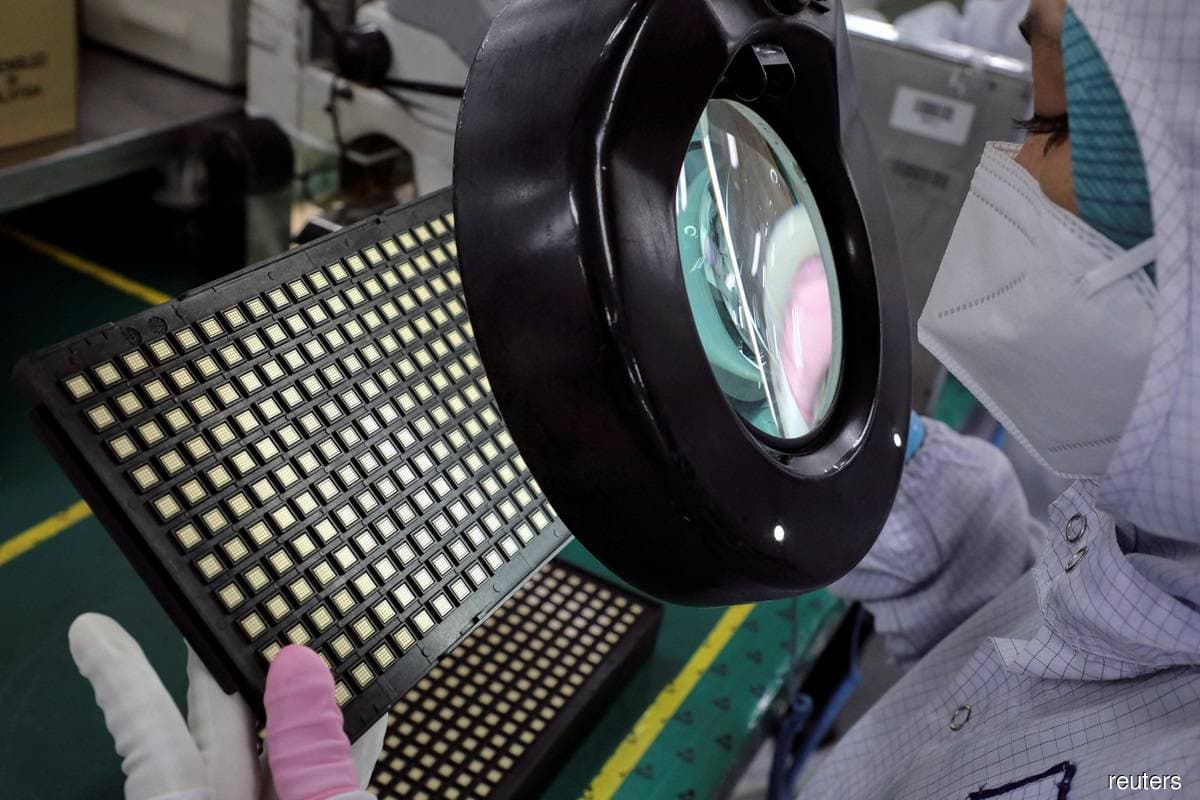
KUALA LUMPUR (Sept 9): Malaysia’s industrial production growth is expected to slow in the second half of 2026 (2H2026), but strong electrical and electronics (E&E) demand should continue to support manufacturing, economists said.
The industrial production index (IPI) grew 4.7% year-on-year in July, down from 6.5% in June and below market expectations, mainly due to weaker mining output. Manufacturing remained resilient, growing 6.4%.
BIMB Securities Research maintained its 2026 IPI growth forecast at 4.8%, saying manufacturing should remain the key driver of industrial activity, supported by the ongoing artificial intelligence-driven E&E upcycle, firm export demand and technology-related investments.
It expects industrial growth to moderate in 2H2026 following the stronger first-half performance as export front-loading gradually normalises and weakness in domestic crude oil and condensate production persists.
Commodity price volatility stemming from geopolitical tensions and softer global demand also pose downside risks, while stronger-than-expected semiconductor demand and continued data centre investments could provide upside.
Manufacturing sales rose 9.1% year-on-year to RM177.3 billion in July, with BIMB noting that growth remained anchored by E&E-related segments including integrated circuits, electronic components and circuit boards.
RHB Research maintained its bullish target of 5.8%, supported by strong E&E production and 5.7% growth so far this year.
It expects manufacturing to remain supported by global E&E demand, steady domestic spending and investment. However, higher production costs remain a key risk, with the producer price index rising 9.7% in July.
It expects Budget 2027 measures to potentially focus on easing financing and cost pressures, accelerating approved investments and addressing bottlenecks involving utilities, land and labour.
MBSB Research, which maintained its 2026 IPI growth forecast at 4%, expects a more moderate expansion in 2H2026, banking on manufacturing which saw output rising 1.1% month-on-month in July.
It expects E&E, commodity demand and domestic economic activity to support growth, but warned that supply disruptions, higher costs, weaker demand and tighter trade policies could weigh on the sector.