

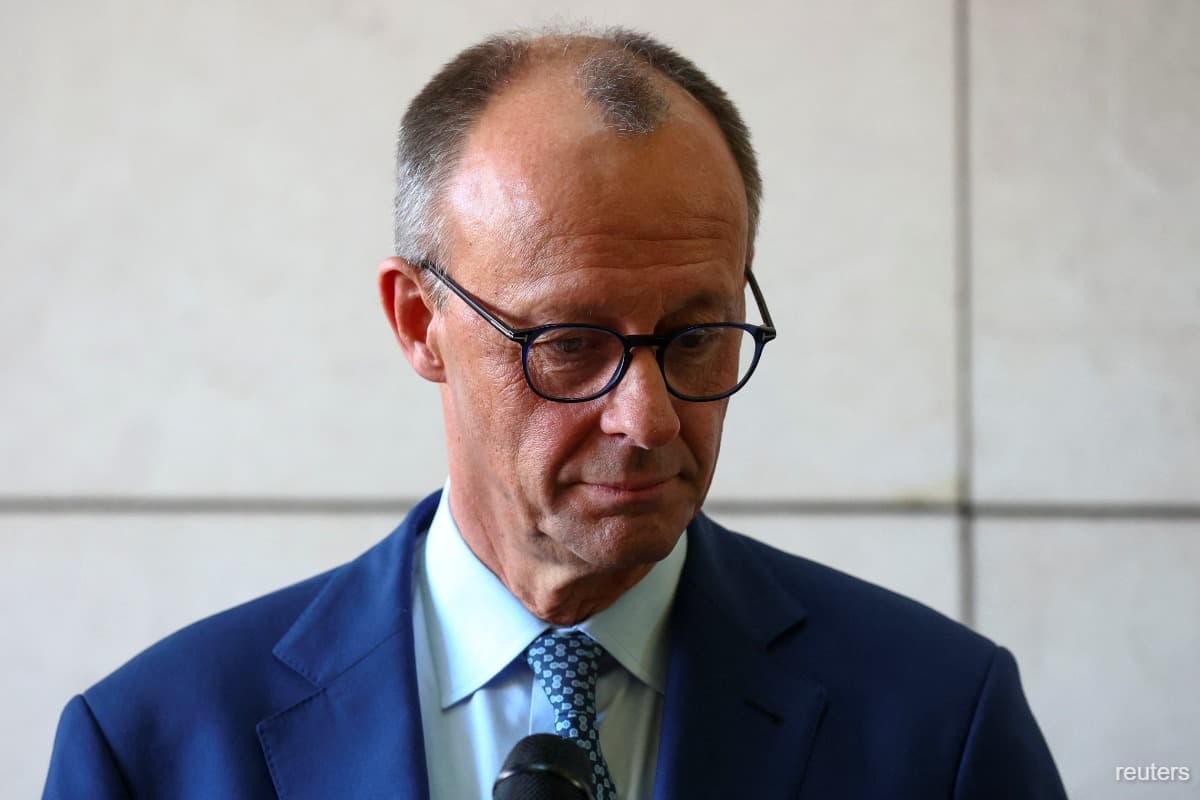
(Sept 7): German Chancellor Friedrich Merz said his government will have to learn the lessons from an overwhelming victory by the far right in a state election that he said will alter the country’s politics.
The anti-immigration Alternative for Germany (AfD) secured its best-ever result in Saxony-Anhalt on Sunday, putting the party three seats short of an outright majority to lead the first far-right government in the country since World War II. Merz’s Christian Democrats (CDU), who have led the region since 2002, saw their support collapse.
Saying he was “deeply shocked” by its unexpectedly weak performance, Merz said the party will take stock after two more state elections later this month. He remains committed to leading the government and pushing ahead with the coalition’s reform agenda, he said.
“This day not only changed things in Saxony-Anhalt, but also Germany as a whole,” Merz told reporters in Berlin after meeting the party leadership on Monday, calling it the worst result for the CDU in decades. “Of course, there will have to be consequences.”
Merz’s beleaguered 16-month chancellorship has been accompanied by speculation that he could be replaced as the head of government as his reform efforts fail to gain traction with the public amid sluggish economic growth and rising energy prices. On election night, party officials in Saxony-Anhalt laid the blame squarely with Merz, according to people familiar with the discussions.
Still, with two more state votes coming on Sept 20 — in the eastern state of Mecklenburg-Western Pomerania and in Berlin — there is little appetite for an immediate decision on Merz’s future.
The AfD more than doubled its support in Saxony-Anhalt to 44% on Sunday, while the CDU’s backing dropped by more than half to 17%. The AfD, elements of which are considered by German domestic intelligence to be a right-wing threat to the constitutional order, has tapped into public grievances with its call to halt migration, end efforts to tackle climate change and restore relations with Russia.
“No chancellor has been as unpopular as Merz,” AfD co-leader Alice Weidel told reporters on Monday, reiterating her ambition to secure more than 40% support nationwide, with the next national election due in 2029 at the latest. “People want a change in policy — they don’t want things to continue as they are.”

Whether the party and its lead candidate, Ulrich Siegmund, can lead the next government in Saxony-Anhalt will depend on parliamentary manoeuvring. Weidel said the AfD will reach out to partners, including disaffected CDU lawmakers in the state legislature in Magdeburg. BSW, a breakaway party founded by former Left leader Sahra Wagenknecht, is the only party that’s said it’s willing to cooperate with the far right.
Lawmakers will meet on Oct 6 at the latest, after which they’ll hold a series of secret ballots to install the state premier. Siegmund could clear that hurdle to take power, though the AfD would lack a majority on its own. The state leader intimated that the party could simply win the next election after the deadlock makes forming a government impossible, echoing comments he made to Bloomberg last week.
CDU state premier Sven Schulze, standing alongside Merz, said his party didn’t have a governing mandate after the defeat, ruling out for now any ambitions to assemble a broader coalition to prevent the AfD from taking power.
The party’s appeal will also be tested in Mecklenburg-Western Pomerania, where the AfD has held a consistent lead in polls — but faces a stiffer challenge from the SPD and its popular premier, Manuela Schwesig. In the state of Berlin, the far right will contend with the ruling CDU, the Greens and Left, but has little prospect of leading.
Merz’s SPD coalition partners also raised questions about the fate of the coalition’s reform agenda, including an effort to overhaul the country’s pension system. The party has especially scrutinised an unpopular initiative to abolish an early-retirement option.

“Things can’t simply stay the way they are,” Labour Minister Bärbel Bas, the SPD co-leader, told reporters. “We need to discuss with the chancellor how we can dispel fear among people about reforms.”
In Saxony-Anhalt, a state of just over two million that has the lowest gross domestic product per capita of Germany’s 16 states, the AfD has discussed plans set up a state-funded “deportation task force”, to purge the ranks of civil servants — and to overhaul the education system to expunge it of “left-wing indoctrination”.
Even as its popularity has gained, the party has coalesced around an ethno-nationalist ideology and dropped much of its more moderate language, according to Germany’s federal counterintelligence agency, the Federal Office for the Protection of the Constitution. In its annual report issued in June, it said an increased number of party officials have openly adopted the concept of “remigration”, or large-scale expulsions.
That has isolated it in Europe, even among far-right peers. France’s Marine Le Pen ended cooperation with the party in 2024 after an AfD lawmaker said in an interview that not every Nazi SS member should be considered a criminal. Italian Prime Minister Giorgia Meloni, whose Brothers of Italy has embraced transatlantic ties, has kept her distance given the AfD’s closeness to Russia.
Uploaded by Tham Yek Lee