

This article first appeared in The Edge Malaysia Weekly on September 7, 2026 - September 13, 2026
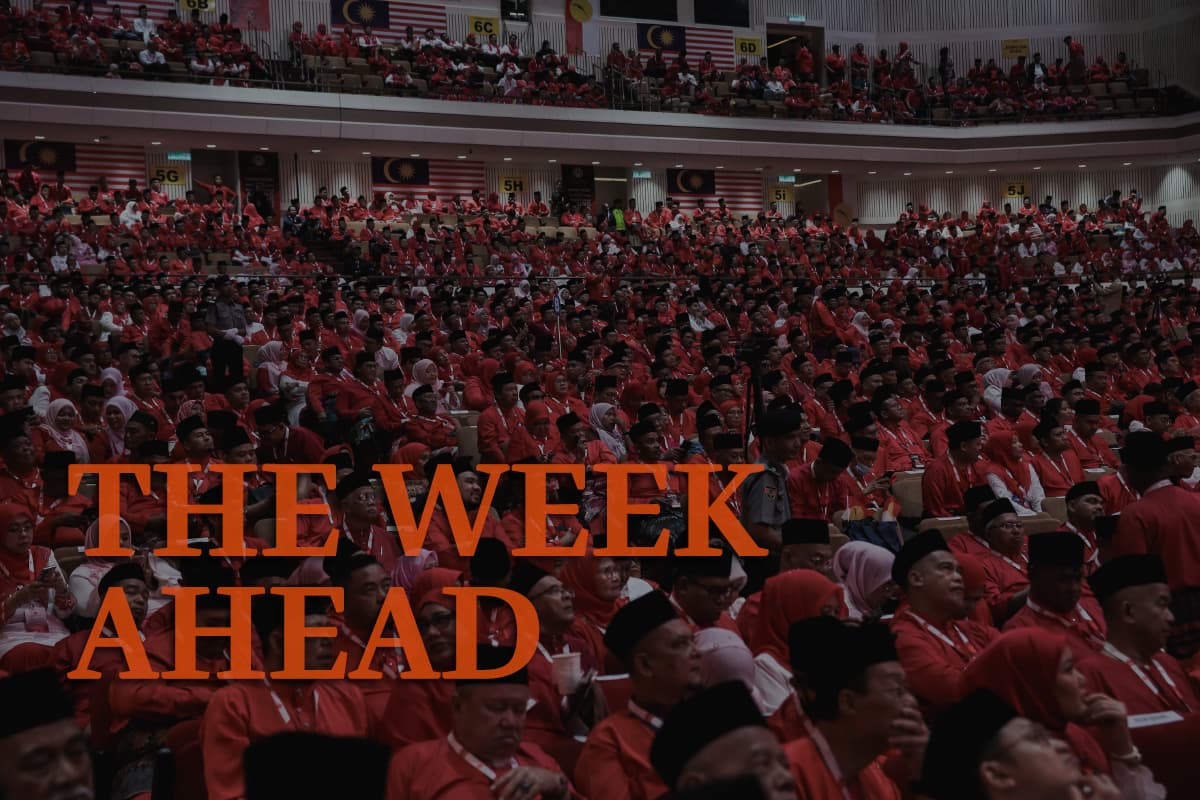
The 2026 Umno general assembly, which is expected to draw over 50,000 attendees, will take place over four days from Sept 9 to 12. Among the key issues to be debated are the party’s direction and its political cooperation, particularly within the framework of the unity government.
Umno secretary-general Datuk Asyraf Wajdi Dusuki said last week that PAS president Abdul Hadi Awang is expected to attend the general assembly.
Meanwhile, geopolitical tensions in the Middle East are likely to remain in focus this week following fresh US strikes on Iran last Wednesday and renewed Israeli threats against Tehran, raising concerns over the potential impact on global oil supplies and prices.
The latest attacks marked the most significant escalation between the US and Iran since July, with the conflict now entering its seventh month. US petrol prices surged last week, with diesel hitting a record US$5.85 a gallon on Friday (Sept 4), surpassing its previous high of US$5.81 set in June 2022.
The US stock and bond markets will be closed on Sept 7 in observance of Labour Day.
At home, the focus will be on the July Industrial Production Index (IPI) and manufacturing data, which the Department of Statistics Malaysia (DOSM) is scheduled to release on Sept 9.
DOSM will also release data on the informal sector and informal employment on the same day.
Bank Negara Malaysia’s statement of assets and liabilities as at Aug 28 is due to be issued on Sept 7.
Over in the courts, the High Court will on Sept 10 hold case management for Datin Seri Rosmah Mansor’s bid to adduce further evidence in relation to her graft conviction involving a solar hybrid project for 369 rural schools in Sarawak.
On Sept 7, at the Court of Appeal, is the hearing of an appeal by six individuals who are embroiled in the Negeri Sembilan palace saga — four Undang and two chieftains — to stay committal (contempt) proceedings against them by the Dewan Keadilan and Undang (DKU) and its secretary Raja Norazli Raja Nordin.
Thailand and Indonesia will each release consumer confidence data for the month of August this week.
The Philippines will on Sept 8 announce the July unemployment rate and data on bank lending and money supply.
South Korea will announce second-quarter (2Q) gross domestic product (GDP) data on Sept 8. A Bloomberg survey of economists expects the economy to have grown 3.7% year on year (y-o-y) in the quarter, unchanged from the previous estimate.
Japan too is set to report its final 2Q GDP reading on Sept 8. An earlier estimate last month showed that the economy grew 0.3% from the previous quarter, for an annualised rate of 1.1%, falling short of analyst forecasts, with weak consumer spending and a decline in corporate investment dragging the number down. Analysts polled by Reuters had expected that the annualised number would be about 2%. In 1Q, the economy grew 1.9%.
Japan will also release July trade data and August bank lending information on Sept 8. Apart from that, the country will issue its latest bond buying and selling data (Sept 10), August Producer Price Index (PPI) (Sept 11) and July IPI (Sept 14).
India will report the August Consumer Price Index (CPI) on Sept 14.
China will release August external trade data on Sept 8, followed by the PPI and CPI data the next day. A Bloomberg survey sees the August CPI, a measure of inflation, rising 0.9% y-o-y, up from 0.5% in the previous month.
The 11th Belt and Road Summit will take place in Hong Kong on Sept 9 and 10, with Hong Kong Chief Executive John Lee among the speakers.
The US has a slew of macroeconomic data releases including July consumer credit (Sept 9); August PPI and existing home sales as well as July wholesale inventories (Sept 10); and August CPI (Sept 11). In the UK, July IPI and trade data are expected on Sept 11.
The European Central Bank (ECB) has an interest rate decision on Sept 10. All eight analysts polled by Bloomberg expect the ECB to raise its deposit facility rate, its main refinancing rate and its marginal lending facility by 25 basis points each.
“Our economist … is also aligned with the majority. While policymakers paused in July to assess the inflationary impact of higher energy prices, the Governing Council maintained a hawkish tone and reiterated concerns over inflation persistence and potential second-round effects. By September, the ECB will have updated staff projections and additional data on growth, inflation and wages, which we believe will provide sufficient justification for one more hike,” said UOB Global Economics & Markets Research in a Sept 4 outlook report.
Save by subscribing to us for your print and/or digital copy.
P/S: The Edge is also available on Apple's App Store and Android's Google Play.