

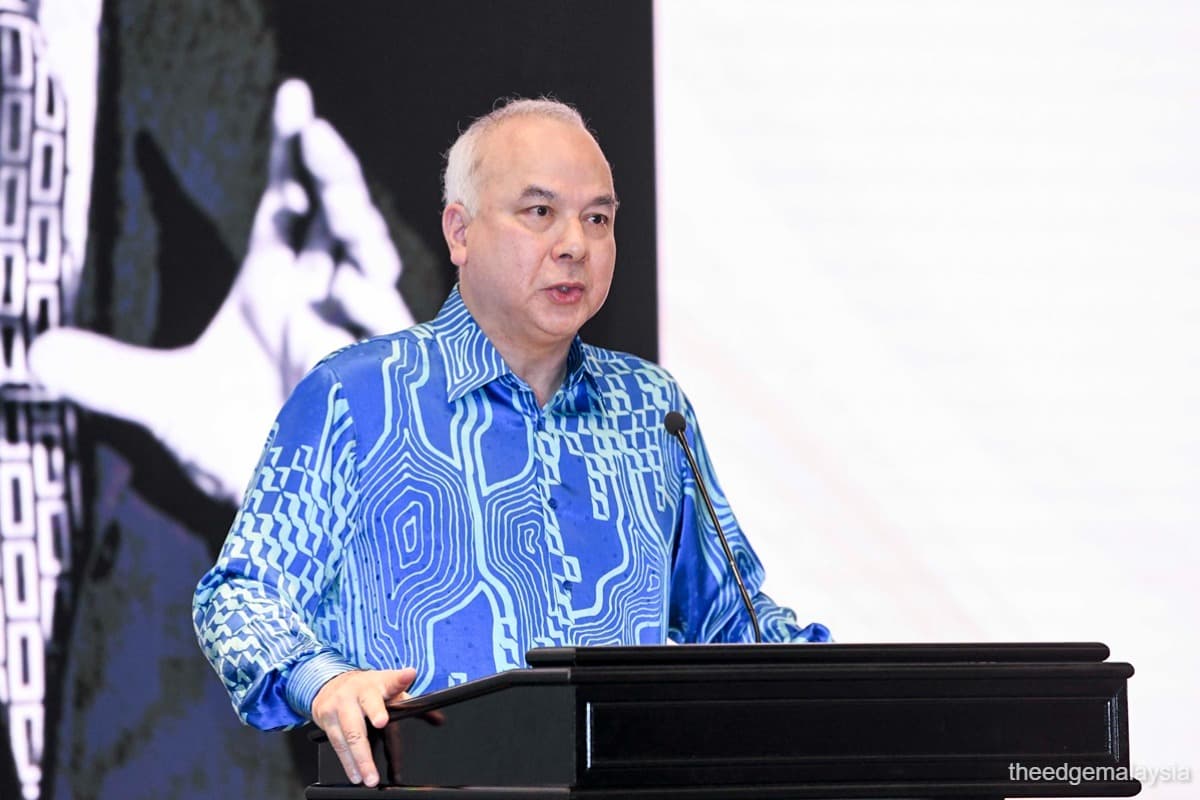
KUALA LUMPUR (Sept 5): The Sultan of Perak Sultan Nazrin Shah on Saturday emphasised the critical need to address environmental pollution and its link to cancer rates, warning that industrial growth must not outpace safeguards meant to protect public health.
Sultan Nazrin said that cancer prevention can no longer focus solely on smoking and lifestyle habits, but must honestly address industrial emissions, vehicle exhausts and water contamination.
The Sultan said pollution had been linked to several types of cancer, including childhood leukaemia as well as lung, bladder and breast cancers among adults exposed to pollutants over long periods.
“So when we talk about preventing cancer, we must also speak honestly about what our factories release, what our vehicles put into our streets, and what we allow to settle into the lungs of a sleeping child,” the Ruler said.
Sultan Nazrin said this at the opening of the National Cancer Congress Malaysia (NCCM) 2026, themed “Bridging Gaps, Building Hope, Empowering Lives”, which was jointly organised by the National Cancer Society of Malaysia (NCSM) and Sunway University at Bandar Sunway on Saturday.
Sultan Nazrin said Malaysia should take heed of the emergence of so-called “cancer alleys” in various parts of the world, where intensive industrial activity has expanded faster than safeguards to protect nearby communities.
The Sultan said such areas had been identified in countries including the US, South Africa, China and along the Niger Delta in West Africa, adding that the issue was not unique to any particular country or industry.
“This is not a problem unique to any one country or industry, and it is a pattern we in Malaysia, with our own industrial corridors and our own rivers running past factories and plantations, would be wise to take as a caution rather than a distant headline,” the Ruler said.
The Sultan also cited London’s Ultra Low Emission Zone as an example of how government intervention could produce tangible improvements in public health, noting that research had found significant recovery in children’s lung function following a reduction in toxic vehicle emissions.
Sultan Nazrin said the experience demonstrated that pollution and disease should not simply be regarded as unavoidable consequences of modern life, as environmental risks could be reduced through policy choices and collective action.
“If a city as large as London can restore its children’s lungs within five years, then Malaysia, blessed with rainforest, coastline, and industries still young enough to build cleanly from the start, can protect the lungs and the futures of our own children,” the Ruler said.
Sultan Nazrin also commended homegrown scientific achievements, notably Programme ROSE (Removing Obstacles to Cervical Screening), developed by Universiti Malaya researchers led by Professor Dr Woo Yin Ling alongside Australian collaborators, as an example of Malaysian innovation in cancer prevention.
The Sultan said early detection should be made accessible to all Malaysians, describing a national screening programme that reached plantation workers as easily as company executives as “one of the best investments” in the well-being of the people.
The Sultan also stressed that Malaysia’s response to cancer should not be measured solely through survival statistics, but also through the dignity, support and quality of life provided to patients and their caregivers.
At the same time, Sultan Nazrin called on scientists and doctors to continue conducting rigorous research that could benefit patients nationwide, policymakers to incorporate evidence and patients’ experiences into the national cancer strategy, and Malaysians to take greater responsibility for cancer prevention.
The Ruler added that no single hospital, ministry, university or congress could defeat cancer alone, stressing that collaboration was essential to advancing the fight against the disease.
Uploaded by Chng Shear Lane