

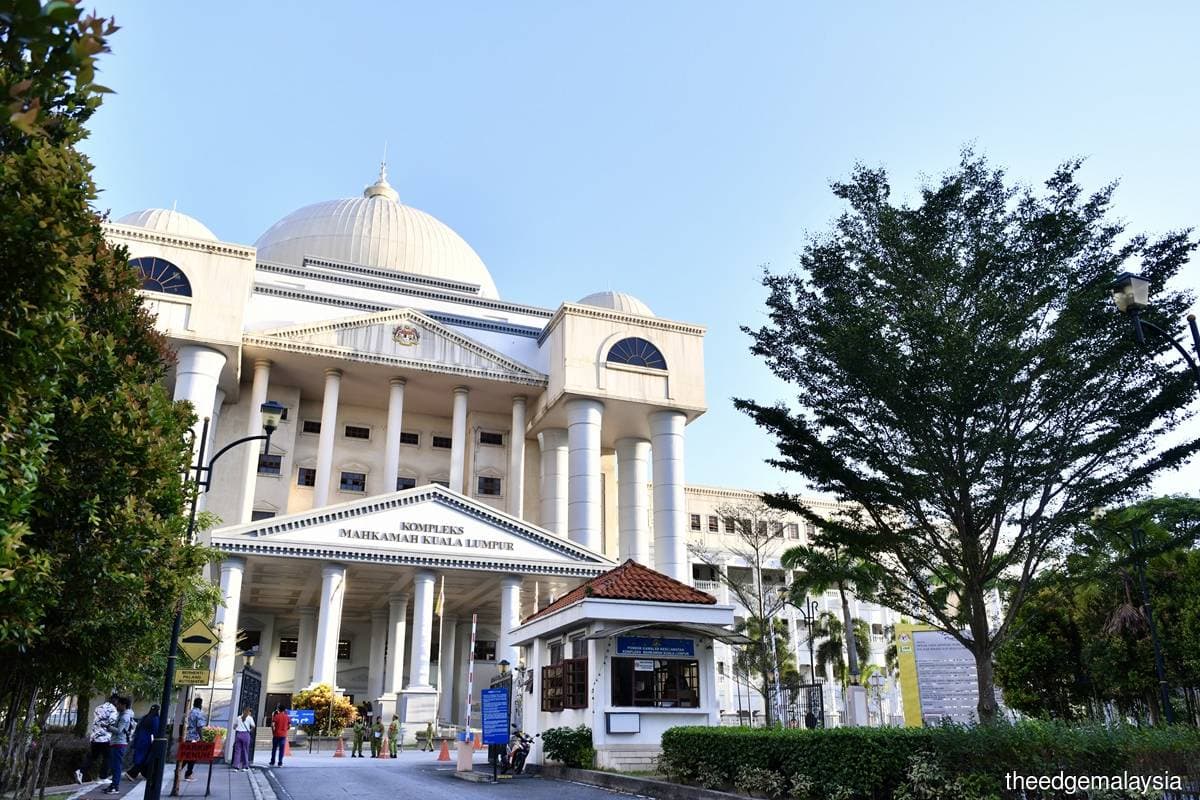
KUALA LUMPUR (Sept 4): The High Court on Friday has dismissed the challenge by two politicians, the Malaysian Bar, non-governmental organisation Bersih 2.0 and other civil society groups over the 2021 Covid emergency proclamation, as the court declined to make the declaratory reliefs sought by the applicants.
Court of Appeal judge Datuk Aliza Sulaiman, in her broad grounds delivered Friday afternoon, said this follows the revocation of the emergency made by the government in late-2021. Further, she said that despite questions that the revocation must be submitted to the Yang di-Pertuan Agong (YDPA) and Parliament, the constitutional timeline in Article 150 (7) of the Federal Constitution must be applied to the relevant instruments (of revocation).
The declaratory reliefs sought by the applicants is at the court's discretion.
“The respondents (the government) argued that these questions posed are academic, as state ordinances have ceased to operate.
“The legal and effective steps taken in 2021 were followed by parliamentary consideration. The court should not use the declaration to reopen the effect of parliamentary proceedings or pronounce upon the validity of advice that is given to the Yang di-Pertuan Agong.
“I am of the opinion that Article 150(3) and Article 150(7) require legal construction in an appropriate live case. In the present case however, the declarations sought (by the applicants) are tied to the past revocation, expiry, and parliamentary treatment of the state ordinances.
“It is unnecessary and inappropriate to decide the abstract — whether every act described by the parties in July and October of 2021 was a revocation and annulment, a cessation by operation of law, or some combination of these concepts. Such a conclusion would require a detailed examination of the legal form of past acts and of parliamentary proceedings without any presently operative relief,” Aliza added.
The judge said the declaratory relief sought would also be closely connected to the validity and continuation in force of the state ordinances under Article 150(8).
“Due to these reasons, the court dismisses all the applications, with no order as to costs,” Aliza said.
Article 150(8) of the Malaysian Federal Constitution is an ouster clause that prevents courts from reviewing a Proclamation of Emergency or any emergency ordinance.
Meanwhile, Article 150(3) concerns the need to bring the emergency proclamation to Parliament while Article 150(7) stipulates that any emergency ordinance or law made during a proclamation of emergency will automatically lapse and cease to have effect six months after the emergency ends.
Emergency announced in January 2021
The Yang di-Pertuan Agong had proclaimed the emergency on Jan 12, 2021, during the Covid-19 pandemic. On July 26, 2021, then de-facto law minister Datuk Seri Takiyuddin Hassan announced its revocation — effective July 21, 2021 — in Parliament, resulting in uproar among politicians, as even the then-YDPA questioned the procedure.
Following that, its revocation was formally made in Dewan Negara on Dec 8, 2021.
Despite this, parties which filed the challenge in 2021 questioned the procedure.
In the proceedings on Friday, the Malaysian Bar was represented by counsels Abdul Rashid Ismail and Gregory Das, while Pasir Gudang Member of Parliament Hassan Karim and Perak’s Tebing Tinggi assemblyman Abdul Aziz Bari were represented by Datuk Dr Gurdial Singh Nijar, Abdullah Abd Rahman and Abraham Au, while Bersih 2.0 and other civil society groups were represented by Messrs Amer Bon.
They had filed the judicial review and originating summons challenging the emergency proclamation. Initially Abdul Aziz had filed the challenge with Datuk Seri Salahuddin Ayub and Datuk Johari Abdul (now a Tan Sri).
However, following Salahuddin’s death in 2023 and Johari becoming the Dewan Rakyat Speaker in 2022, their names were dropped, leaving Abdul Aziz.
Federal counsel Zulkifli Sulaiman appeared for then-prime minister Tan Sri Muhyiddin Yassin and the government.
These applications were first filed in 2021. Previously, both the High Court and the Court of Appeal had dismissed them.
But in 2024, the Federal Court cleared the path for these challenges. In June 2024, the apex court ruled that the Malaysian Bar and Bersih’s challenges must be heard by the High Court. This was followed in July 2024 by a five-member panel led by then-chief justice Tun Tengku Maimun Tuan Mat, which granted leave to the lawmakers — Hassan and Abdul Aziz — remitting their case back to the High Court for a full hearing on the merits.
The case had been pending since January this year.