

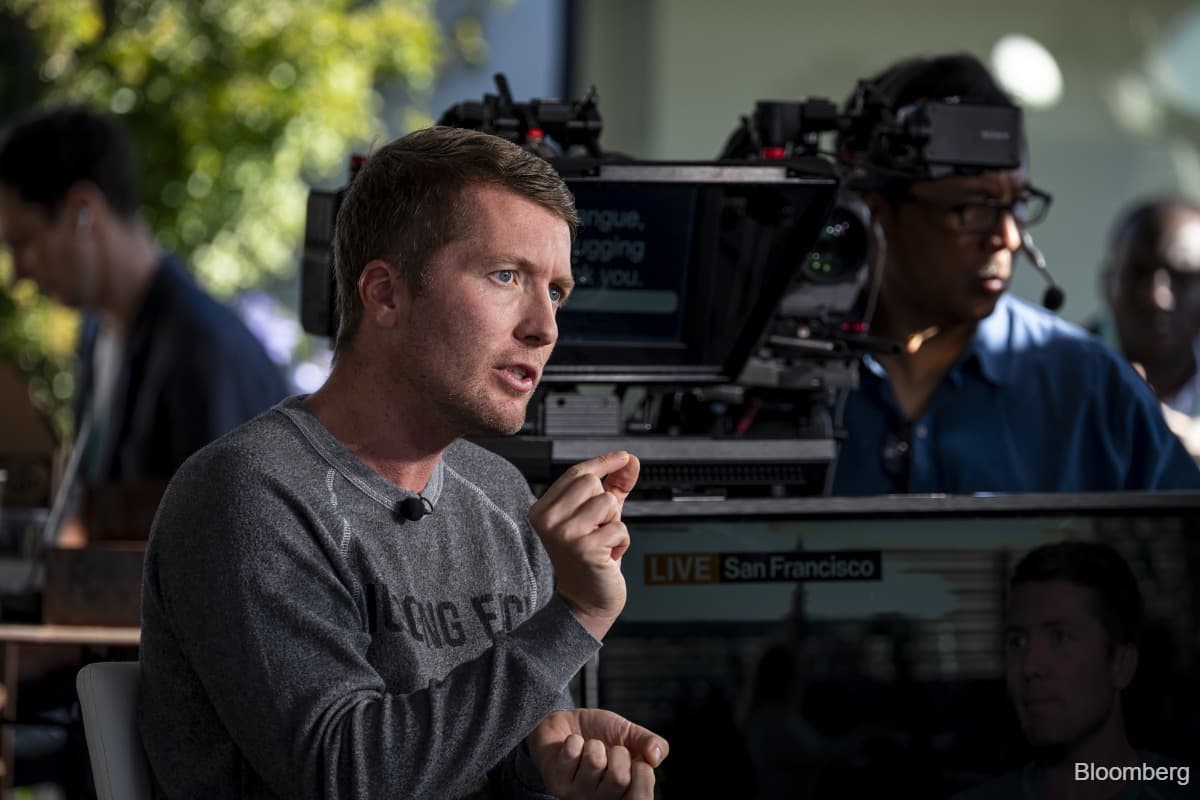
(Sept 4): Hugging Face’s three French founders have become billionaires after Nvidia Corp agreed to acquire the artificial intelligence (AI) platform, capping a decade-long transformation from a startup originally built around a very different idea.
Clement “Clem” Delangue, 38, Julien Chaumond, 42, and Thomas Wolf, 41, will each have a net worth of about US$1.8 billion (RM7.28 billion), according to the Bloomberg Billionaires Index, which is valuing their fortunes for the first time. Nvidia agreed to buy the startup in a transaction valued at roughly US$13 billion.
A spokesperson for Brooklyn-based Hugging Face, which began in 2016 in Paris, didn’t respond to requests for comment about the founders’ wealth.
The deal — expected to close in the first half of 2027 — marks the biggest move yet by Nvidia chief executive officer Jensen Huang to broaden the uptake of AI and extend his customer range. It’s also a big test for Hugging Face, which has long backed keeping the industry open and decentralised, boasting it’s “on a mission to democratize good machine learning” and describing itself as being like an AI library.
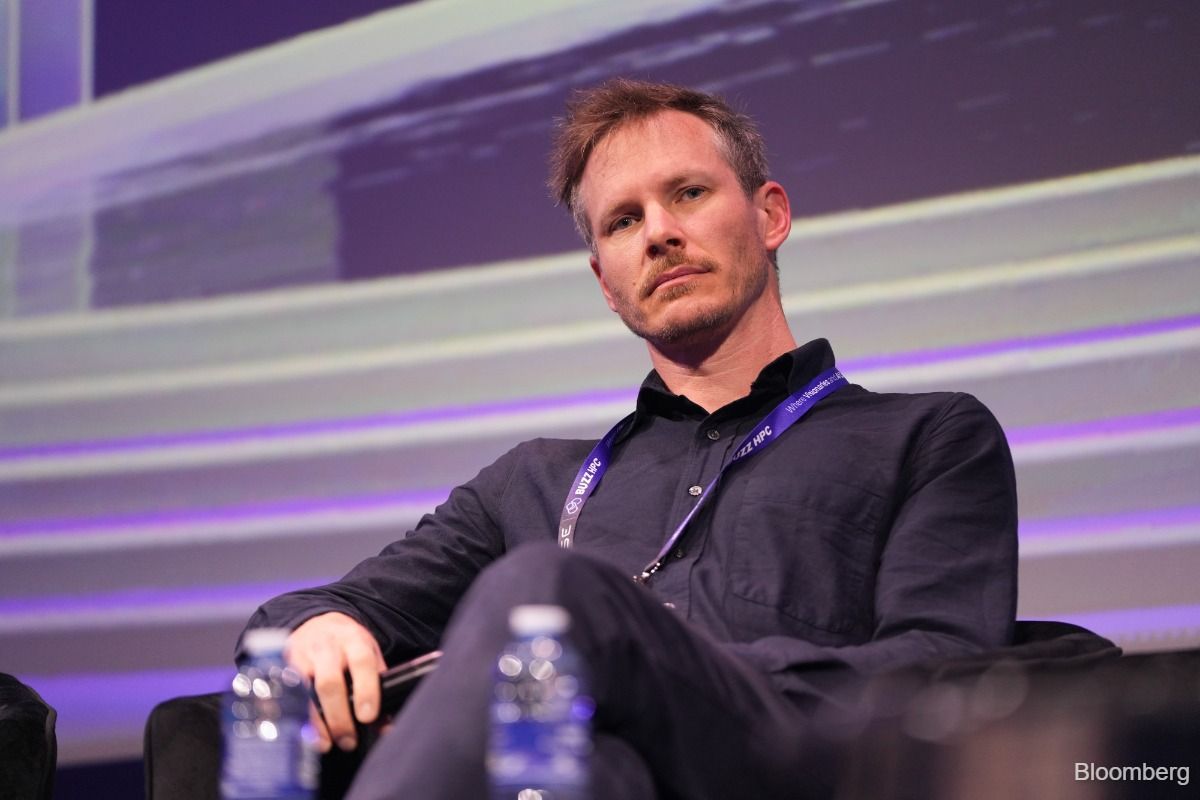
“I am honoured that Clem came to me as he considered the next chapter of Hugging Face and believed Nvidia would be a great home for the company,” Huang said in a blog post announcing the deal.
Hugging Face operates a platform for sharing AI models that can be used freely by others. It was at the centre of a cybersecurity incident this year when it was inadvertently hacked by a model being tested by OpenAI.
Under the deal unveiled on Thursday, Nvidia pledged Hugging Face will remain an open platform, with users able to upload and download AI models and datasets of their choosing. The co-founders will stay at the company under a six-year retention agreement, Wolf said in an interview on Bloomberg TV, adding that the hack was one driver in the company’s decision to sell.
“Either we raise more money and double down or we find someone who shares our values and our mission deeply, and we partner with them,” Wolf said.
Open source
The three co-founders have made public accessibility to cheaper, open-source AI models their mantra, even organising a street march in San Francisco earlier this year in support of the principle.
“I think it would be a really great world if we can enable, empower more people to be AI builders because it means that we won’t outsource that to just a couple of labs in Silicon Valley,” Delangue, who is CEO, said earlier this year at a conference.
The Hugging Face trio join the three founders of Paris-based Mistral AI as French nationals who have become billionaires through their stakes in AI and computing companies. Also included in the cohort are Olivier Pomel and Alexis Le-Quoc, founders of New York-based Datadog Inc, who have offloaded about US$1.4 billion in shares apiece over recent years.
Their success has sparked some soul-searching in France because in the case of Datadog and Hugging Face it has come outside the country. French President Emmanuel Macron has made turning the nation into a serious global AI competitor a policy priority. While illustrating prowess in engineering talent, the two companies have also shown the advantages of the US’ extensive capital markets in fuelling tech company growth and wealth creation.
Despite having headquarters in New York and living in Miami, Delangue has said the company considers itself Franco-American and is “strongly attached to France”, where most of its employees are based.
His first startup experience was with Moodstocks, a developer of machine-learning based on image recognition technology, that was bought by Google, according to his LinkedIn profile. He attended universities in Madrid, Dublin and Bangalore before going to a French business school and taking an online introduction to computer science course at Stanford University, where co-founder Chaumond had completed some of his studies.
They started their company a decade ago, choosing Hugging Face as a “temporary” name after an emoji, and later joining billionaire Xavier Niel’s startup campus Station F, located in a redeveloped, century-old freight station in Paris. In posts on LinkedIn, Station F showed a plaque in their honour and said the three first arrived in 2017 to develop a chatbot for teenagers, then pivoted, began raising money, and have become a “titan of an exit”.
Singing robot
Delangue has said they honed in on the idea of creating a platform for open-source models after co-founder Wolf spent a weekend re-packaging Google’s “Bert” model and then putting it online to great acclaim.
As chief science officer, Netherlands-based Wolf was one of the drivers behind Hugging Face’s release last month of a singing US$400 bipedal robot called Microduck, which he has said is aimed at showing AI is “very accessible” and not expensive or scary. The company’s foray into robotics came after it took over a French developer called Pollen Robotics.
Like Chaumond, Wolf attended France’s elite engineering school Ecole Polytechnique. He then completed a PhD in physics and a law degree in Paris before practicing for six years as a European patent lawyer with clients including a roster of machine-learning startups.
Chaumond, who is chief technology officer and based in Brooklyn, counts himself among the co-founders of reading startup Glose, which was bought by Medium. On Thursday he posted what he said was a personal take on the deal, saying that AI is “at an inflection point”, where open source can become less relevant if big, closed labs run away with it.
“Given Jensen’s stance on open source AI and how he stepped up to defend it when it was under threat, Nvidia was the only partner we truly considered,” Chaumond wrote.
Uploaded by Felyx Teoh