

(Sept 3): For the vast majority of investors, the S&P 500 is the sun around which their portfolio revolves. The funds that track the index — VOO, IVV, SPY and SPYM — give and sustain life.
Their diversification is legendary, competition among issuers has kept fees low and, obviously, the returns are pretty darn good.
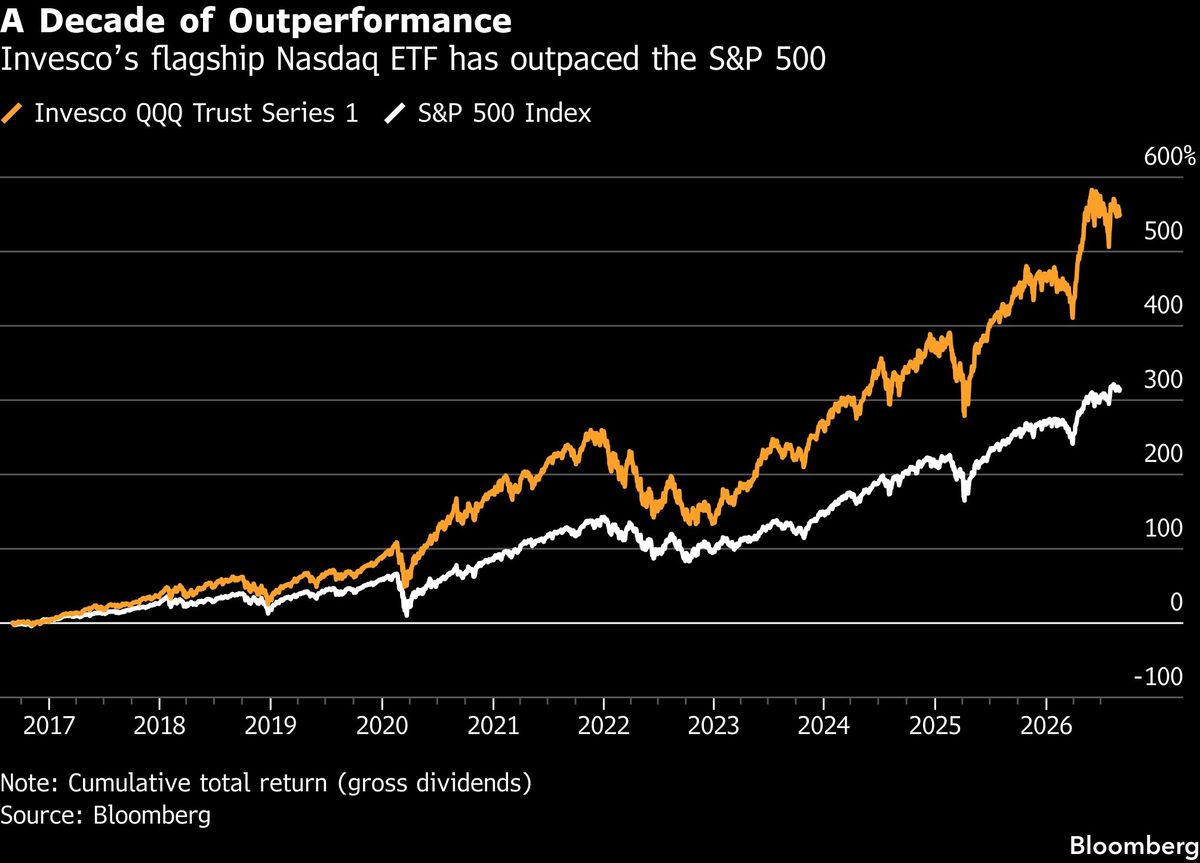
And yet the S&P 500’s performance can almost look a little quaint by some lights. One particularly noteworthy constellation is Invesco’s QQQ Trust Series 1, an exchange-traded fund (ETF) that tracks the Nasdaq 100 Index. Thanks to its concentrated exposure to some of America’s biggest tech companies, the “Qs” — as the fund is known to its many fans — has delivered remarkable outperformance: about a 550% total return over the past decade, compared with 315% for the S&P 500.
For years, Invesco had this corner of the ETF universe largely to itself. Now BlackRock and State Street have launched cheaper versions tracking the same index. Bloomberg Money spoke with Eric Balchunas, a senior ETF analyst with Bloomberg Intelligence, about the competition for one of investing’s great success stories — and what it means for investors.
What makes the “Qs” such an investing blockbuster?
In a word: returns. The fund has beaten 99.8% of active managers in the past 15 years, not to mention the vast majority of other indexes. Yet there’s so much more to unpack.
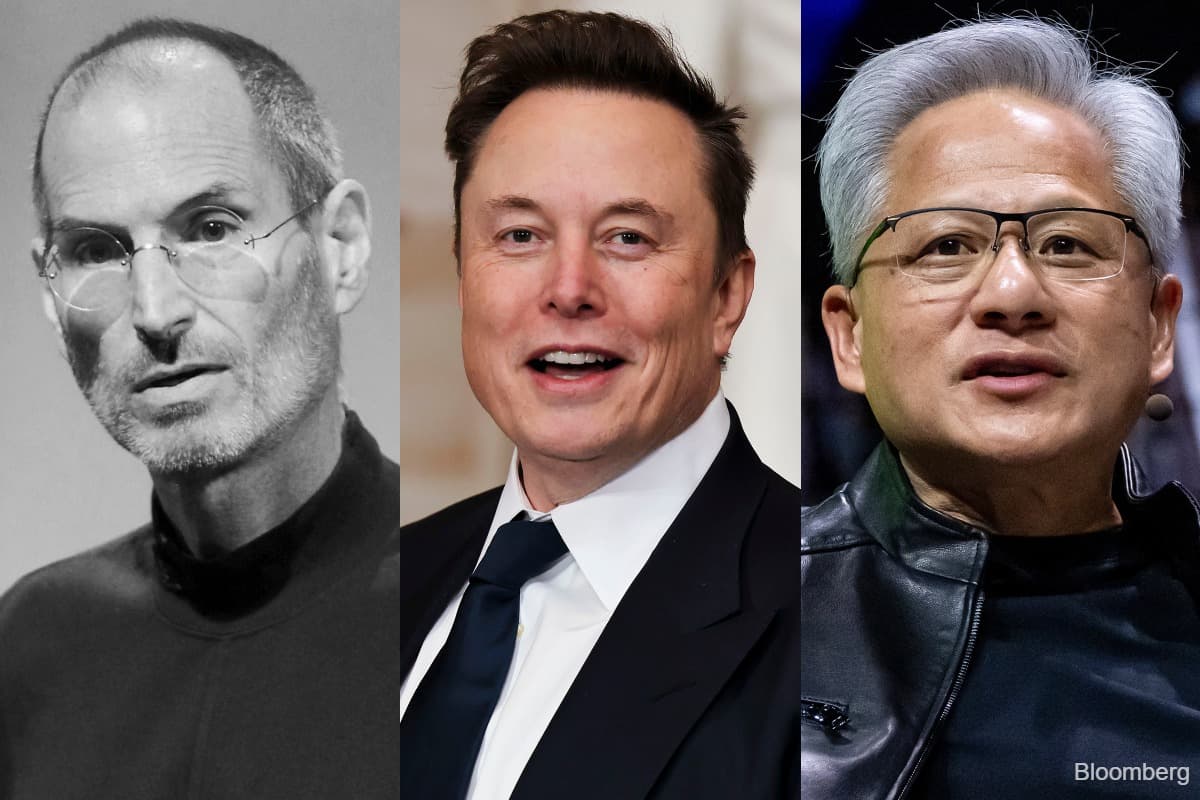
On paper, the index simply tracks the 100 largest non-financial companies listed on Nasdaq. Of course, that includes some of the world’s most dynamic companies — the likes of Nvidia, Apple, Microsoft, Amazon and Tesla. This cohort is the tip of the spear for US innovation, and it’s really been that way since Steve Jobs decided to list Apple’s IPO on the Nasdaq in 1980. This Steve Jobs Effect, as I call it, is arguably the secret to the index’s success. So many other visionaries who have wanted to “think different” have followed his lead and ended up listing with Nasdaq.
As a result, the Nasdaq 100 is, truly, one of the greatest curiosities in all of investing. It isn’t tracking market “beta” like the S&P 500 Index — instead, inclusion is largely determined by where a company chooses to list its shares. And despite everybody calling it a tech play, it isn’t a tech index either — half the stocks in the index are actually non-tech companies. All of which makes categorization slightly challenging for analysts like myself.
QQQ’s success has turned it into a target. What’s the competition look like? And what took so long?
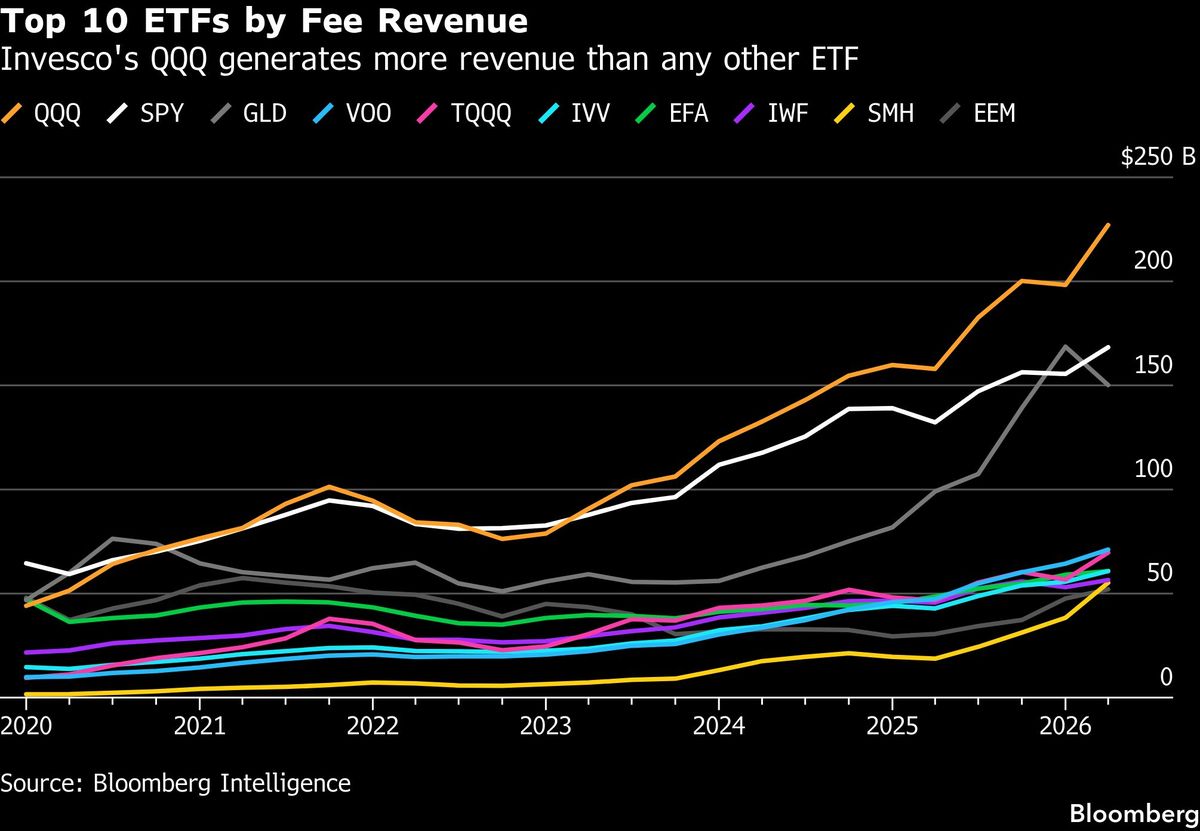
Invesco has had an exclusive licensing agreement with Nasdaq for more than two decades, but that ended in April. Other firms moved to license the index, with BlackRock and State Street becoming the first issuers to capitalise on the opportunity. It’s not hard to understand why: QQQ generates more revenue than any other ETF. This is a business, after all, and issuers are always looking for ways to grow assets and revenue.
The timing was especially fortuitous. Unlike the S&P 500, Nasdaq decided to include SpaceX in its index soon after the company went public. So shortly after the largest IPO in history, BlackRock and State Street were able to roll out product suites that offered exposure to both the Nasdaq 100 and SpaceX.
Does all this competition take away some of the magic?
Perhaps down the road. QQQ is so well-known and so liquid that Invesco has nothing to worry about in the short or even medium term. Over the long term, however, it could see its share of assets decline. We’ve seen this story play out many times before in the ETF market.
BlackRock and State Street not only have huge distribution capabilities, but they’re also offering the exposure for a lower fee. And historically, lower fees have an impeccable track record of moving the needle with flows.
How meaningful are the differences between these cheaper options? Is cheaper always better?
The differences aren’t drastic. Traders are likely to stick with QQQ because of its liquidity. All else being equal, however, long-term investors tend to gravitate towards the cheaper option — and that will likely erode some of QQQ’s market share over time.
Currently, QQQ charges 0.18%, while BlackRock’s iShares Nasdaq 100 ETF (IQQ) and State Street’s SPDR Portfolio Nasdaq 100 ETF (QNDX) both charge 0.1%. Over a year or two, that difference is microscopic. But over five or 10 years — let alone 30 — those savings can really start to add up, especially when a lot of money is invested.
This is why the longer an investor’s horizon, the more expense the ratio matters; the shorter the horizon, the more liquidity matters.
What other ways are investors playing the Qs?
Invesco launched a “mini-me” version of the Qs a few years ago, the Invesco Nasdaq 100 ETF (QQQM), which charges 0.15%. It did this mainly to appeal to financial advisors seeking lower fees. The fund has since gathered US$100 billion (RM404.18 billion) in assets — and it’s still only three basis points cheaper than QQQ. That fact alone suggests just how much interest investors could have in BlackRock and State Street’s funds, which are eight basis points cheaper.
Invesco has also launched some “sequels” that complement QQQ but arguably compete with it, too. The Invesco Nasdaq Next Gen 100 ETF (QQQJ), for example, tracks the 100 stocks that are next in line to join the Nasdaq 100 — the on-deck circle, if you will. There’s also the Invesco Nasdaq Future Gen 200 ETF (QQQS), which tracks Nasdaq stocks outside the top 200. So an investor could own the whole Nasdaq enchilada with QQQ, QQQJ and QQQS.
Weber and Balchunas co-host the Trillions podcast. Money goes where it’s treated best. That simple truth is one reason trillions of dollars are flowing into exchange-traded funds, the low-cost investment vehicles that have quietly transformed investing. From stocks and bonds to gold and bitcoin, ETFs let investors access nearly every corner of the market. Trillions demystifies them — and hopefully delights you in the process.
Uploaded by Felyx Teoh