


This article first appeared in City & Country, The Edge Malaysia Weekly on September 7, 2026 - September 13, 2026
AmFIRST Real Estate Investment Trust (REIT) (KL:AMFIRST) has been under the radar over the past decade. Its unit price has stagnated, dividends have thinned and no new acquisitions have been made.
“We have been a little bit quiet,” says AmFIRST REIT CEO Chong Hong Chuon in an exclusive interview with City & Country. “Our asset portfolio has not generated enough yield for us to pay a dividend. Because of the low dividend, the share price has come down.”
The fortunes of AmFIRST REIT, a predominantly office REIT that has been listed on Bursa Malaysia’s Main Market since Dec 21, 2006, can be attributed to the performance of the office sector.
“The subsector has gone through a different cycle altogether compared to when we started. The commercial office suite was the sought-after asset class that was being injected into the REIT. After 10 to 15 years, the subsector went through a different sub-cycle, where it experienced a glut in supply. People were saying there were empty offices and more new supply was coming in, rental was difficult to grow with occupancy still under pressure. So, all these issues were affecting us,” says Chong.
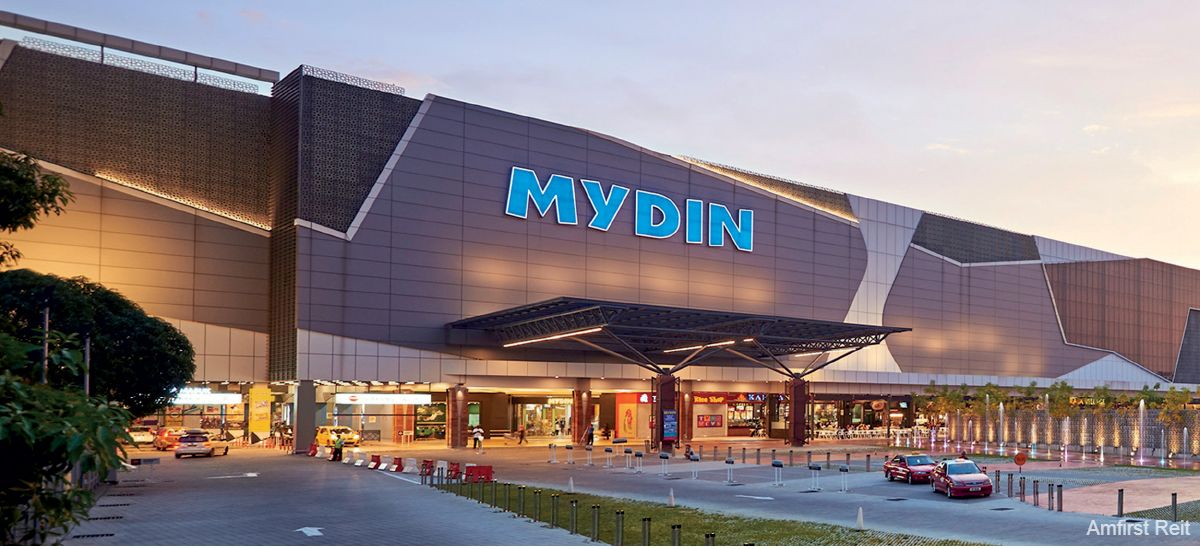
Its last asset acquisition — Mydin Hypermall in Bukit Mertajam, Penang — took place more than a decade ago. According to AmFIRST REIT chairman Azlan Baqee Abdullah, it has not made any acquisition since 2015 as the REIT’s price has been falling.
“When the share price dropped, it was a bit difficult to do rights issues because there would be a dilution effect. Expansion was not the best option at the time because that would penalise the shareholders. We always try to reward shareholders and avoid dangerous routes for them. At that time, what was more important was to improve our yields. Unfortunately, it came with a lot of crises,” says Azlan.
“There was the office glut; then came Covid. There was a bit of a digitalisation effect where people’s shopping was affected by new models of marketing. They go online and that affects a bit of the shopping market. So we lost a lot of income from the car park [segment].
“Car parks were our biggest earner at the time. Because people didn’t come, car park income dropped severely. So just to buy another asset was not a good option,” he explains.
Post-pandemic, the management looked at improving its income. “When we do acquisitions, we do it either through reducing our gearing first or by raising funds. Because raising funds wasn’t the best option at the time, we looked at our gearing and as there was very little headroom, the next best step was to divest assets that were dragging us down.”
Towards that end, AmFIRST REIT underwent a portfolio optimisation process by divesting lower-yielding and non-core assets. It disposed of AmBank Group Leadership Centre (AGCL) in 2015 and Menara AmFIRST in 2022. Now, management is on a path to turn the REIT around by improving its fundamentals.
Strengthening fundamentals
Aside from divesting assets, strengthening the REIT’s fundamentals has been a priority.
“Zooming in on the last two years, the team has been focused on getting the house in order,” Chong says.
He adds that the REIT has been trying to improve occupancy at assets with low occupancy rates. In line with that, it has signed tenancies covering 180,000 sq ft, which provides an additional income of RM6.7 million.
Another initiative was diversifying its income stream beyond traditional office leasing and car park income into the co-working space.
According to AmFIRST REIT deputy CEO and head of investment Zuhairy Md Isa, co-working operator International Workplace Group (IWG) manages the co-working spaces. IWG will receive a management fee based on an agreed percentage from revenue generated.
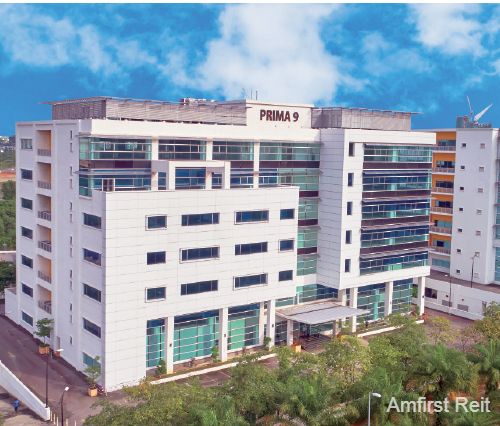
IWG currently operates the Regus co-working space at Menara Summit (part of The Summit Subang USJ mixed-use development) in Subang Jaya and Prima 9 in Cyberjaya as well as the HQ co-working space at Menara AmBank in Kuala Lumpur.
The Regus brand caters to traditional corporate teams and professionals while HQ focuses on cost-conscious clients such as freelancers.
“These co-working spaces [resulted] in quite a good new income for us. The returns in terms of the ROI (return on investment) is over 30%, when we look back on the whole year. These are tenants that are flexible and short term, and that also enhances our revenue. It gives us high occupancy, high rent and high car park income,” Chong says.
That improvement can be seen in its latest full-year financial performance. For FY2026 ended March 31, 2026, the REIT posted a 5% year-on-year (y-o-y) increase in net property income to RM64.1 million, from RM61.04 million, while revenue rose 5.2% y-o-y to RM110.26 million. Full-year distribution per unit came in at 2.87 sen, up by 19.6% from 2.4 sen a year earlier, which management attributes to organic occupancy gains, the new co-working income stream and tight cost discipline in the face of rising utility tariffs, the minimum wage increase and the implementation of sales and service tax.
AmFIRST REIT has also embarked on asset enhancement initiatives at its ageing assets. Renovations on The Summit Hotel in Subang Jaya started in May this year.
“We tried to sell the property because it was a non-core asset. Unfortunately, we couldn’t find a buyer, so we decided to extract its value based on what the asset has. We found a new operator that was willing to pay a rent of RM600,000 per month while we put in a RM45 million capital expenditure [for the refurbishment of the hotel].”
The renovations, which are taking place in two phases, are expected to be fully completed by January 2027. The first phase is slated for completion by next month. The operator is Mana-Mana Holdings Sdn Bhd, a unit of Exsim Hospitality Bhd (KL:EXSIMHB). Once completed, the hotel will be renamed Portrait Hotel Subang Jaya.
Chong says the renovation focuses on beautifying the common areas and hotel rooms to meet current requirements and trends.
According to Zuhairy, the hotel will still be positioned as a city/business hotel. “It’s still a city/business hotel because we have a sizeable ballroom and function room that can accommodate up to 1,000 people. We will focus more on the MICE (Meetings, Incentives, Conferences and Exhibitions) sector.”
As for the other components of the mixed-use development, Zuhairy says management is introducing another co-working space, which is the HQ co-working centre in Menara Summit, while community activities have been conducted at the mall to encourage a more lively atmosphere.
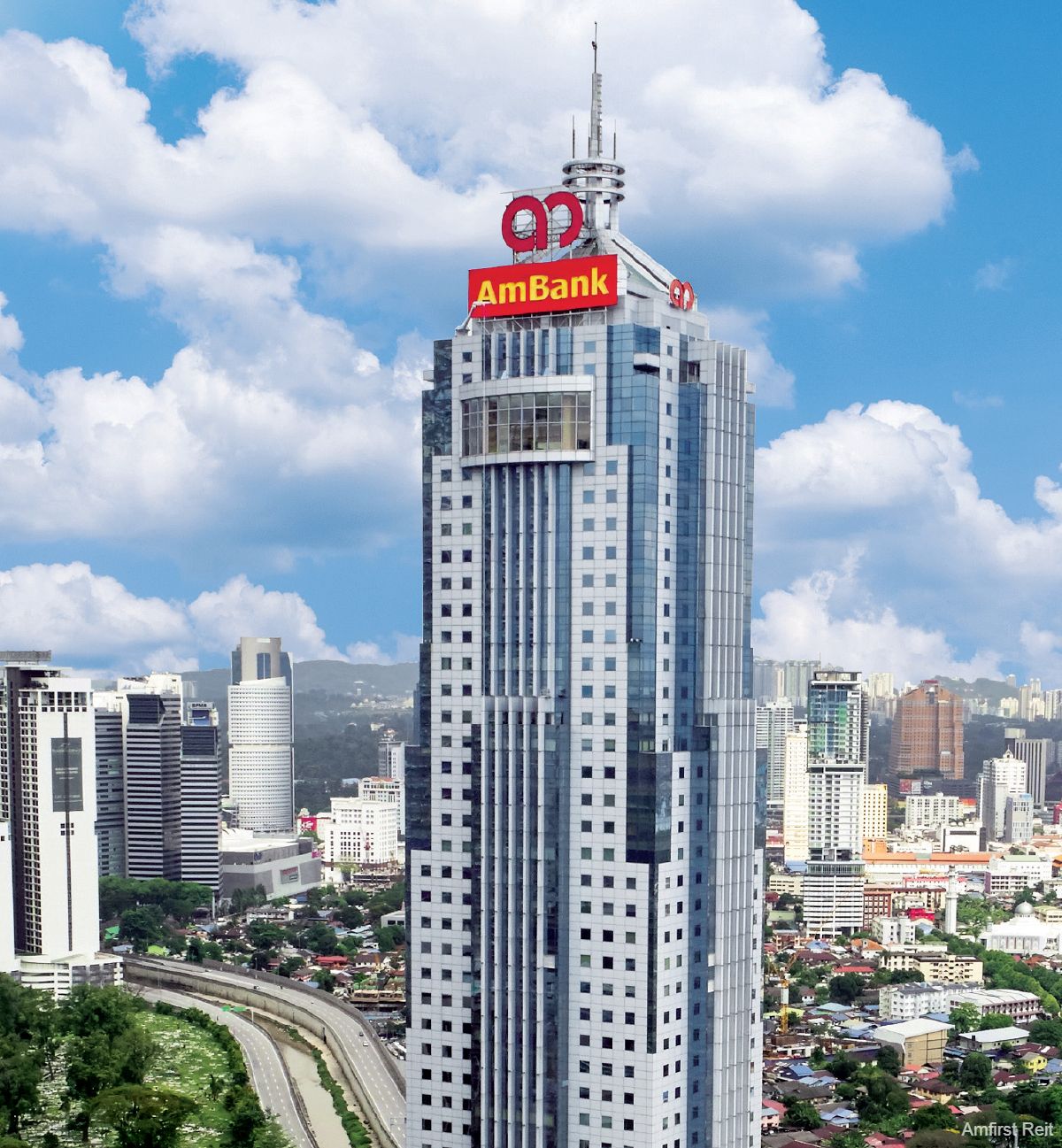
Another recovery effort by the REIT is to identify low-yield, low-occupancy assets for divestment. Following the sale of AGCL and Menara AmFIRST, the REIT announced in June that it was selling Menara AmBank for RM331 million to AMMB Holdings Bhd (KL:AMBANK).
The 46-storey freehold office tower has a net lettable area of 453,419 sq ft and an occupancy rate of 77.8%. AmBank is its anchor tenant, occupying 65.6% of the space.
Chong explains, “This asset has given us a yield that is below the borrowing cost. If you look at the yield alone, it’s always below borrowing, which is a negative spread carry asset. So, if you sell it, you just pare down your borrowings, then you get a credit effect. Mathematically, financially, it’s positive. But of course, our story doesn’t end at just paying the borrowings.”
He says the sale is also expected to result in a capital gain of roughly RM51.1 million with proceeds to go towards debt repayment.
If the sale goes through, AmFIRST REIT’s gearing could potentially decrease from 46.6% to 33.9%, creating more headroom for it to consider diversifying into new asset classes.
“[We will] take this opportunity, use the substantial headroom that we created to buy meaningful assets for us to pursue our diversification strategy,” Chong says.
The sale is pending approval from shareholders at its extraordinary general meeting on Sept 21.
What’s next for the REIT?
AmFIRST REIT’s asset portfolio is currently made up of office (65%), retail (25%) and hotel (5%). It includes Bangunan AmBank Group, Menara AmBank, Wisma AmFIRST, Prima 9, Prima 10, Jaya 99 (office and mall), Mydin Hypermarket and The Summit Subang USJ (office, hotel and mall).
As part of its diversification strategy, Chong says management is looking to reduce its exposure in the office market. “To have meaningful diversification, the new asset class [which could be hospitals, industrial or education] probably needs [to be] about 20% to 30%. After the disposal [of Menara AmBank], the percentage of office [in our portfolio] will reduce from 65% to 45%. Then we can use 25% of the proceeds from the divestment of Menara AmBank to invest in a new asset class, as part of our strategy to diversify into defensive, higher-yielding assets.”
Rather than chasing the trendiest asset class currently, Azlan says the trust’s diversification strategy will be anchored by “good yield, stable, low risk” guidelines.
“That’s what a REIT is supposed to be about. We do not want to mess this with a lot of storylines. You can create a nice storyline about being some kind of specialist REIT, but at the end of the day, it’s about whether it provides a good, long-term yield. There are a lot of new asset classes we haven’t tested for resilience. People talk about data centres, and we’re studying it, but it’s not based on a storyline. If it meets the criteria, then good. It’s not a certain class of assets that attracts us. It’s still the reliability of the asset to produce good yield and low risk to our shareholders. That’s the main consideration,” he says.
Chong says the REIT will take a selective approach as it searches for a new asset class to venture into.
“Our chairman said we have to be very careful of the next [acquisition] because everybody will look [at] us as it will be our first acquisition after so many years. The next acquisition will set our future direction and the standards. So it’s important to do it very diligently and selectively,” he adds.
Save by subscribing to us for your print and/or digital copy.
P/S: The Edge is also available on Apple's App Store and Android's Google Play.