

BEIJING (Sept 3): As China learns to live on less fuel since the Iran war, its carbon emissions are falling, a new analysis showed on Thursday, with researchers saying a structural shift towards electrification and cleaner transport was creating the conditions for emissions' sustained decline.
China's carbon dioxide emissions shrank by 1% year-on-year in the second quarter of 2026, driven by a 9% decrease in oil consumption as consumers chose cleaner and cheaper ways to get around, according to a Centre for Research on Energy and Clean Air (CREA) analysis for Carbon Brief.
"The rise in oil prices has caused a stronger shift in China's transportation sector than anyone anticipated, with EV deployment and use accelerating from an already high base," the analysis said. "This trend is unlikely to be reversed."
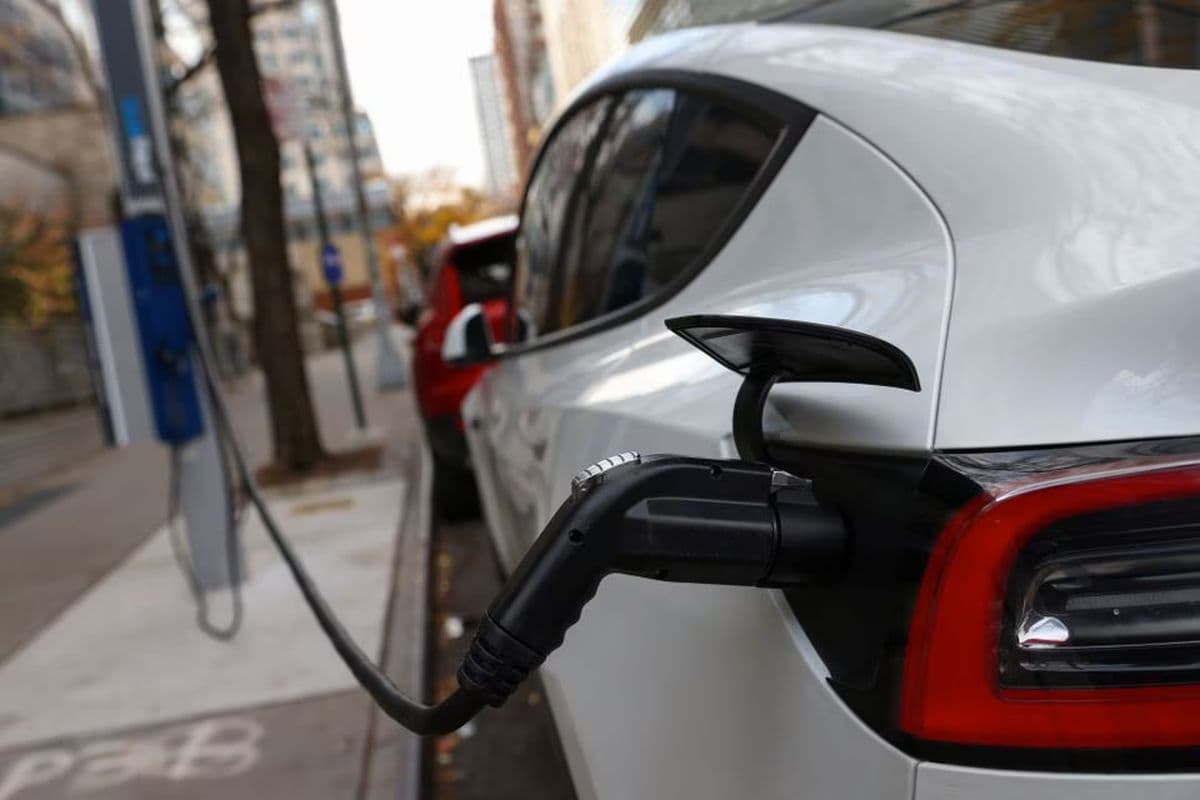
Electric vehicles alone displaced 36 million tons of oil in the first half of the year — more than the entire UK consumes in six months — accounting for about one-third of the decline in oil demand.
"The shift to electric vehicles, rail public transportation and other clean transportation, rather than a fall in mobility, played the key role in reducing oil consumption," the report said.
The pace of oil displacement accelerated sharply in the second quarter, with electric vehicles replacing 19 million metric tons, up 50% year-on-year.
Electric trucks were the fastest-growing source of oil displacement, with trucks' alternative fuel use jumping 90% on the year in January-June.
While China's emissions have fallen before — they were down 0.3% in 2025 in the first annual drop since 2022, according to CREA — the second quarter marked the first time that lower use of oil, rather than coal, brought emissions down. The decrease also happened despite a 3% increase in power sector emissions as the industry used more coal.
China is the world's largest emitter of carbon dioxide and has taken a prominent role in climate diplomacy since the US, currently the second largest emitter but the largest in historic terms, abandoned the landmark international Paris Agreement to limit global warming.
China's emissions could fall in 2026
CREA estimated that lower oil use helped China avoid 35 million tons of carbon dioxide emissions in the second quarter, or 1.3% of total emissions during the period, even after taking into account emissions from electric vehicle charging.
Slower growth in the chemical industry and a shift in the construction and mining sectors, which swapped out diesel equipment for electric, also contributed to the drop in oil demand.
Emissions were still up slightly over the first half of the year, which included the two months before the Iran war began in late February, pushing up crude prices and reducing China's oil consumption.
But they are on track to fall over the full year given shrinking oil demand, a property market slowdown and slower growth in the coal to chemicals industry, the analysis found.
Even though coal to chemicals companies have seen their profits boom since the Strait of Hormuz blockade, output was already running near full capacity and has little room to increase further.
The increase in power sector emissions could also be reversed in the second half of the year if China gets curtailment, or wastage of renewable power, under control and wind conditions improve, the analysis said.
Uploaded by Lam Seng Fatt