

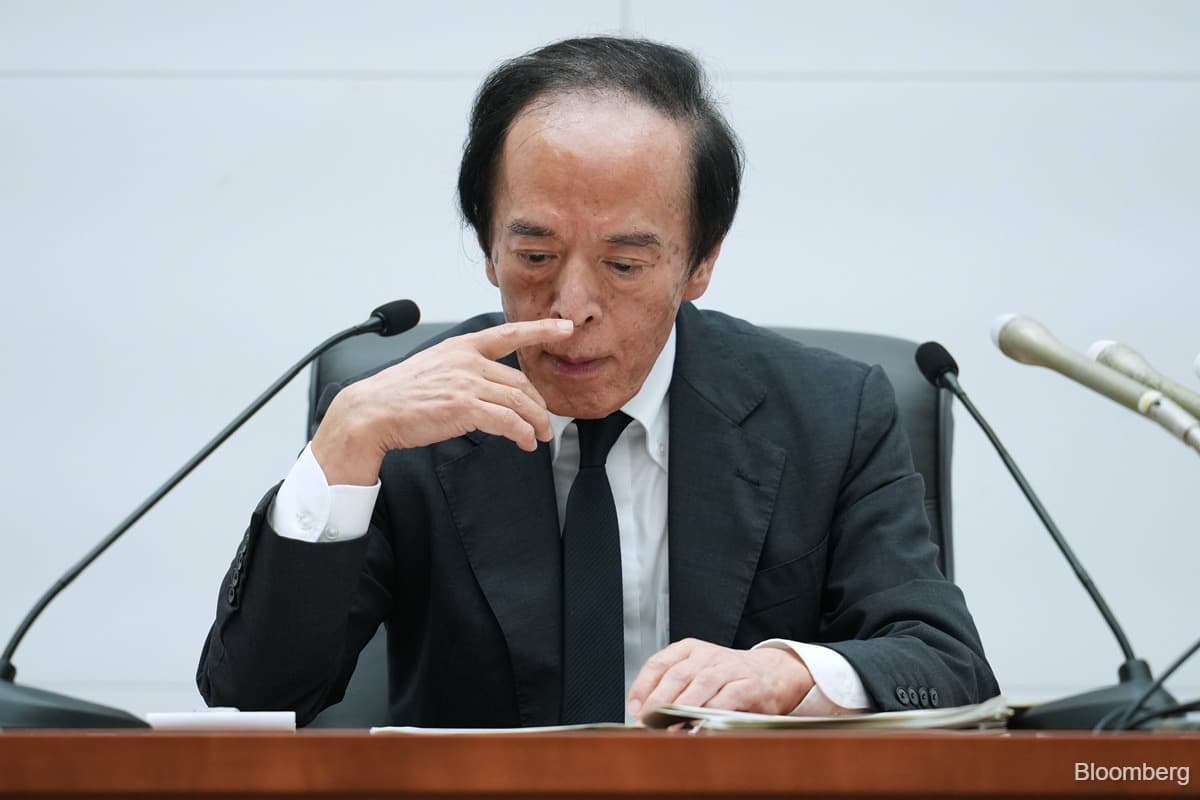
BOJ officials will mull an increase in the policy rate from 1% at the two-day meeting ending on Sept 18, according to the people. They continue to see inflation risks as skewed to the upside, with service prices and ongoing weakness in the currency strengthening the case for action, the people said.
For now, the officials see economic developments broadly in line with their outlook, the people said. There has been no major change in the situation that would require opting for a larger move of half a percentage point, one of the people said, playing down the likelihood of a jumbo hike.
The yen weakened a tad in brisk trade after the news, as some traders had apparently been positioned for a larger move following hawkish comments from a board member earlier this week. The yen was trading around 157.08 per dollar late Thursday afternoon in Tokyo.
The central bank is also aware of the potential need for further rate increases beyond September and is open to adjusting the pace of rate hikes flexibly depending on economic developments and upside inflation risks, the people said. That means the BOJ isn’t ruling out a faster pace of hikes, should conditions require it.
The BOJ decision will come under unusually intense scrutiny from Washington. US Treasury Secretary Scott Bessent repeatedly made it clear that he wants higher Japanese rates in a series of interviews and statements during a Group of 20 meeting of finance ministers earlier this week.
During a bilateral meeting with governor Kazuo Ueda, Bessent discussed “the importance of sound policy formulation to anchor inflation expectations and avoid excess currency volatility,” according to the Treasury Department.
Pricing in overnight index swaps implies that investors are primed for the rate change in two weeks. With expectations so elevated, a decision to wait could itself risk jolting global financial markets.
A September rate move, coming three months after the last hike in June, would mark the shortest interval between rate hikes under governor Ueda.
Bessent’s comments carry additional weight after the US joined Japan in buying yen on July 31, the first such coordinated intervention by the two countries since 1998. The action helped pull the currency back from around its weakest level in four decades.
US support for the yen probably makes it harder for Prime Minister Sanae Takaichi’s government to press the central bank to move slowly on rates. Takaichi’s preference for accommodative monetary conditions nevertheless remains a key source of uncertainty over whether the BOJ can sustain a faster pace of tightening.
Speaking to reporters after the G-20 meeting on Tuesday, Ueda made no effort to cool mounting speculation over a September hike. The governor said the bank needs to conduct policy with upside inflation risks in mind.
Japan’s key inflation gauge is expected to head toward 3% after government subsidies and other measures helped cool it in recent months, according to economists surveyed by Bloomberg. The combination of a weak yen and higher oil prices amplifies inflationary forces due to the nation’s heavy reliance on imports.
Ueda also said data have largely been in line with the bank’s outlook, adding that there had been no major change in thinking on the conduct of monetary policy going forward.
That suggests a hike this month would be a conventional quarter-point move. Board member Hajime Takata, who dissented in favour of a hike when the board held settings steady in July, on Wednesday floated the idea that larger increases are also possible.
Absent a major change in circumstances, however, a half-point hike would pose a significant communications challenge for the BOJ.
Uploaded by Liza Shireen Koshy