

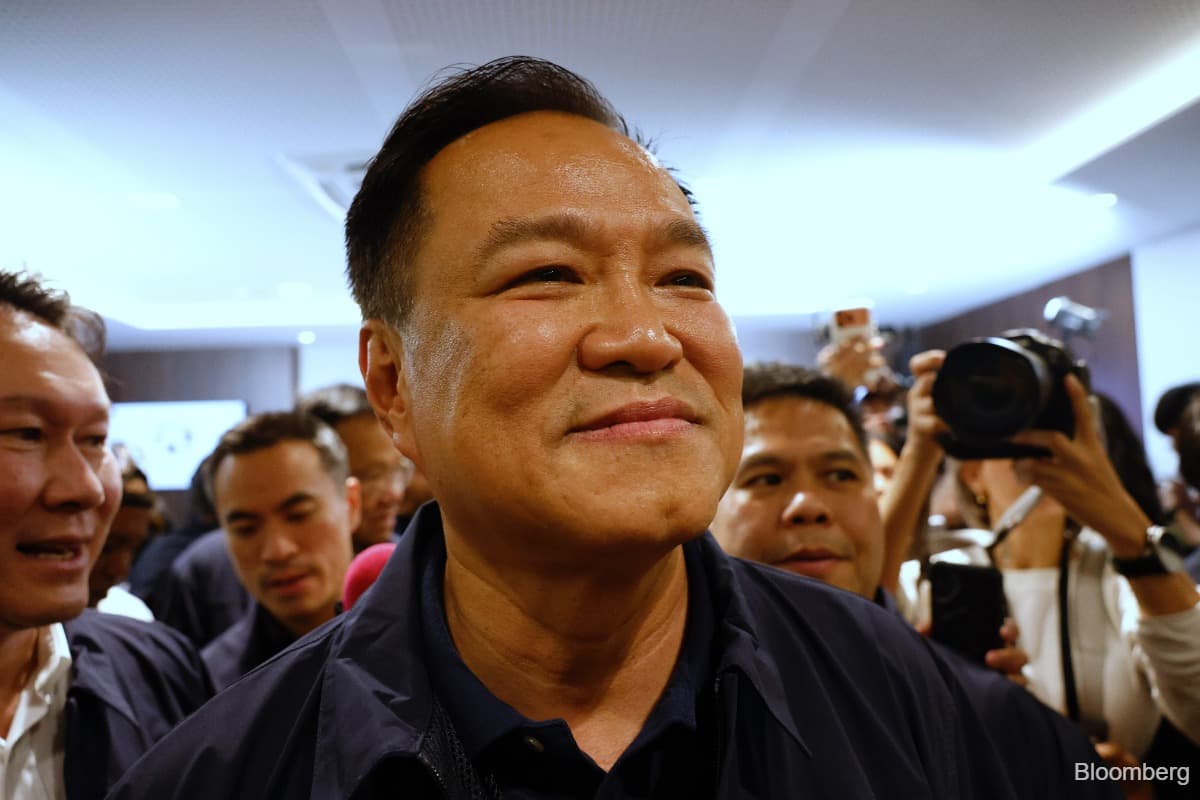
(Sept 3): Thailand is heading into Fitch Ratings’ annual review with risks receding from a year ago, when political uncertainty and mounting debt prompted a negative outlook on its credit.
“It looks like the balance of risks has improved with the more stable political outlook and some resilience in terms of economic growth,” Thomas Rookmaaker, a senior director in Fitch’s Sovereigns Group, said in an interview.
Nearly a year after Fitch lowered the outlook on Thailand’s BBB+ rating, the government of Prime Minister Anutin Charnvirakul has consolidated its power. The economy has also weathered the Middle East conflict better than expected as the AI boom drives exports and attracts investments, Rookmaaker said.
The improving backdrop could strengthen Thailand’s case for a return to a stable outlook, bringing Fitch back in line with Moody’s Ratings and S&P Global Ratings. Rookmaaker declined to say categorically whether such a move was in the offing.
Political stability is an important part of that assessment, with Anutin having ridden a wave of nationalism to election victory in February. Frequent changes of government have complicated efforts to tackle Thailand’s structural economic problems and raised questions about whether administrations could deliver on multi-year fiscal commitments.
“After the elections, we’ve seen periods of political tranquility,” Rookmaaker said. “That’s positive from a ratings perspective.”
Greater political stability makes the government’s medium-term fiscal plans more credible and gives it more scope to pursue reforms, he said.
Thailand’s gross general government debt has steadied at close to 60% of GDP, slightly above the 57% median for BBB-rated sovereigns, after seeing a “sharp deterioration” of about 25 percentage points since 2019, according to Rookmaaker.
Anutin’s government has said that roughly US$12 billion (RM48.54 billion) in emergency borrowing prompted by the Middle East conflict will stay within its medium-term fiscal framework and keep public debt below the 70% ceiling.
The funds have helped the economy perform better than expected. Rookmaaker said Fitch is likely to raise its current 1.8% growth forecast for this year, helped by the fiscal stimulus and stronger investment.
The Ministry of Finance recently upgraded its 2026 growth estimate to 2.5% from 1.6%, while the government is getting support from Bank of Thailand Governor Vitai Ratanakorn, who has said the central bank is determined to help address structural problems like heavy household debt and weak productivity.
Thailand also retains stronger external buffers than similarly rated peers and can finance its debt at relatively low interest costs, Rookmaaker added.
Fitch is now weighing whether the improvements in growth, debt dynamics and the political environment can be sustained over the medium term.
Improving infrastructure and the business climate could help kick the Thai economy into higher gear, according to Rookmaaker. It’s also unclear whether the surge in investment into data centres will have much spillover to the economy in the longer run.
New revenue measures, such as a long-delayed value-added tax hike, seem to be unlikely at a time when the government is still keen on extending stimulus, he added.
“The path for medium-term debt-to-GDP is stabilising. Currently we’re trying to assess to what extent we need to change that based on an update of our growth forecasts for the next few years,” Rookmaaker said.
Rookmaaker declined to say when the ratings company will next assess Thailand. Its last review was published on Sept 24, 2025. Since then the baht has declined 3.5%, outperforming the currencies of neighbouring Indonesia and the Philippines.
Fitch will also weigh the kind of policies the government plans to pursue. “That’s a bit easier now to understand in the current, more stable political environment,” he said.
Uploaded by Chng Shear Lane