

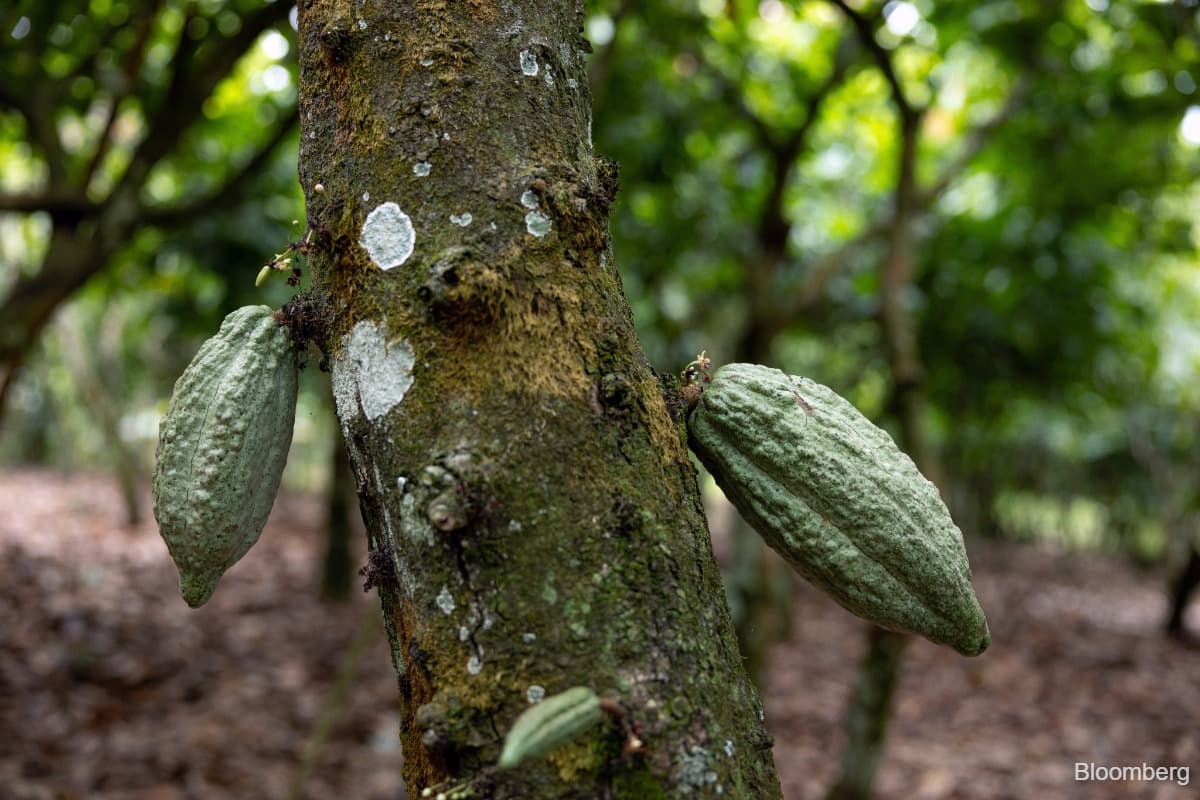
(Sept 2): The global cocoa market is poised to face a supply shortfall for the first time in three years as a strengthening El Niño threatens production across key growing regions, according to Asia’s top processor.
A deficit of 300,000 to 400,000 tonnes is expected in the 2026-27 season, said Brandon Tay Hoe Lian, the chief executive officer of Malaysia-based Guan Chong Bhd (KL:GCB). That compares with a surplus of about 100,000 tonnes a year earlier, with the weather risks to crops set to coincide with steadying demand, he said in an interview on the sidelines of the CAA International Cocoa Conference in Singapore.
The outlook comes during a volatile stretch for the cocoa market, which is set to cap a second annual surplus. That follows three straight deficits triggered by poor harvests in West Africa, where much of the world’s beans are grown. That shortfall sent New York futures to an all-time high above US$11,000 a tonne in late 2024.
Prices are now well below those levels, but have been rallying again as fresh crop risks emerge. West Africa cocoa farms have been hit by excessive rainfall, with waterlogged fields and persistent humidity raising the risk of disease and weakening pod development. The threat could be compounded by El Niño, which is known to intensify the annual dry Harmattan winds that sweep through the region, further stressing trees.

Futures have climbed for six straight months, with prices this week touching the highest since October. The supply strain is expected to add to the rally, with Tay forecasting that futures could climb to about US$8,000 a tonne by December — up from about US$6,500 currently.
Tay’s outlook stands in contrast to several others in the market. Analysts at BMI, Hedgepoint Global Markets and StoneX all recently forecast a surplus for 2026-27, albeit smaller than the year before.
Consumers had cut back on cocoa at the height of the price rally and the demand recovery has proven uneven. Asia is showing signs of a rebound, though, with grinding in the second quarter jumping 25% versus the same period last year.
“We will have relatively bad production in the upcoming season globally,” said Michel Arrion, executive director of the International Cocoa Organization. “It should have a positive impact on prices.”
Uploaded by Magessan Varatharaja