


(Sept 2): The sell-off sweeping global bond markets looks painful, but it’s nothing compared with the rout four years ago, when soaring inflation forced central banks into a series of rapid-fire interest-rate hikes.
The difference is scale. While the latest pullback has driven yields to multi-year highs in the world’s biggest markets, the move is just a fraction of the one seen in late 2022. Global government bond yields have risen 17 basis points on a rolling 20-day cumulative basis, compared with 62 basis points back then, data compiled by Bloomberg show. On a peak-to-trough basis, bonds have lost 4.2% this year — a far cry from the 23% plunge seen in 2022.
While the current sell-off is hardly showing any sign of letting up, the relatively modest move in yields so far is offering some reassurance to seasoned market watchers.
“Maybe take a chill pill,” said Stephen Miller, a consultant at investment management firm GSFM in Sydney who has covered debt markets since 1983. “I can’t say that bonds are a screaming buy,” he said, adding that still “at these sorts of yields, they do become worthy of some consideration by an income-oriented investor”.
The 2022 rout had pushed global bonds into their first bear market in a generation. That came as central banks led by the Federal Reserve embarked on the most synchronised and rapid policy tightening in half a century, battling an inflation surge fuelled by the post-pandemic rebound in demand and compounded by the war in Ukraine.
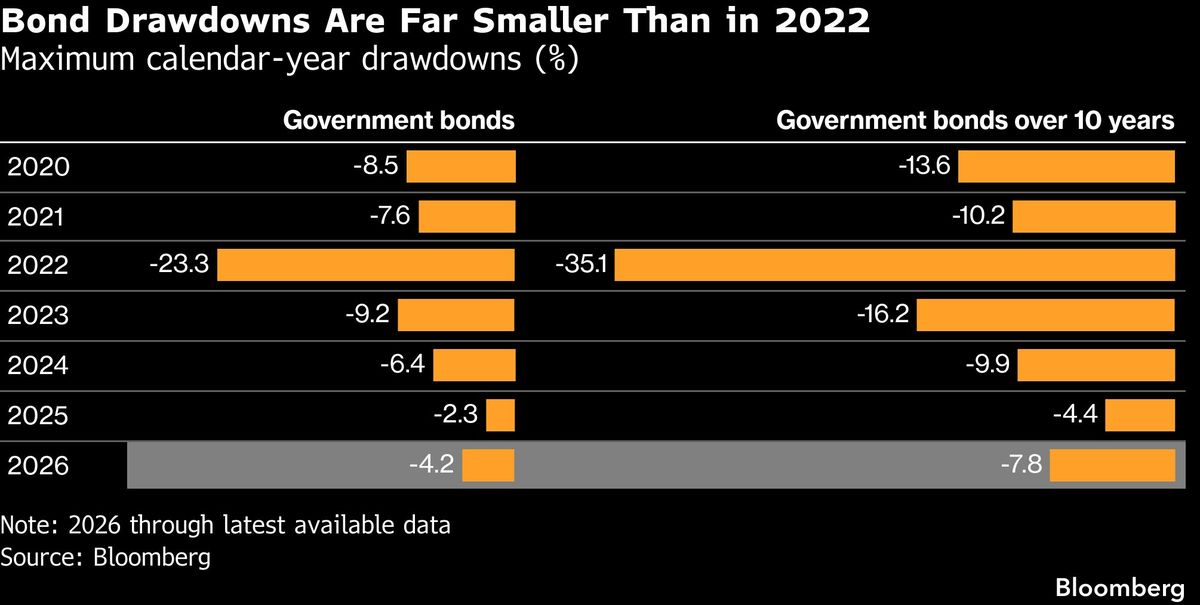
While inflation is a key factor this time as well — given the Iran war and its impact on energy prices — other forces are adding to the pressure on bonds.
Heavy government spending in major markets like Japan, the UK and the US is keeping debt issuance elevated, prompting investors to seek more compensation to own longer-maturity debt. At the same time, the vast amount of funds needed to finance the AI boom is intensifying the competition for capital and helping push borrowing costs higher.
Even so, bond losses have been more contained in part because yields are rising from much higher levels, providing investors with a bigger income cushion against falling prices. By contrast, yields were near historically low levels heading into 2022.
Bonds in the Bloomberg Global Treasury Total Return Index have carried an average coupon of 2.68% this year, up from 1.84% in 2022.
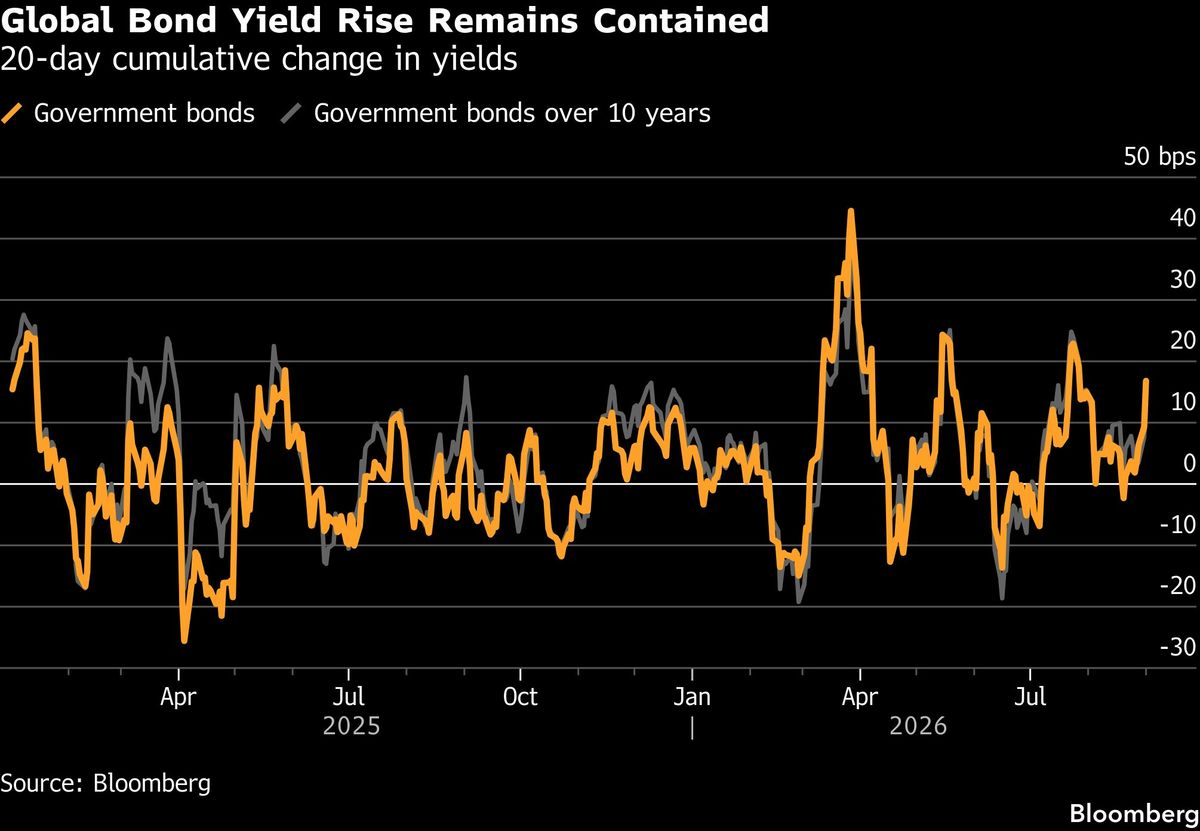
“It’s not nearly as bad for every economy as the bond market would make out,” said Kerry Craig, a global market strategist at JPMorgan Asset Management in Melbourne. And in some markets like Australia, investors may even be overestimating how much the central bank will hike, he said.
Recent economic reports lend support to such a view. In the US, some key releases have disappointed, with payrolls declining in July and retail sales unexpectedly falling. Japan’s economy also grew less than expected in the second quarter.
To be sure, no one is firmly calling the peak in yields just yet.
The sell-off in bonds may have room to run as energy-driven inflation keeps rate hike bets in play and heavy debt issuance adds upward pressure on yields. Rising Japanese yields are another potential source of strain as they risk drawing global capital back home.
The yield on 10-year US Treasuries — a global benchmark for borrowing costs — advanced to 4.81% on Wednesday, the highest level since late 2023, heaping more pressure on debt in other developed markets. Japan’s 10-year government bond yield on Tuesday touched 3% for the first time this century.
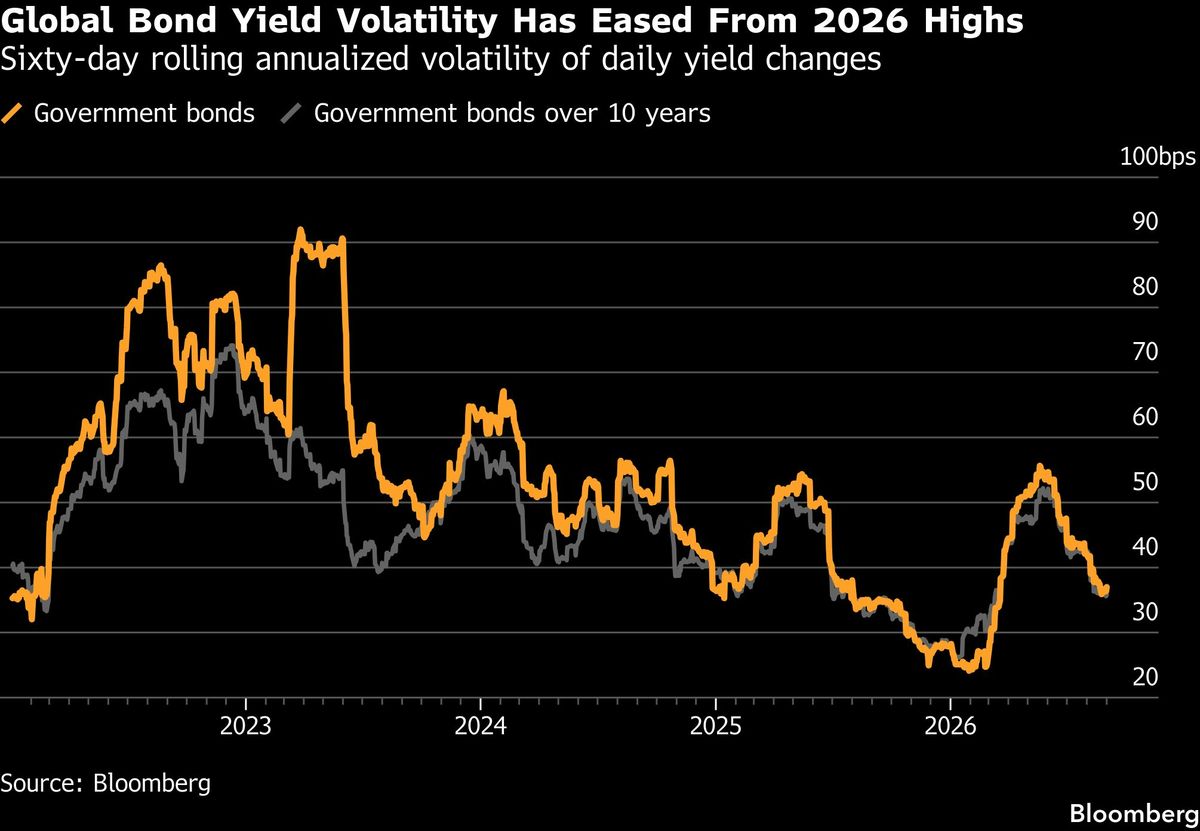
Still, lower market swings also suggest investors are taking the latest sell-off more in their stride. The yield volatility for global government debt has fallen to 37 basis points from a peak of 56 basis points in May. The measure surged in 2022 before peaking at about 92 basis points in March the following year.
“Negative factors for bonds have been steadily building, but so far there has been no decisive catalyst strong enough to force investors out of the market,” said Ayako Sera, senior market strategist at Sumitomo Mitsui Trust Bank Ltd in Tokyo.
Uploaded by Chng Shear Lane