

This article first appeared in Forum, The Edge Malaysia Weekly on August 31, 2026 - September 6, 2026
Malaysia is richly endowed with biodiversity and natural resources, and has benefited from them, though not to the optimal point. Blessed with vast tracts of land and forest reserves, the country has become one of the leading producers and exporters of palm oil, rubber, timber products and furniture. In the mineral sector, Malaysia was once a top tin exporter and continues to possess substantial reserves of petroleum, natural gas, bauxite and rare earth elements. Malaysia also enjoys maritime advantages for fisheries both to the east (South China Sea) and to the west (Malacca Strait).
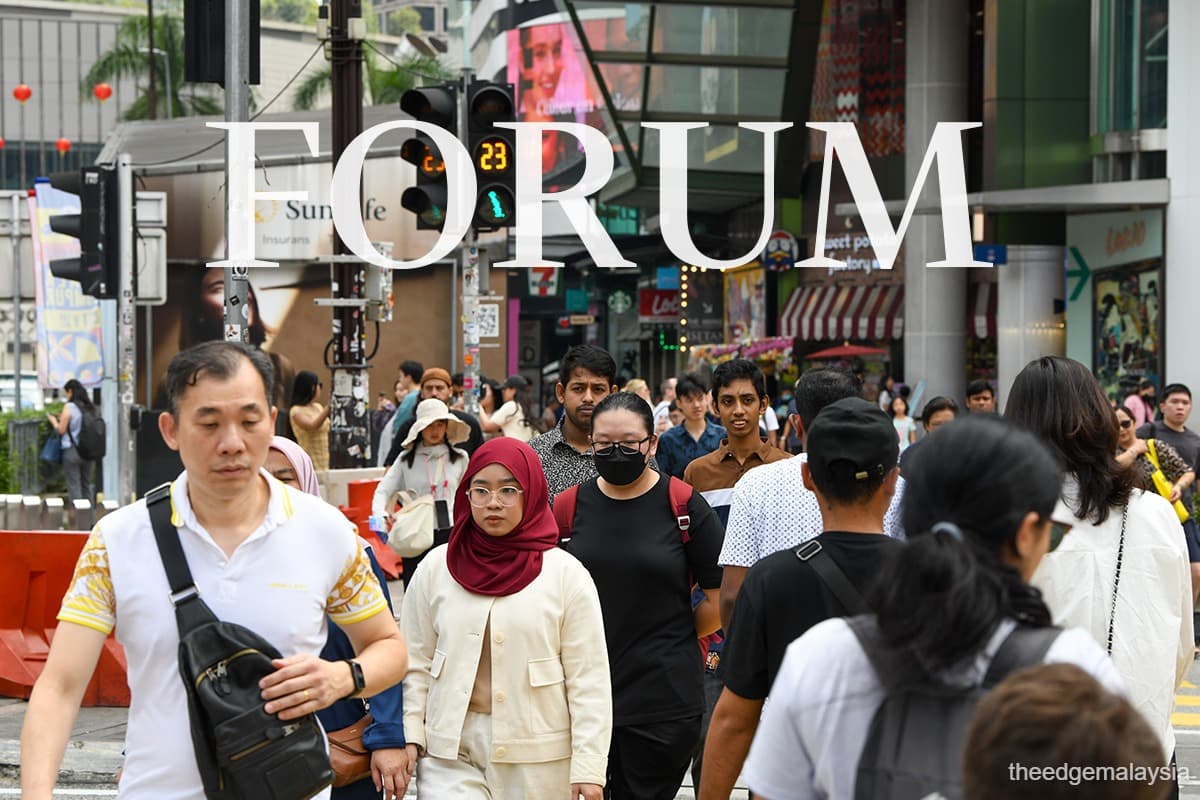
Amid its rapid development, Malaysia has often overlooked what may be its greatest asset: its unique and diverse human capital. Malaysia is one of a few countries in the world where the population comprises people of diverse origins with distinct cultures, languages, traditions and histories. Currently, the racial mix of her population comprises Malays (60%), Chinese (22%), Indians (7%) and various indigenous and minority groups.
This mix is a result of British colonial rule to serve its quest for tin mining and rubber production to feed its industrialisation needs at home. Chinese were brought in to work in tin mining while Indians largely tended to the rubber estates. This divide-and-rule policy has had an everlasting impact — it has shaped the demographic composition as well as the sociopolitical and economic landscape of Malaysia to date. The three ethnic blocs remain engaged in continuous contestation over rights and privileges within a sensitive framework.
So far, Malaysia has held together a delicate equilibrium among its ethnic groups. Flare-ups are the norm but remain under control thus far. The frightening reality is that the racial bomb could easily explode if the formula goes wrong.
At times, the mix has not been harmonious, as proven by the May 13, 1969 riots — the clash between the Chinese and Malays over income inequality between the two. The late Prime Minister Tun Abdul Razak Hussein made the pioneering move to implement the New Economic Policy (NEP), which aimed to create an equitable society through affirmative strategies to improve the lives of the poor, a majority of whom were Malays.
Despite almost six decades of the NEP, the divides are still apparent, particularly in the division of the economic cake. For instance, for every RM1 earned by an average Chinese household, bumiputera households earn about RM0.72 and Indian households earn RM0.85. The Gini Coefficient for Chinese is 0.412, Indians 0.38 and Malays 0.369. According to the World Inequality Database (WID), the top 10% of all Malaysians control approximately 38% of the national income. Among the bumiputera, in terms of wealth and asset ownership in the form of corporate equity and investment assets, the Gini Coefficient exceeds 0.5. WID data also shows that real income growth for the top 1% of bumiputeras significantly outpaced the national average. These data indicate income disparities at both inter-ethnic and intra-ethnic levels, with the latter showing a deep divide between rich and poor Malays.
The NEP’s original objectives were noble but the data suggest a different outcome. Clearly, the policy has outlived its original mandate and should evolve into a more inclusive, productivity-driven strategy. The non-Malay community at large continues to progress despite the NEP, indicating that long-term prosperity depends less on preferential policies and more on capacity building, access to opportunity and entrepreneurship.
There are growing calls for public policy to focus on economic vulnerability rather than race. Such an approach would not neglect the Malays as poverty remains strongly correlated with the Malay population. Instead, it would ensure that assistance is directed to those who need it most, regardless of race — making the policy fairer, more effective in reaching neglected communities and instrumental in preventing the seeds of future racial conflict.
Despite these disparities, Malays continue to hold a dominant position in politics and religion owing to their demographic weight and historical legacy. To date, the interplay of political power, religious influence and economic dynamics has remained broadly manageable. However, historical experience indicates that this balance can be fragile and susceptible to disruption during periods of severe economic or political stress, as evidenced by Indonesia (1997/98), Egypt and Tunisia (2011), Venezuela (from 2014) and Sri Lanka (2022). These episodes illustrate how economic crises can precipitate social unrest, political upheaval and institutional instability.
Even relatively homogeneous countries can descend into sociopolitical turmoil during severe economic crises; the risks may be even greater in a multiracial society such as Malaysia. However, such an outcome is not inevitable.
Racial fragmentation can be mitigated by harnessing the country’s greatest strength: its rich mosaic of languages, cultures, traditions and lifestyles. Differences are not meant to divide but to enrich.
Of course, a multi-ethnic society has many faces to it, embodying both strengths and challenges. The experiences of other countries, such as the US with its mix of communities, show that multi-ethnic nations face systemic risks:
● Social division and segregation: Segregation creates distrust and tension between groups. People may develop prejudice, discrimination and stereotypes when they have limited interaction with others from different backgrounds.
● Economic inequality: Skewed income distribution leads to limited opportunities for neglected groups. These socioeconomic gaps are recipes for political instability, civil unrest and conflict among excluded communities. Severe inequality results in a major loss of human potential and retards overall economic development.
Uniting the diverse ethnic and indigenous communities remains an arduous task. The current approach has repeatedly proven vulnerable to political manipulation. The fact that, after nearly six decades, Malaysia’s major political parties remain largely organised along racial lines suggests that genuine racial integration has yet to fully take root.
Without doubt, Malaysia has implemented various measures to promote multi-ethnic and regional integration. These include celebrating diversity by acknowledging multicultural religious beliefs and festivities, providing affirmative action to assist poor bumiputera and pribumi communities and supporting various sociocultural programmes. While these mechanisms are far from perfect, Malaysia continues to struggle to find an “effective formula”.
According to reformers like American educationist Horace Mann and South Africa’s president Nelson Mandela, education is the greatest equaliser of human conditions. This is because of its power to shape the mind, develop character, expand opportunities and influence both individual and societal progress.
Malaysia is currently missing a critical educational perspective: social integration can be achieved much more easily if the population becomes genuinely multilingual in the country’s major languages: Malay, English, Mandarin and Tamil. Language is the single best tool to communicate, appreciate and respect other cultures, thereby creating an integrative society. Currently, many Malaysians have limited proficiency in languages beyond their own linguistic communities, restricting meaningful interaction and fostering misunderstandings, stereotypes and suspicion. Such social incongruities have persisted for decades without substantial improvement.
Therefore, Malaysia should consider a long-term educational strategy that enables all schoolchildren to attain proficiency in the four major languages while preserving and nurturing their respective mother tongues. Although implementing such a policy would require substantial short-term financial and administrative investment, the long-term benefits would be transformative.
The positive dimensions of a multi-ethnic, multilingual society yield outcomes that far offset the problems ascribed to plural societies:
● Cultural exchange and critical thinking: Broader cultural exchange enhances mutual understanding, tolerance and empathy while enriching educational perspectives. Students gain access to multiple historical viewpoints and traditions, strengthening critical thinking and global awareness.
● Creativity and innovation: Diversity breeds innovation because the collective national knowledge bank is richer and more diversified. Exposure to different cultures helps people become flexible, open-minded and capable of working in multicultural environments.
● Economic and diplomatic advantage: Multilingual populations with cross-cultural ties foster stronger international business networks, diplomacy, trade, tourism and global competitiveness.
In short, making all Malaysian children proficient in these languages will cultivate not only a highly skilled and globally competitive workforce but also a more cohesive, tolerant and peaceful society. The long-term social and economic returns will far outweigh the initial costs, minimising the deadly political, ethnic and religious tensions that have periodically strained the nation’s development.
Professor Datin Paduka Dr Fatimah Mohamed Arshad is a research fellow at the Laboratory of Agricultural and Food Policy Studies, Institute of Tropical Agriculture and Food Security, Universiti Putra Malaysia
Save by subscribing to us for your print and/or digital copy.
P/S: The Edge is also available on Apple's App Store and Android's Google Play.