

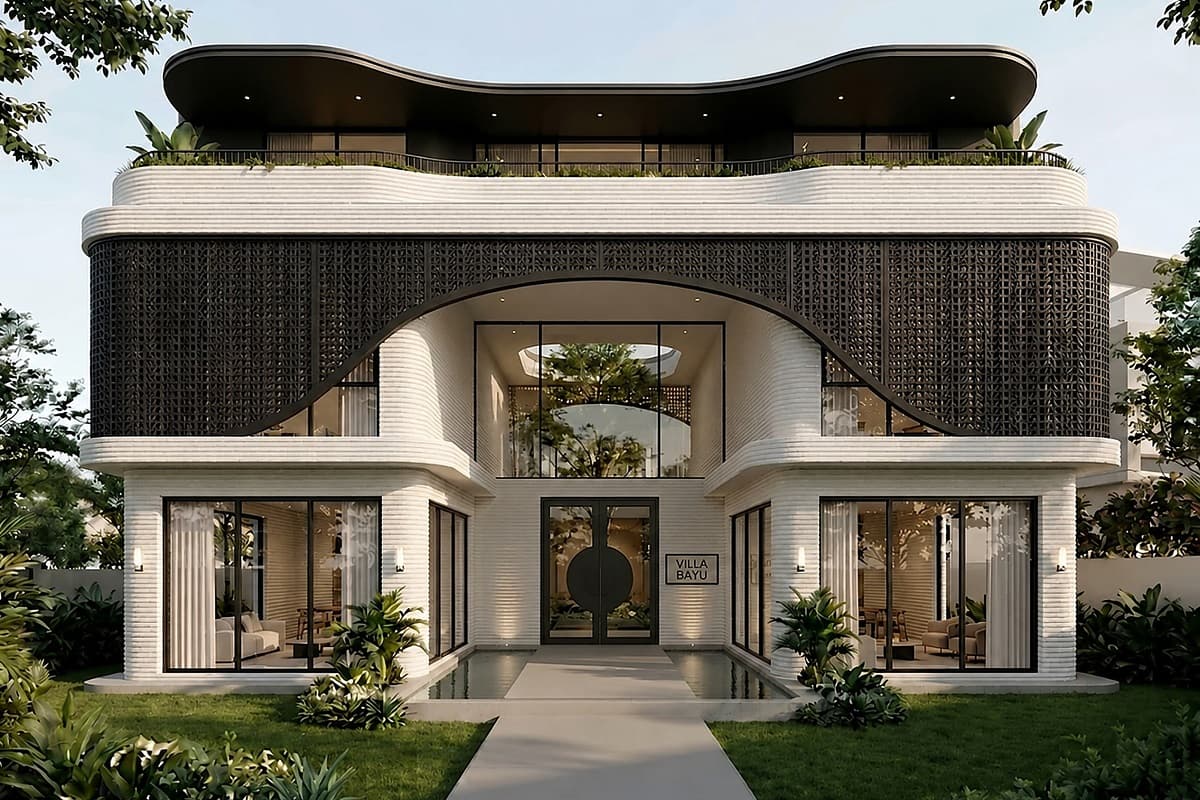
KUALA LUMPUR (Sept 1): Japan-based V3D Asia Ltd is aiming to commence construction of Malaysia’s first 3D-printed luxury bungalow in November 2026.
According to a press statement issued on Friday, V3D Asia — through its Malaysian commercial arm Nuvah Sdn Bhd — is targeting to commence construction of Villa Bayu, a bungalow development located at the Gentlebre Precinct of Eco Majestic in Semenyih, Selangor. This project will be followed by a 12-villa development built for sale in Bali, Indonesia, which is targeted for completion by December 2027.
The group previously completed a pilot project in collaboration with the government of Brunei.
"Malaysia’s opportunity in 3D construction printing will not be built by machines alone. Any country can buy a printer. What is far harder, and far more valuable, is a workforce that understands the technology, the materials and the craftsmanship behind it," said V3D Asia group chairman Kazuhiro Ono in the statement.
Nuvah is moving 3D construction printing (3DCP) into mainstream residential, commercial and infrastructure delivery through partnerships with established Malaysian developers and contractors.
The initiatives form part of a long-term plan to establish Malaysia’s first locally built 3DCP company, combining Japanese engineering with local specialist workforce development, materials science, structural engineering, and quality control.
"Our ambition is not to sell equipment into Malaysia. It is to build the industry here — the printers, the homes and, above all, the people. If we do that properly, Malaysia will not be a customer for this technology in ten years’ time. It will be the region’s supplier of it," Kazuhiro added.
To drive local adoption, Nuvah is working with the Construction Industry Development Board (CIDB) to include 3DCP as the seventh system under Malaysia’s Industrialised Building System framework.
The company also collaborated with Sirim Academy Sdn Bhd, a unit of Sirim Berhad, in June 2026 to help develop the country’s first industry standards for 3DCP.
The deployment of automated technology comes as Malaysia’s construction sector faces severe labour constraints, with foreign workers accounting for an estimated 70% to 80% of the workforce amidst tightening recruitment policies.
"This is just the beginning of what we hope to build in Malaysia. We see these initiatives as a foundation for the industry that follows," said Kazuhiro.