

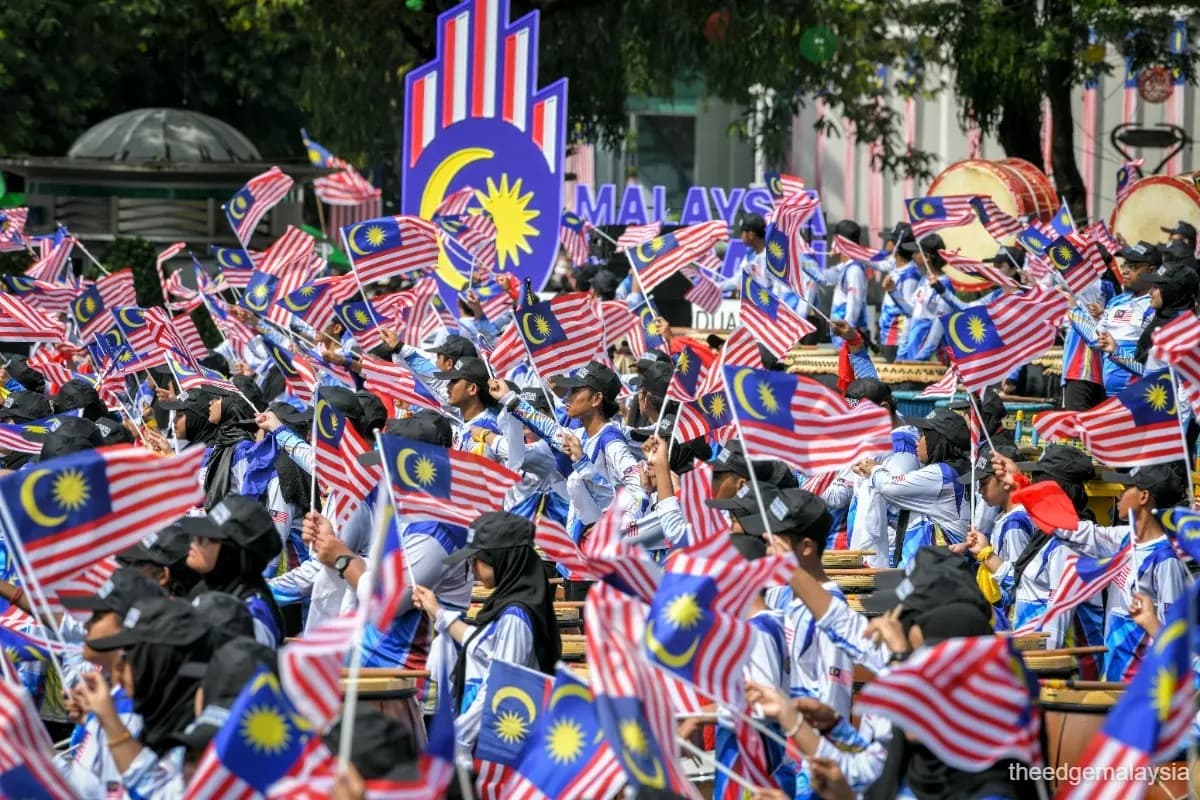
Malaysia marks its 69th National Day today under the 2026 theme “Malaysia MADANI: Kesejahteraan diNikmati” — a theme that speaks of an advanced, inclusive and harmonious country in which wellbeing is to be enjoyed by all, not merely by selected groups. That aspiration is timely, because the meaning of Merdeka must extend beyond the ceremony of flags, parades and patriotic songs. It must also be reflected in how Malaysians regard one another and in the quality of the politics by which we are governed.
For too long, sections of our political discourse have relied on a familiar formula: tell one community that its position is being eroded, portray another community or political opponent as an existential threat, invoke race or religion, and convert anxiety into political loyalty. Claims of this kind are sometimes repeated with extraordinary certainty but little evidence. When fear replaces facts, Malaysia pays the price.
The central question on this National Day should therefore be straightforward: after 69 years of independence, should Malaysians still be persuaded to fear one another, or should political leadership finally be judged by the quality of governance it delivers?
Race cannot become an alibi for poor governance
Corruption is not caused by ethnicity. Money laundering is not caused by another religion. Weak administration, failed investments, inadequate infrastructure, poor educational outcomes and a shortage of quality jobs cannot credibly be blamed on ordinary citizens of another race. These are questions of institutions, policy choices, leadership, competence and accountability.
This distinction matters economically. Malaysia is competing for capital, talent and technology in a region moving at extraordinary speed. Investors assess policy certainty, institutional quality, infrastructure, productivity, skills and the ability to execute. Young Malaysians consider whether their country offers them opportunity, fairness and a future. Neither group is strengthened by politics that continually turns national attention towards communal suspicion.
Where states or communities face weak investment, unemployment, outward migration or inadequate development, political leaders should have to explain their record. What industries were attracted? How many quality jobs were created? What happened to household incomes? Has infrastructure improved? Are schools producing competitive graduates? Are public funds managed transparently? These are harder questions than finding a racial or religious scapegoat, but they are the questions that decide prosperity.
Every political party, regardless of ideology or constituency, should face the same test: show the results. A government that performs should be able to defend itself with evidence rather than fear.
Merdeka was built through accommodation, not exclusion
The history of independence also deserves greater honesty. Malaya's path to independence was negotiated in a plural society. It involved the Malay rulers, political leaders from the country's major communities and the British authorities. Those negotiations were difficult and imperfect, but they recognised a fundamental reality: an independent Malaya had to find a workable compact among its people.
Malaysia's national story broadened further in 1963 with the formation of Malaysia involving Malaya, Sabah, Sarawak and, initially, Singapore. The country that appeared is not a single-community project. Generations of Malay, Chinese, Indian, Orang Asli, Kadazan-Dusun, Iban, Bidayuh, Melanau and many other Malaysians have contributed through public service, enterprise, agriculture, education, medicine, defence, labour and taxation.
Recognising that history does not require denying the constitutional position of Islam, the Malay rulers, the Malays and the legitimate interests of the Bumiputera communities. Nor does protecting those constitutional arrangements require treating other citizens as lesser Malaysians. A mature nation should be capable of protecting constitutional safeguards while affirming equal dignity, belonging and responsibility among its citizens.
Malaysia belongs to all Malaysians. That proposition should not be provocative. It is the basis upon which a multi-ethnic federation can remain cohesive.
The economics of division
Communal politics carries an economic cost that is too rarely calculated. A country preoccupied with whether one race is gaining at another's expense has less political bandwidth for the questions that will define the next generation: artificial intelligence, advanced manufacturing, semiconductors, energy transition, food security, healthcare, productivity, educational quality and the competition for global talent.
Malaysia's diversity should be an advantage in that competition. Multilingual capability, international commercial networks, cultural familiarity with major Asian markets and a population accustomed to diversity are economic assets. Yet these advantages are weakened when Malaysians are repeatedly encouraged to view one another primarily through the prism of communal competition.
A Malay graduate obtaining a world-class education strengthens Malaysia. A Chinese entrepreneur creating thousands of jobs strengthens Malaysia. An Indian doctor, an Iban engineer, a Kadazan scientist or an Orang Asli conservationist contributes to the same national balance sheet. Prosperity is not a zero-sum contest between ethnic groups.
Demand evidence, not slogans
When public figures claim that a community is disappearing, being dispossessed or facing an existential threat, Malaysians should ask for evidence. What demographic data supports the claim? What economic indicators prove it? What constitutional mechanism makes the alleged outcome possible? Serious claims require serious substantiation.
The same standard should apply whether the speaker is a politician, preacher, academic, activist or social media personality. Religious standing should not confer immunity from scrutiny, just as political popularity should not convert assertion into fact. Faith deserves better than to be instrumentalised as an electoral weapon.
Political competition itself is not the problem. Malaysia needs vigorous disagreement. Governments should be challenged and opposition parties should be free to criticise. But there is a profound difference between arguing over policy and manufacturing hostility towards citizens based on race or religion.
Accountability without a new instrument of censorship
Malaysia should examine whether its present legal framework adequately addresses deliberate and serious racial or religious incitement while protecting legitimate political expression. If Parliament concludes that reform is necessary, any new legislation should be narrowly defined, evidence-based and subject to strong safeguards for journalism, academic inquiry, legitimate religious discussion, satire and robust political criticism.
The greater issue, however, is equal enforcement. Selective action destroys confidence in the law. The same threshold must apply irrespective of the speaker's ethnicity, religion, party affiliation or political usefulness. Accountability cannot be credible when one side is prosecuted for conduct tolerated from another.
The purpose of such a framework should never be to criminalise disagreement or shield government from criticism. It should be to protect democratic debate from deliberate incitement while preserving the freedom necessary to challenge those in power.
A different measure of patriotism
National Day is a suitable moment to redefine what patriotism demands. It cannot merely mean displaying the Jalur Gemilang while tolerating rhetoric that tells fellow citizens they do not fully belong. Nor can loyalty to country mean silence about corruption, incompetence or abuse of power.
Patriotism should mean insisting that Malaysia works so that institutions are trusted, public money is protected, children receive a competitive education, businesses can invest with confidence, young people can build careers without leaving, and citizens are judged by their conduct and contribution rather than stereotypes attached to their ancestry.
Let political parties compete over who can create more jobs, raise productivity, improve schools, strengthen healthcare, attract investment, reduce corruption and administer public resources more efficiently. Let them compete over integrity and competence. But Malaysia gains nothing when parties compete over who can make Malays fear Chinese, Chinese fear Malays, Muslims fear non-Muslims, or any citizen regard another as an intruder in a shared homeland.
The generation of 1957 secured freedom from colonial rule. The challenge for the present generation is different: to free Malaysian politics from the dependency on communal fear that prevents the country from realising its full economic and social potential.
Malaysia belongs to all Malaysians
Not because one community grants permission to another, but because citizenship carries both belonging and responsibility. Our histories are now inseparably intertwined, and our economic futures even more so.
Sixty-nine years after Merdeka, the most meaningful tribute to those who secured independence would be to build a country confident enough to reject manufactured enemies, strong enough to demand accountability from every leader, and generous enough to recognise that another Malaysian's success is not our loss.
Merdeka should mean that no Malaysian is made to feel like a permanent guest in the country he or she calls home.
That is not a retreat from history or the Constitution. It is the foundation for taking Malaysia forward.
Dr Charles Chow Kok Cheng is a veteran plantation professional and former corporate leader