

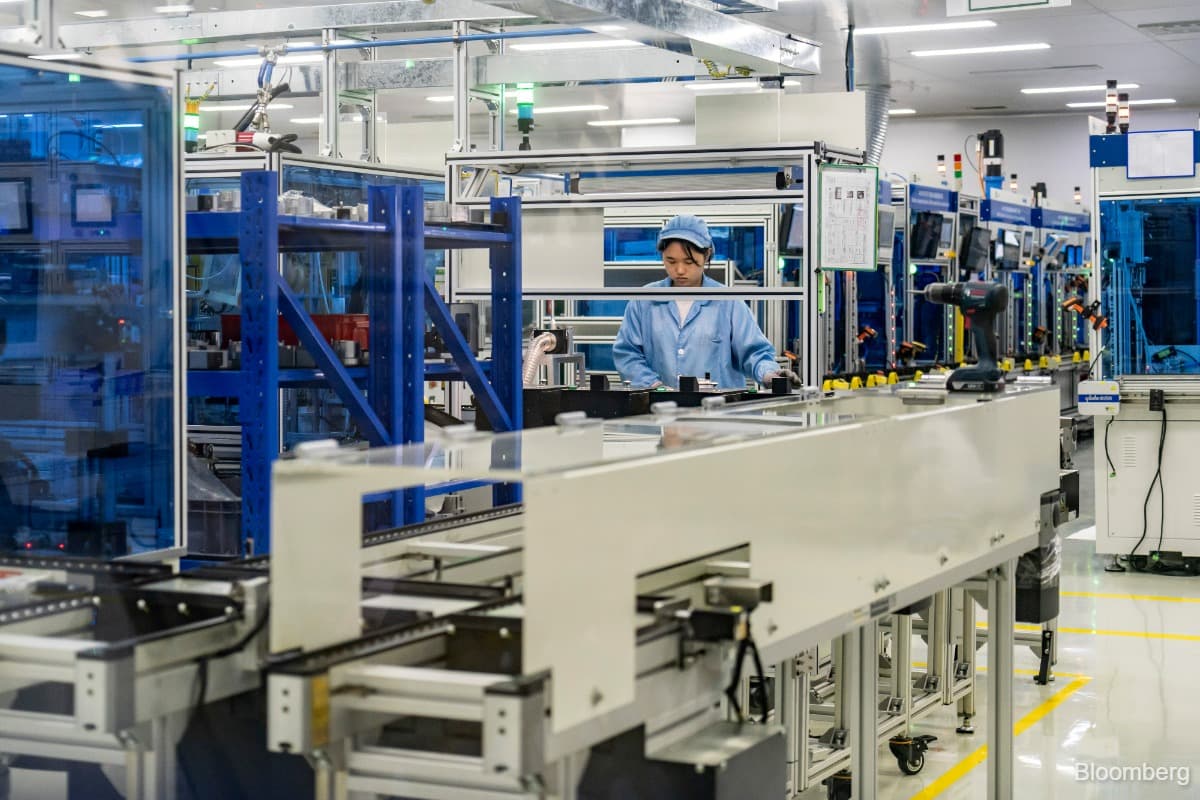
(Aug 31): China’s factory activity improved more than forecast in August while staying in contraction for a second month, showing glimmers of a pickup for the economy as policymakers eye new measures.
The official manufacturing purchasing managers’ index reached 49.8 from 49.2 in July, the National Bureau of Statistics said Monday. The median estimate of economists surveyed by Bloomberg was 49.5. A reading below 50 indicates contraction.
Sixteen of the 21 industries surveyed saw an increase in their performance compared with the previous month, indicating a “significant improvement” in manufacturing, according to NBS statistician Huo Lihui. But while production and new order indexes for sectors such as electrical machinery and equipment were both above 53%, similar gauges for industries like chemical raw materials were below the 50 threshold separating growth from contraction, Huo said in a statement accompanying the data release.
The uptick suggests manufacturers remain supported by exports and pockets of strength in technology-related industries, even as consumer demand, investment and the property market stay weak.
The non-manufacturing measure of activity in construction and services also stayed in contraction at 49.0, the statistics office said, missing expectations. The gauge for construction business activities fell further to 46.9, the lowest since the start of the pandemic.

“Due to the impact of extreme weather such as heavy rain and typhoons in some areas, the construction progress slowed down,” Huo said.
China’s economy showed further signs of weakening, with industrial output, consumption and investment in July all missing expectations, while softer factory-gate and consumer price gains added pressure on corporate revenues.
Goldman Sachs Group Inc estimates China’s economy was expanding at about 4% year-on-year at the start of the third quarter, down from 4.3% in the previous three months, and below Beijing’s annual target of 4.5%-5%. Chief China economist Hui Shan said the latest slowdown is particularly concerning because it is demand-driven and has spread to areas that had previously remained resilient.
The weakness has fuelled expectations for additional policy support, although analysts generally expect the People’s Bank of China to keep interest rates unchanged. A cut to banks’ reserve requirement ratio later this year is viewed as more likely.
As calls for stronger stimulus grow, Chinese leaders have so far proposed only incremental steps and signalled little urgency to deliver bolder measures. Premier Li Qiang recently urged officials to “strive to achieve” annual growth targets, while policymakers are considering loan subsidies and other financing support for businesses and consumers.
“Growth momentum is fading,” said Raymond Yeung, chief economist for Greater China at Australia & New Zealand Banking Group Ltd. “We are waiting for the policymakers to announce large stimulus.”
Uploaded by Chng Shear Lane