

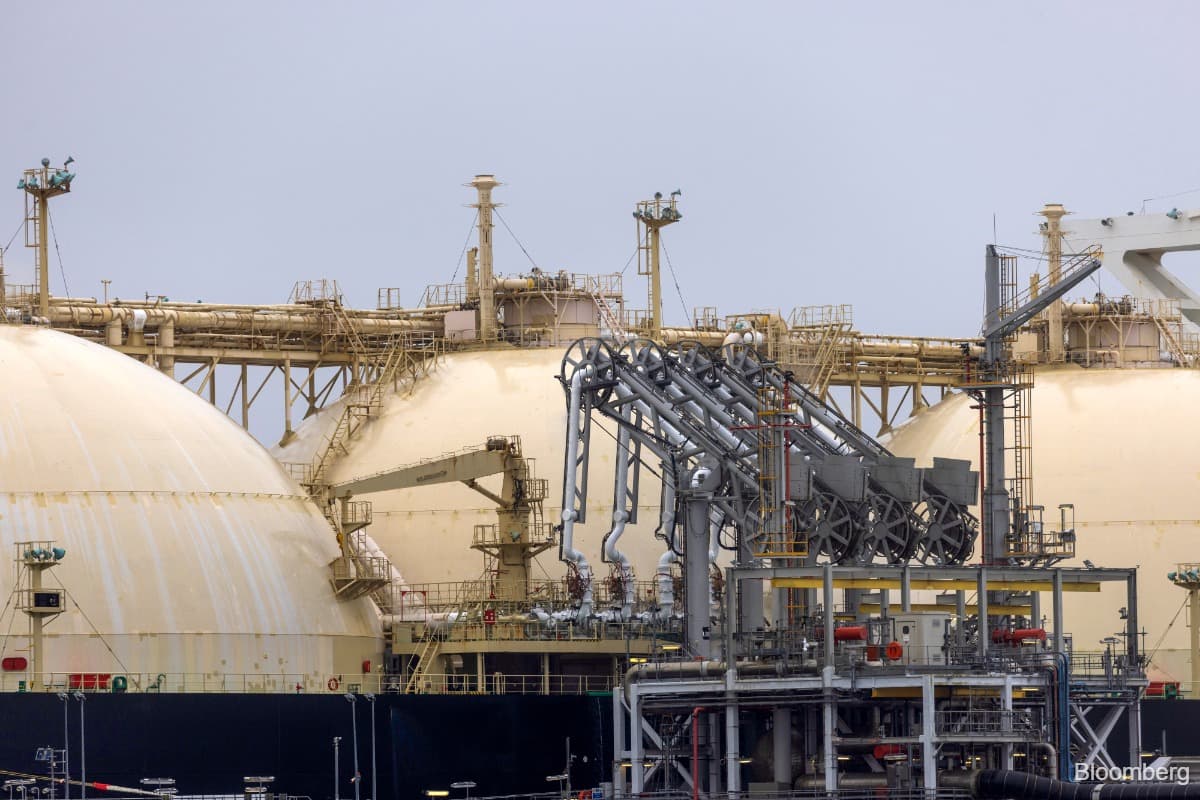
(Aug 28): Qatar extended force majeure on liquefied natural gas supplies to European and Asian buyers by another month as uncertainty over the full reopening of the Strait of Hormuz clouds prospects for restoring Persian Gulf energy flows.
State-owned QatarEnergy this week notified Pakistani buyers that LNG cargo cancellations will continue into October, according to traders familiar with the matter. Force majeure on supplies to Bangladesh has also been extended beyond September, they said.
Italy’s Edison SpA, one of QatarEnergy’s customers, said that cancellations were extended into early November. Other traders in Europe have also started receiving notices, according to two other people aware of the development.
QatarEnergy didn’t immediately respond to a request for comment.
LNG flows through Hormuz remain near a standstill even as an increasing number of oil tankers is navigating the waterway using tactics such as shuttling, where smaller vessels move crude through the strait for transfer to larger ships waiting outside. Some tankers are also switching off transponders while crossing high-risk areas.
Qatar has been more cautious on sending cargoes through Hormuz because LNG carriers are scarcer and more valuable than oil tankers, said Masanori Odaka, an analyst at Rystad Energy. Also, these ships are closely tied to the country’s state-owned producer and shipowner, he added.
“Going dark or running high-risk transits with those ships is a bigger capital and safety bet than doing the same with oil tanker,” Odaka said. “Oil can be shuttled and transferred; Qatari LNG still cannot, at scale.”
Qatar has largely halted LNG shipments through Hormuz since two vessels carrying its fuel were attacked in July. The disruption threatens to keep flows constrained through a waterway that handled about a fifth of global LNG supply last year, as a peace deal between the US and Iran remains elusive.
The squeeze has pushed LNG prices in Europe and Asia to nearly double the prewar levels. Prolonged disruptions could intensify the competition between the two regions for the sparse cargoes as winter approaches, driving prices even higher.
Qatar has been operating its Ras Laffan facility at reduced rates after it was attacked and shut in March. The plant is kept ready to ramp up output rapidly if Hormuz reopens.
Uploaded by Evelyn Chan