

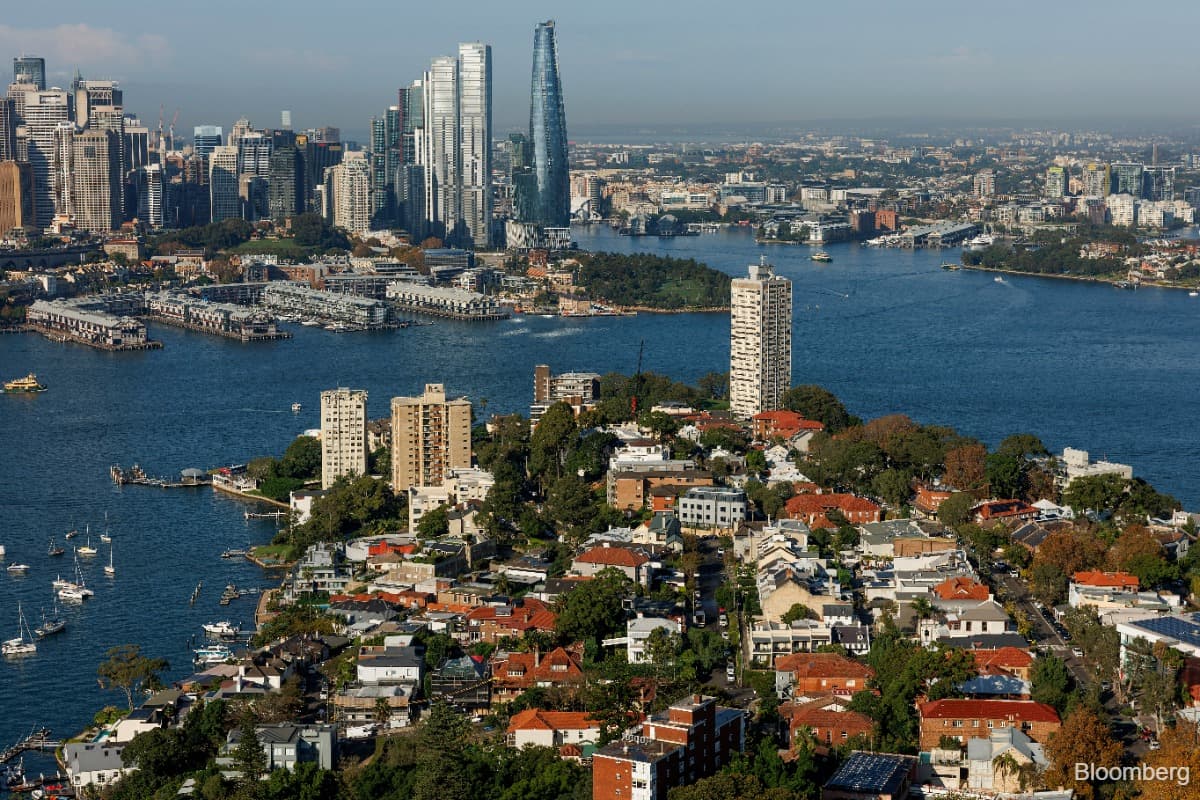
MELBOURNE/SYDNEY (Aug 28): A week before Christmas, police marched Andrew Hu, a mortgage broker in Sydney, out of his suburban townhouse in handcuffs and drove him away in a squad car.
Police then seized a Rolex GMT Master II, diamond rings worth tens of thousands of dollars, and froze two properties worth millions that they say Hu acquired by allegedly helping to defraud banks of more than A$100 million (US$72 million or RM290.04 million) with a group of lawyers, bankers and fellow brokers.
Hu was alleged to be part of the so-called “Penthouse Syndicate” that used fake documents and shell companies to take out massive loans from some of the country’s biggest banks, using insiders to gain approval. Police allege the group acquired loans for properties at inflated valuations, and used some of the proceeds to buy more high-end real estate, fancy cars and other luxury goods. Police say the elaborate fraud resembled a Ponzi scheme, as new borrowed money was used to pay down existing loans, while channelling money into new deals.
Hu, who’s in his 30s, has been charged with offences including dealing with criminal proceeds with an intent to conceal and directing activities of a criminal group. He is set to appear in court next week. Trial dates for Hu and others arrested have not yet been set.
His lawyer declined to comment.
Police have yet to untangle the full extent of the dealings, but anticipate the Penthouse Syndicate’s alleged frauds alone could tally more than A$400 million. Beyond this scheme, banks are grappling with other mortgage fraud using fake documents that could top A$4 billion in loans, according to the Australian Financial Review.
The allegations and criminal charges are a giant wake-up call for Australia’s banking system. The country's financial crimes agency, which is working with banks to untangle the claims at the heart of the Penthouse Syndicate allegations, said last week that Australia's biggest lenders face coordinated mortgage fraud across the banking system involving inflated incomes, misrepresented employment and fabricated business activity.
“The weaknesses it exposed could be exploited by criminals seeking to abuse Australia’s financial system,” said Brendan Thomas, chief executive officer of the Australian Transaction Reports and Analysis Centre. He said there was no evidence of widespread money laundering.
The scandals are spurring the industry to action. Banks are reassessing lending practices, pushing to generate their own deals and rely less on brokers as they try to weed out fraudulent loans. They’re also adopting new technology to identify doctored pay slips and company accounts, adding a further cost burden on the big four banks that already spend billions a year on technology. The country's regulators are working with the police and banks to examine this sprawling problem, and expanded anti-money laundering requirements to more professionals last month.
The allegations around the activities of the Penthouse Syndicate highlight that “financial crime has never really existed within a single institution”, said Alice Saveneh-Murray, partner of financial crime and implementation services for consultant KordaMentha. The scheme typically “flows across the lender network, lawyers, corporate structures”, making it hard to detect, she said.
Hu’s story
At the centre of the alleged fraud scheme sit brokers like Hu, who allegedly leveraged his deep knowledge of how banks process loans to expose weaknesses in the system.
Hu appeared to arrive in Australia around 2008 from Jinan, the capital of Shandong Province in China, according to his social media profile. He enrolled in Ryde Secondary School in Sydney and was commended by the state for his mathematics skills, going on to study finance and accounting at the University of New South Wales, one of Australia’s best schools. An associate from Hu’s university days recalls him as active and outgoing, with a big circle of friends.
After graduating, Hu worked at National Australia Bank Ltd from 2015 to 2018 as a financial planner, before working his way to become a business banker between 2018 and 2020. He then left to join Commonwealth Bank of Australia, the country’s largest lender.
In 2022, he was fired after CBA grew concerned over loans that police say cost the bank millions in losses. He found another banking job at a mortgage broker connected to one of Australia’s largest mortgage aggregators that funnels loans to the major banks. Here, police say Hu weaponised his knowledge of internal bank procedures to push through more spurious loans, bringing the total in fraudulent credit he helped generate to A$105 million, police allege.
Banking scams take on many forms, according to police and media reports.
With the Penthouse Syndicate, the complex web of allegations centre on a simple idea: recruiting professionals integral to approving loans at banks, brokers and law firms to alter documents with the goal of fraudulently borrowing money.
Under this scheme, police allege the syndicate would buy a shell company for as little as A$5,000, using names like Gold Roulette and Ohh Wow and inflated their financial statements. Syndicate members, known as mules, were allegedly installed at these firms and used fake pay slips to get bank approval for a loan from a staffer working for the group.
Police also allege home loans linked to the group were typically well in excess of a property's value, and that those implicated in the allegations pocketed the difference. This excess capital was then used for mortgage payments in order to keep the scheme running, while also used as the down payments for new loans, supercharging the alleged fraud. Members of the group also face allegations they used fake or stolen identification to generate loans for luxury vehicles that didn't exist.
The proceeds of the alleged crimes were used to support a luxury lifestyle among those at the heart of the allegations. As part of their raids, authorities seized a Bentley Bentayga SUV that can cost about A$450,000, a Ferrari 360 and real estate in some of Sydney’s most sought-after neighbourhoods.
Bing Li, alleged to be a member of the Penthouse Syndicate, was arrested wearing a limited edition Louis Vuitton jacket and was renting a penthouse condo for A$37,000 a month.
Court documents show Li faces charges relating to knowingly dealing with criminal proceeds with an intent to conceal and using false documents to obtain financial advantage. His lawyer declined to comment.
“This is the largest matter I’ve seen in terms of complexity, coordination, and the apparent corruption of trusted insiders,” said Gordon Arbinja, a three-decade veteran of the New South Wales police force and commander of the financial crimes unit.
The allegations have rocked Australia's banking industry, exposing vulnerabilities at some of the countries largest financial institutions even if they have yet to specify the dollar-figure losses attributable to the syndicate's activities.

The banks aren’t the only ones affected by the widespread fraud. Inflated property transactions may have unfairly elevated prices in some of Sydney’s most attractive enclaves. The country’s stable economy, steady population growth and shortage of housing has supported the real estate market for decades, though prices have slumped in recent months.
One four-bedroom home with a cinema, gym, mineral pool, elevator and roof terrace with views of Sydney’s skyline sold last year for around A$13 million to Anya Phan, a self-professed feng shui guru and fortune teller. She was later arrested for her alleged role in the Penthouse Syndicate.
Authorities seized the home and later sold it for A$8.5 million, according to Ric Serrao, a realtor with Raine & Horne who did the transaction, reflecting the exaggerated valuations that underpinned the alleged frauds.
Phan is alleged to have helped attract mules to borrow money, which police say included offering false prophecies of wealth through her fortune-telling practice. Phan withdrew almost a million dollars at Sydney’s Star Casino in transfers linked to her ANZ account, according to court documents.
She faces charges that include directing activities of a criminal group and dishonestly obtaining financial advantage by deception. Her case was heard again in court this week. Her lawyer declined to comment.
Meanwhile, the big banks have adopted various measures to thwart crimes like these. CBA has tightened its lending practices, while NAB in June unveiled a 24/7 operations hub to combat AI-enabled threats, scams and frauds. ANZ Group Holdings Ltd has identified scams and fraud as a top priority. Westpac Banking Corp highlighted fake applications for loans as a risk in a May report.
“The mortgage industry is fighting a heightened and increasingly sophisticated fraud environment,” said Chris Sheehan, executive of group investigations for NAB, who is responsible for protecting the company from fraud. The bank has reported multiple people to authorities and fired or suspended staff from the bank.
“We will continue to take an uncompromising stance on anyone who engages in illegal or unethical behaviour,” Sheehan said. He added this is a “complex, organised crime that spans industries and borders” and the bank is calling for a coordinated national effort to tackle the problem.
Spokespeople for CBA, ANZ and Westpac declined to comment.
Banks have joined forces through the Fintel Alliance initiative, where bank staff are seconded to the financial crimes agency Austrac. There, they are allowed to legally access, share and analyse financial data with other banks.
“We’ve got the most involvement we’ve ever had,” said Jon Brewer, national manager of the Fintel Alliance at Austrac. When banks highlight a concern for the Fintel Alliance to investigate, it issues notices to banks to collect the data and begin its analysis, which it can then pass on to law enforcement.

In July, Austrac extended anti-money laundering requirements to a larger set of businesses, including mortgage brokers, lawyers and surveyors.
The lenders are also stepping up efforts to generate more mortgages themselves rather than relying on external brokers, which has led to some tensions over the years. Brokers make up around 80% of the home loans generated in Australia, up from 50% a decade ago. Brokers can find themselves on the front line of frauds, dealing in doctored paperwork that is becoming harder to spot.
“Bulletproof documents generated by AI,” such as pay slips, are increasingly common and almost impossible to detect, said Theo Chambers, chief executive officer of Shore Financial, a Sydney-based mortgage broker. “We’ve been broking for 13 years and I’ve never seen the stuff I’m seeing now.”
Uploaded by Chng Shear Lane