

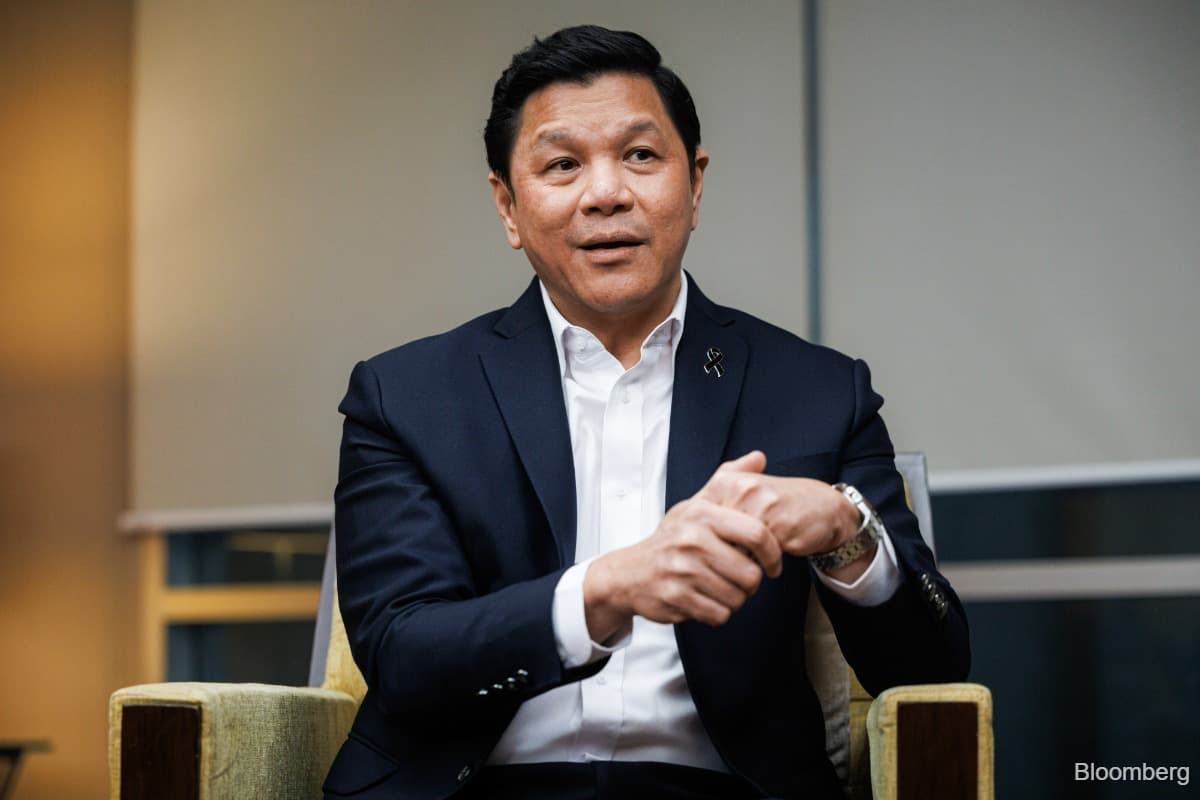
(Aug 28): Thailand’s central bank governor said restrictions on gold trading have weakened the metal’s influence on the baht and could be tightened further, as authorities step up scrutiny of the market for signs of illicit money flows.
The Bank of Thailand (BOT) imposed a 50 million-baht (US$1.5 million or RM6.1 million) daily limit on online gold trading per person in March and encouraged larger investors to settle transactions in US dollars rather than baht. Governor Vitai Ratanakorn said the cap could be lowered to 30 million baht or less if necessary.
“Could we tighten it further in the future? We can, because we now have the tool,” Vitai said Thursday in an interview at the central bank’s headquarters in Bangkok.
The measures appear to be weakening a relationship that had complicated Thailand’s management of the currency. The 60-day correlation between the baht and gold prices fell to 0.3 in April, the lowest in four years, from as high as 0.85 last year. Traders attributed the decline partly to the new limits, as well as a pullback in the precious metal.
Surging gold prices contributed to the baht’s sharp appreciation last year as large trades amplified currency swings. Thailand’s unusually active gold market makes that relationship particularly pronounced because local investors tend to sell when prices rise, generating sizeable inflows into the Thai currency, Vitai said.

Excessive currency strength can hurt Thailand’s export and tourism industries, two key drivers of one of Southeast Asia’s largest economies.
The BOT is separately increasing scrutiny of gold transactions as part of a broader crackdown on illicit financial flows. Physical gold withdrawals exceeding 2 kilograms have dropped about 70% since authorities began requiring them to be reported, Vitai said.
Authorities are also working to tighten controls on cash payments for gold purchases exceeding 10 million baht and on cash deposits or exchanges above five million baht.
“Ten million baht in cash? A normal person doesn’t carry a medium-sized suitcase full of cash to buy gold,” Vitai said.
The governor also backed the principle behind a Finance Ministry proposal to tax some gold transactions to improve transparency, provided the levy is low enough to avoid burdening legitimate businesses or consumers. The central bank isn’t involved in designing the tax.
“What we need to see is who is buying and who is selling gold because we believe some illicit money flows through this channel,” Vitai said. “If we can’t track the transactions, there’s no way to prevent it.”
Uploaded by Chng Shear Lane