

This article first appeared in Wealth, The Edge Malaysia Weekly on August 24, 2026 - August 30, 2026
Hive Ventures has set its sights on two Malaysian start-ups — one in fintech and the other in supply chain management — as it expects to close at least four new deals across Southeast Asia by year-end.
The investments form part of the venture capital firm’s bet on artificial intelligence (AI) and enterprise software that can improve how traditional industries operate in the region.
Its wider pipeline includes companies in Thailand, Singapore and Vietnam.
The firm’s investments will be made through the Taiwania Hive Ventures Southeast Asia Fund, which has raised close to US$80 million (RM325.7 million) towards its US$100 million target. The fund is jointly managed by Hive Ventures and state-backed Taiwania Capital.
Taiwania Capital was established in 2017 by Taiwan’s National Development Fund and private enterprises. It invests in technology and biotechnology companies in Taiwan and overseas.
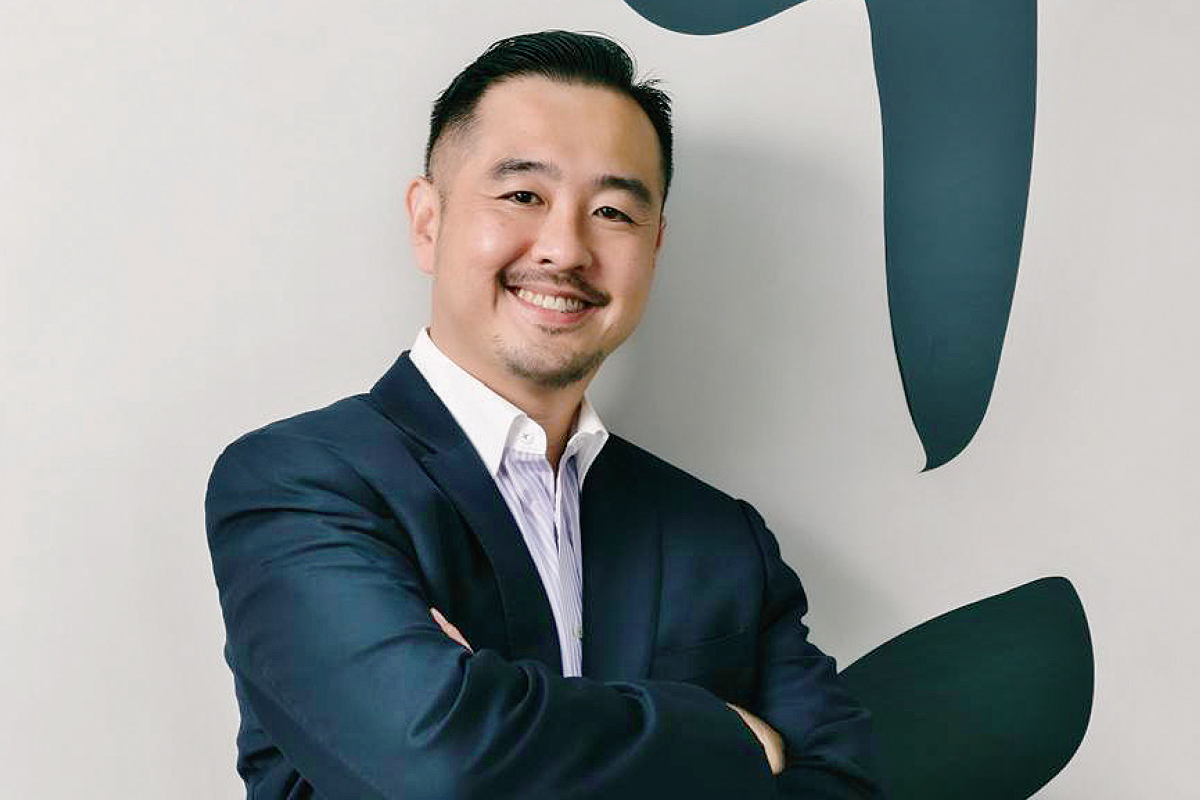
Hive Ventures founder and managing partner Yan Lee says the fund’s largest investors are the Taiwanese government and listed Taiwanese companies in telecommunications, systems integration and semiconductors.
The fund has been deploying capital for about a year and has completed three investments in the region. These are Malaysia-based human resources and payroll platform brioHR, Malaysia-based data trust and governance company Decube, and Thailand-based pharmacy technology platform Arincare.
One of the two Malaysian companies under consideration is expected to go before Hive Venture’s investment committee within the next month or two, with the firm intending to lead the round. Hive Ventures is still working through the structure of the second investment.
Its initial cheques range from US$500,000 to US$3.5 million, and 40% to 50% of the fund is reserved for follow-on investments. Although Hive Ventures invests from seed to early Series B, its current sweet spot is around pre-Series A, says Lee.
Established in 2024, the Southeast Asia fund can back founders from any country, provided Southeast Asia is a major base of operations, he says.
Taiwania Hive Ventures Southeast Asia Fund focuses on Singapore, Malaysia, Thailand and Vietnam. Hive Ventures has team members in Singapore and Vietnam, and is supported by venture partners and advisers across the region.
It has also obtained a venture capital fund management licence from the Monetary Authority of Singapore, even though Lee says it is not required for the fund’s current investments. He says the move reflects the firm’s long-term commitment to Southeast Asia.
In Malaysia, Hive Ventures has been building relationships with government agencies and investors, including Malaysia Digital Economy Corporation, Cradle Fund Sdn Bhd and Jelawang Capital Sdn Bhd.
“We have team members right now in Singapore and Vietnam directly. And we have stable venture partners and advisers in every single country, especially Malaysia, to help us drive the deal flow, corporate relationships, and getting to work in Malaysia. We are very active here,” says Lee.
“We actively engage with Jelawang. They’re an active unit within the ecosystem now, not just towards funds, but also to the entire start-up community at large. They’ve been very helpful in helping us meet other funds in the ecosystem as well.”
Hive Ventures sees mergers and acquisitions by buyers in Japan, South Korea, India, the US and Europe as its main exit route. It remains open to initial public offerings (IPOs) but does not expect to rely mainly on listings in Southeast Asia.
The firm is currently exiting two portfolio companies and expects several potential IPOs in Taiwan and the US over the next one to two years, according to Lee.
Hive Ventures’ approach is shaped by the experience of its founders, who spent years building and operating technology businesses before moving into venture capital.
Lee founded Hive Ventures with John B Chen and Will Wang. The three started a data company together in 2009 and went on to build businesses in the broader data and AI space across Asia and Europe, including taking a company public on Nasdaq.
They later moved into venture capital, establishing what Hive Ventures describes as Taiwan’s first dedicated data and AI fund.
That fund, the Taiwan AI Renaissance Fund, backs early-stage companies in data, AI and enterprise software, says Lee.
Opening corporate doors for portfolio companies
Malaysia is one of Hive Ventures’ key markets in Southeast Asia. The firm is finding local technology companies that have moved beyond the earliest stages of development and are already earning revenue from customers in several markets, says Lee.
He says government agencies and start-up programmes have helped Malaysian founders move from zero to one by turning ideas into businesses. Hive Ventures is looking at the next stage, where companies have proved they can survive and now need capital to scale from one to 10.
“They don’t necessarily need to take venture capital money to survive anymore. But they do need venture capital money to help them scale beyond Malaysia.”
Malaysia’s multilingual workforce and relatively competitive operating costs make it easier for these start-ups to build their businesses across borders.
At the same time, manufacturers from China and Taiwan are establishing operations in Malaysia under the China-plus-one and Taiwan-plus-one strategies. Their arrival expands the pool of potential customers at home and creates demand for technologies that can support their regional operations.
Hive Ventures’ value proposition is its corporate network, built through years of working with companies and investors in Taiwan’s technology and financial sectors.
Its strongest corporate relationships are in Taiwan, spanning electronics, semiconductors, telecommunications and finance. It works with companies such as Foxconn and MediaTek, while Chunghwa Telecom is an anchor investor in the Southeast Asia fund.
The networking works in both directions. It can help Malaysian start-ups expand into other markets and help overseas portfolio companies find customers and partners in Malaysia.
When a portfolio company has a relevant solution, Hive Ventures can bring its founders directly to senior corporate decision-makers. This gives the start-up an opportunity to secure a customer while allowing Hive Ventures to determine whether there is genuine demand for its product.
“It’s not just about hosting parties and then matchmaking sessions. It’s more about very surgical and precise kinds of introductions into an executive level to facilitate business, even co-investments,” says Lee.
“We work very, very closely with the corporates. So, we understand what a corporate needs, and then we bring our portfolio companies into the boardrooms, to the C-suites and the key decision-makers within the corporates.”
For Taiwanese portfolio companies looking to expand into Southeast Asia, Hive Ventures can also help them find customers, business partners and talent in the region.
Lee points to Taiwanese industrial AI company Profet AI Technology, which Hive Ventures introduced to a Malaysian partner at an event co-hosted with Penjana Kapital in Penang about two years ago.
Hive Ventures has also connected Profet AI with Malaysian agency Collaborative Research in Engineering, Science &Technology (CREST) on talent partnerships. The company is now studying whether to establish its Southeast Asian base in Malaysia.
Malaysia gives companies such as Profet AI access to an established electronics supply chain, a large base of Malaysian-owned businesses and a growing number of manufacturers and suppliers from China, Taiwan, Japan and South Korea, says Lee.
“Everyone’s converging into Malaysia right now, which offers a very large pool of enterprise customers for Malaysian start-ups,” he adds.
Meanwhile, Hive Ventures can use Taiwan as a base to connect Malaysian and other Southeast Asian start-ups to other North Asian markets.
Lee says Hive Ventures can link them up with government support, funding programmes and potential corporate customers in Taiwan. Once established there, they can use Taiwan as a stepping stone into Japan and South Korea, where Hive Ventures also has advisers and venture partners.
He says Taiwan’s proximity and business ties with those markets can make it easier for start-ups to enter Japan and South Korea from Taiwan than to expand directly from Malaysia or Singapore.
“If you serve the manufacturing industry, electronics manufacturing industry, Taiwan’s cluster represents the biggest cluster in the world supply … So we can help land them in Taiwan through government support, get grants and funding, and also directly bridge the main contact points that they need within these target clients.
“It’s easier for them to establish an outpost in Taiwan to go to these markets in Japan and [South] Korea rather than directly from Malaysia or Singapore,” he adds.
Save by subscribing to us for your print and/or digital copy.
P/S: The Edge is also available on Apple's App Store and Android's Google Play.