

This article first appeared in The Edge Malaysia Weekly on August 24, 2026 - August 30, 2026
MALAYSIA Land Properties Sdn Bhd (Mayland) is setting its sights on listing its hotel real estate investment trust (REIT) on Bursa Malaysia by early next year, followed by a potential secondary listing in Hong Kong.
According to prominent Hong Kong property and hotel tycoon Tan Sri David Chiu, six or seven Dorsett hotels will be injected into the REIT, with a targeted asset under management of RM1.3 billion.
“The primary listing would be in Malaysia because the assets are in Malaysia. But we may do a secondary listing in Hong Kong. That’s another advantage for us,” he tells The Edge in an interview. Chiu was at the “Think Business, Think Hong Kong 2026” symposium organised by the Hong Kong Trade Development Council in Kuala Lumpur recently.
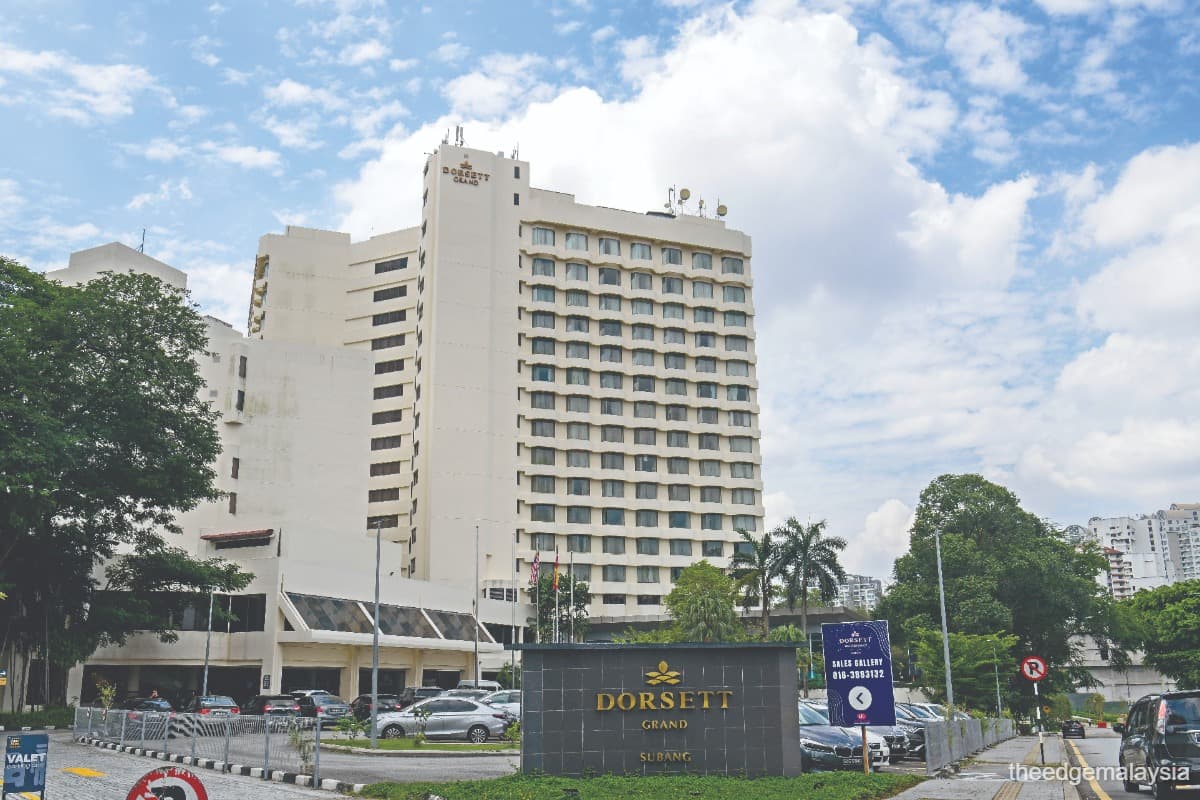
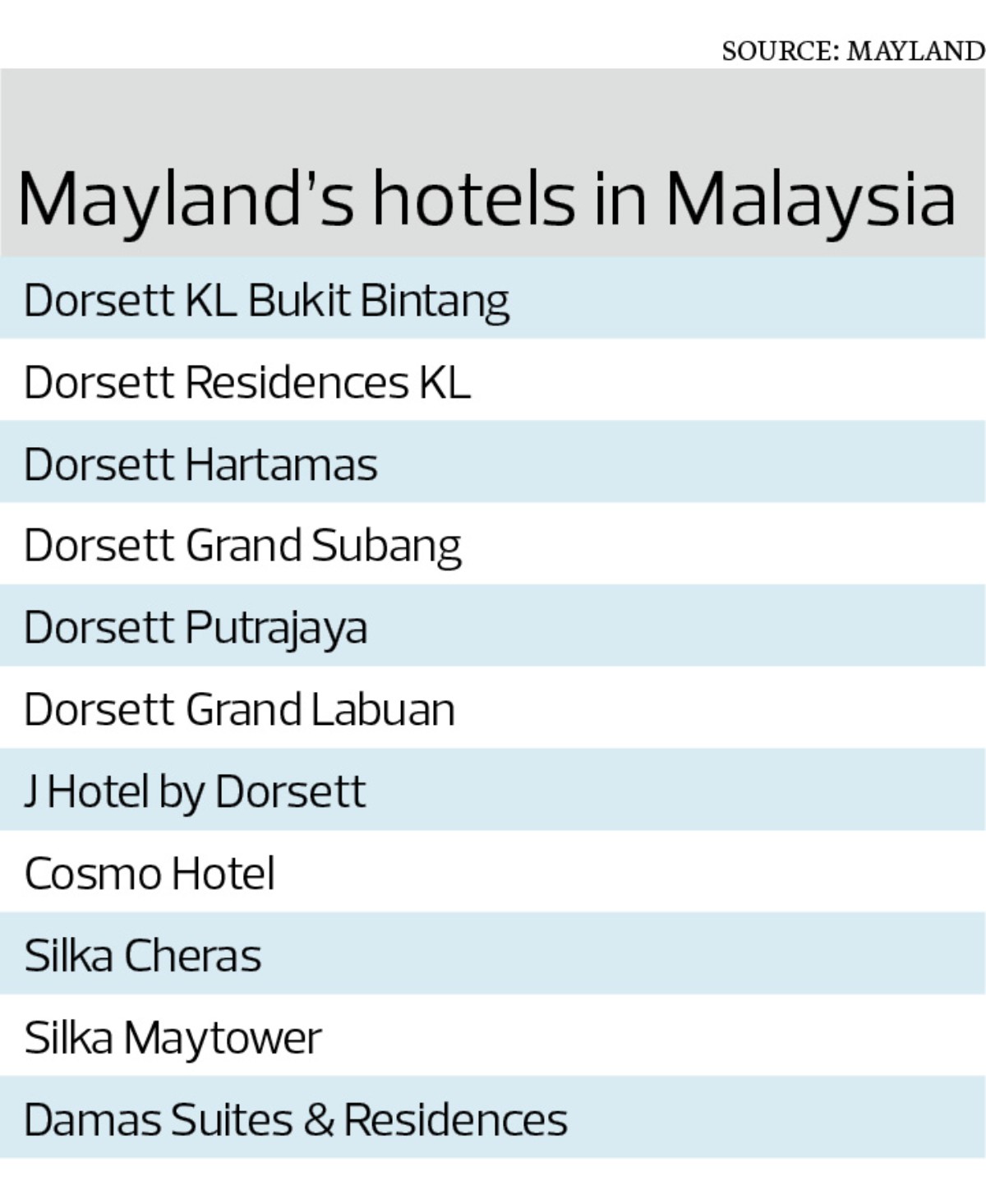
Mayland currently owns 11 hotels in Malaysia, including Dorsett KL Bukit Bintang, Dorsett Residences KL, Dorsett Hartamas, Dorsett Grand Subang and Dorsett Putrajaya, among others, for a total of 4,500 rooms.
Chiu says the group could also inject its 1,800-bed student housing — an off-campus accommodation known as Yoiho — in Subang into the REIT.
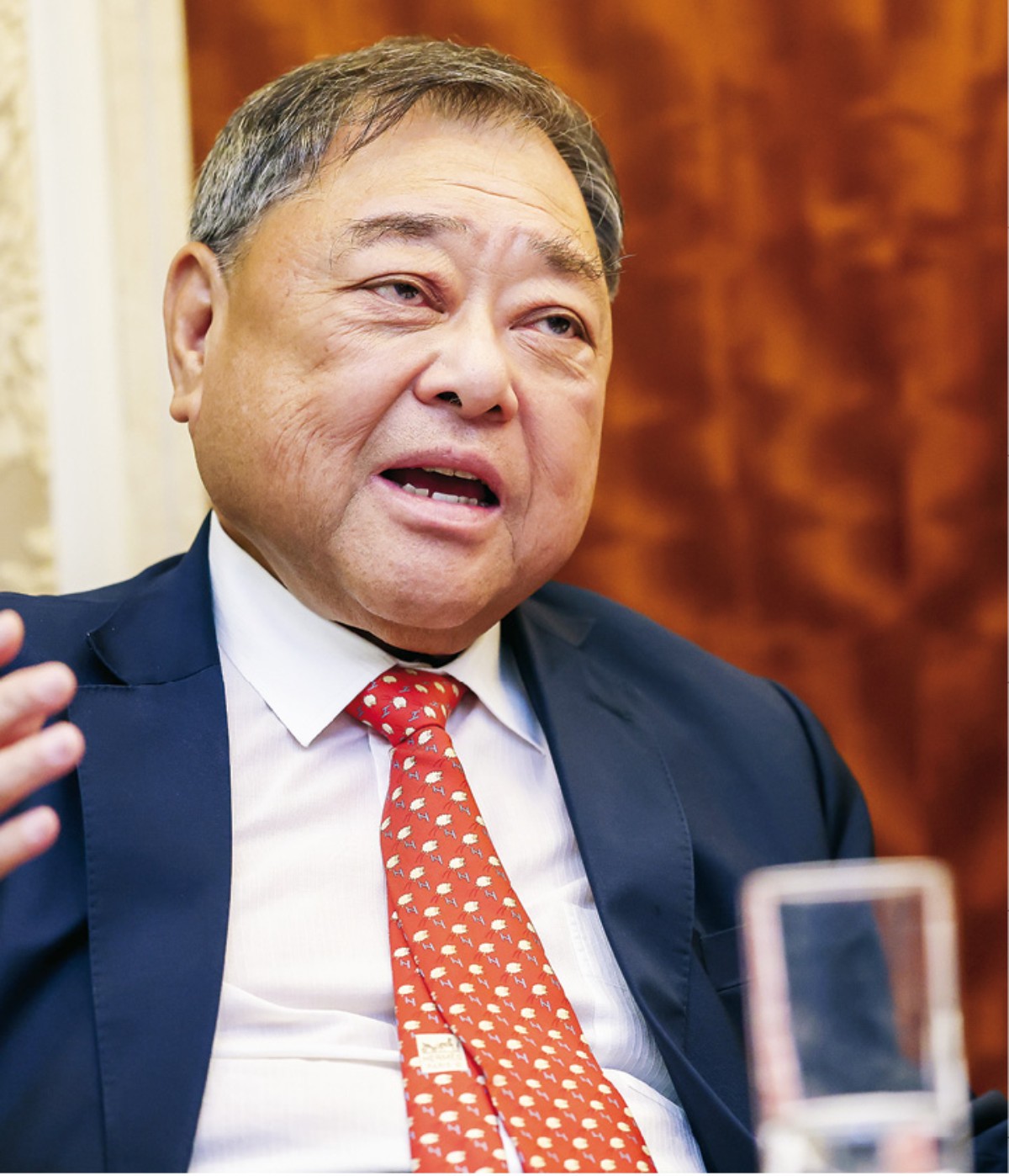
The tycoon is among a number of Hong Kong entrepreneurs who have established a significant presence in Malaysia since the 1980s. Chiu’s property and hospitality ventures in Malaysia are mainly undertaken through Mayland.
In addition, he owns Land Pacific Development Sdn Bhd, and is the largest shareholder of Land & General Bhd (KL:L&G) with a 34.74% stake held through Mayland Parkview Sdn Bhd.
Mayland’s planned REIT listing comes as the simplified dual listing framework between Malaysia and Hong Kong is set to take effect from September. Companies seeking simultaneous primary and secondary listings on Bursa and Hong Kong’s stock exchange will be allowed to submit a single set of documents, including a common prospectus, to support applications in both jurisdictions.
Chiu is the chairman and CEO of Hong Kong-listed Far East Consortium International Ltd, whose businesses span property development and investment, hotel operations and management, car park operations and facilities management, securities and financial product investment, and gaming operations.
Apart from Hong Kong and Malaysia, the conglomerate also has a presence in mainland China, Singapore, Australia, New Zealand, the UK and continental Europe.
Chiu’s entry into Malaysia some 30 years ago started with the purchase of KL Plaza — now the Fahrenheit 88 shopping centre in Jalan Bukit Bintang. The property was then sold to an Indonesian group before being taken over by local tycoon Tan Sri Vincent Tan. In 2007, it eventually came under the control of Pavilion Group.
Meanwhile, Far East’s Dorsett Hospitality International opened its first Dorsett hotel in Malaysia in 1998, before emerging as one of the largest hotel chains in Malaysia.
Expressing his bullishness on Malaysia’s property and hospitality market, Chiu says: “Today, Mayland, Land Pacific and L&G combined have a turnover of RM1.5 billion to RM2 billion a year.”
Founded in 1987, Mayland has an undeveloped land bank of nearly 90 acres in Malaysia, with an estimated gross development value (GDV) of more than RM8 billion. Its ongoing projects in the Klang Valley and Johor Bahru — including Majestic Kiara and Royal Garden — have a total GDV of RM1.5 billion. Majestic Kiara has achieved full take-up while new project One Stonor is slated for launch soon.
The hospitality business delivers a quarter of Mayland’s total revenue, with the remainder coming from property development.
New hotel plans
Chiu says Mayland also plans to build new hotels and resorts in Malaysia, particularly in tourist destinations like Langkawi and Sabah.
“Look at Legoland. It has been very successful. I think there is room to expand Malaysia’s tourism. Malaysia has surpassed Thailand into becoming the top tourism destination for Chinese tourists,” he says, adding that training and conference centres are also planned components of the group’s expansion of its hotel presence in Malaysia.
“Malaysia will be a centre for training and conferences, and it looks to be very promising. It won’t just be a boring hotel for us, but with convention centres and resort integration.”
Mayland is led by managing director Lee Han Ming, who was previously the CEO of Tropicana Corp Bhd (KL:TROP) while L&G is helmed by managing director Low Gay Teck.
On L&G, Chiu says he will retain his controlling stake in the company, citing the encouraging industrial property outlook in Malaysia. He has been L&G’s major shareholder since 2007.
L&G is diversifying into the industrial property segment with the development of an industrial park on its 2,500-acre Sungai Jernih Estate in Kerling, Hulu Selangor.
Chiu acknowledges the fact that L&G has a relatively low profile but at the same time, he highlights the company’s attractive dividend yield of more than 5%.
“It has a very strong balance sheet with very low gearing. The management is quite conservative, but I think we can do better with our balance sheet size in the foreseeable future.”
For the financial year ended March 31, 2026 (FY2026), L&G’s net profit jumped 38.7% to RM50.46 million from RM36.37 million in FY2025, underpinned by the robust progressive recognition of ongoing projects. It paid a one sen dividend in FY2026, representing a payout of RM29.7 million or 58.9% of profit after tax and minority interests.
As at end-March this year, it had a net gearing of 2.9% based on a net debt position of about RM33 million. L&G closed at 17.5 sen last Thursday, having gained nearly 40% year to date and giving the company a market value of RM535.2 million.
The property developer’s unbilled sales stood at RM618 million as at end-FY2026 and there are plans to launch multiple projects with an estimated combined GDV of RM1.5 billion in FY2027.
Synergy between Hong Kong and Malaysia’s business sectors
Chiu, who has owned business interests in Malaysia for decades, sees further opportunities between Malaysia and Hong Kong’s business sectors. Emphasising Hong Kong’s strengths in finance and the vast potential of the Greater Bay Area — a megalopolis linking nine cities in Guangdong Province with Hong Kong and Macau, he urges Malaysian companies to tap Hong Kong’s financial sector, given its advanced market status.
“Hong Kong is more than Hong Kong now. It is now the locomotive of the Greater Bay Area, which has a population of 70 million to 80 million,” he says.
As the world’s second-largest initial public offering market, Hong Kong offers much-needed market liquidity and access to a broader base of international investors for Malaysian firms seeking a secondary listing there, he asserts.
“For example, the Penang semiconductor base is extremely large. The technology sector in Malaysia has surprised me in the last few years. These companies have come a long way and are going to be stronger and bigger.
“Frankly, the research teams in Hong Kong covering the high-tech semiconductor industry are definitely bigger than those in Malaysia. And they have a lot of analysts to write very detailed reports on those companies, which will in fact attract international investors to Malaysian companies,” he contends.
Malaysia’s competitive advantages, Chiu says, include its robust infrastructure and competitive land prices.
“Looking at the airports, highways and ports, Malaysia is miles ahead in infrastructure. It also has competitive pricing for industrial land, particularly the availability of freehold properties, which are beneficial for long-term investments.”
Nonetheless, Chiu stresses that Malaysia needs to strengthen its education system in technology through the establishment of technology-focused schools.
He remains enthusiastic about investing in Malaysia and confident of the country’s economic prospects despite some political challenges.
“Fundamentally, I think the current government is doing a great job, and I believe it will continue to go from strength to strength in the foreseeable future. I’m confident that this very capable government will build on its success in the years to come.”
With its gross national income per capita rising to US$12,380 (RM50,640) — among the highest in Asia — alongside robust economic developments, Chiu says Malaysia’s economy is now in a “sweet spot”. He also notes that the “Malaysia Truly Asia” tagline is well reflected in the country’s diversity, particularly through the presence of vernacular schools.
Given the cultural similarities between Malaysia — especially its Chinese community — and Hong Kong, he believes there is further potential to deepen investment flows between the two markets.
Save by subscribing to us for your print and/or digital copy.
P/S: The Edge is also available on Apple's App Store and Android's Google Play.