

This article first appeared in The Edge Malaysia Weekly on August 24, 2026 - August 30, 2026
LAST year, Malaysia’s sole casino operator Genting Bhd (KL:GENTING) celebrated its 60th anniversary.
After its construction following the opening of the road from Genting Sempah to the peak of Gunung Ulu Kali in 1969, the casino on the Pahang side of the hilly terrain did not look back for a good 45 years.
Genting’s casino and theme parks in the highlands attracted scores of tourists and high rollers because it was the only established gaming operator in the region. Leveraging its profitable Malaysian operations, the group expanded its reach overseas, incurring debts that are now bogging it down.
Its major expansion push came in 2006, when it secured the rights to develop one of the two casinos in Singapore. That year, it also spread its wings to the UK.
In 2021, at the height of the pandemic, Genting opened its first casino in Las Vegas. Then last year, through its 73.83%-owned subsidiary Genting Malaysia Bhd (KL:GENM), it secured a licence to operate a casino in New York, marking its second major gaming venture in the US.
But all is not rosy for the group. A combination of rising debts, narrowing margins at its overseas operations due to competition and an increasing political risk premium for its Malaysian operations has dragged the fortunes of the casino, leisure and hospitality group to an all-time low.
Except for Resorts World Sentosa (RWS) in Singapore, Genting’s overseas expansion has yet to pay off. RWS contributes almost 50% to the group’s earnings before interest, taxes, depreciation and amortisation (Ebitda).
The drawback is that RWS operates in a controlled environment, which leaves little room for Genting to leverage its healthy balance sheet. All the money in RWS is to be spent on expanding its facilities in Singapore, under the watch of the city state’s Gambling Regulatory Authority.
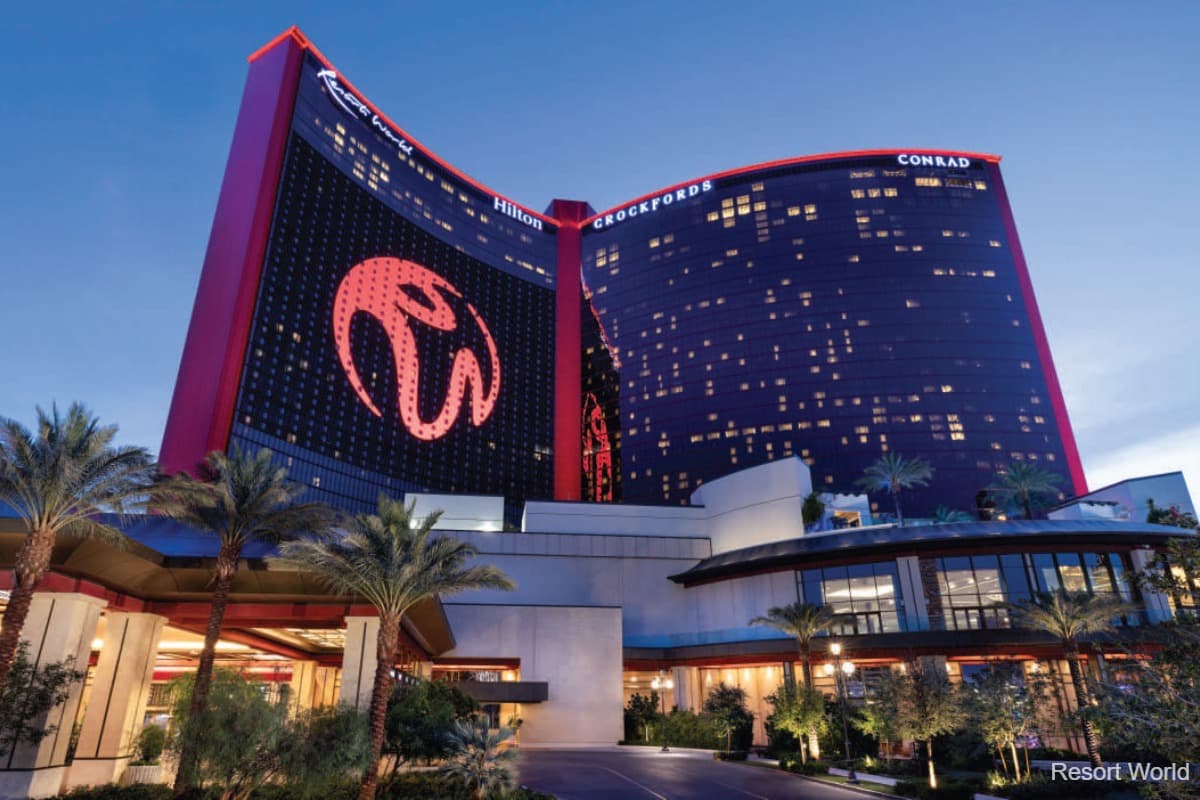
Resorts World Las Vegas (RWLV) is probably the worst performer for Genting in terms of return on investment. Its contribution to the group’s Ebitda was less than RM250 million for the financial year ended Dec 31, 2025. In contrast, the group had ploughed more than RM20 billion in investments into the integrated resort.
Last Friday, Genting announced a net loss of RM27 million for its second quarter ended June 30, 2026, compared with a profit of RM243.5 million in the previous corresponding period. This was partly attributed to foreign exchange translation losses and the higher financing cost for its debts of RM45.25 billion.
The company’s shares are trading at a valuation of about RM8 billion, which actually only reflects the value of its 73.8% stake in GENM. This effectively means the market has not accorded any value to Genting’s casino businesses outside Malaysia as well as its ownership of Genting Plantations Bhd (KL:GENP) and the assets held at the group level.
Genting has invested an estimated US$4.5 billion (about RM20 billion) in RWLV, while the value of its 52.4% stake in Genting Singapore plc is about RM12.5 billion. Even after taking into account the discount on investments accorded to Genting as a holding company, its valuation should easily be more than double today’s price.
But that is not the case. Genting is cheap for several reasons, says a fund manager.
“Among them are its rising debts, corporate governance issues, overseas investments in the US that have yet to pay off and the changing political landscape in Malaysia. Moreover, it has to continue spending more for its operations in Singapore and for the setting up of a new casino in New York,” the fund manager explains.
“The rising debts amid a rising interest rate environment will not do Genting any good. The 10-year US Treasuries are already at 4.71% while the 30-year bonds are at 5.2%. Any future refinancing will only get more expensive.”
According to its latest quarterly results, Genting’s total borrowings had risen to RM45.25 billion at end-June 2026, from RM40.81 billion in December 2025. The rising debts reflect the group’s capital commitments.
Only about 23% of the group’s total borrowings has a maturity profile of more than five years, which means the bulk of it has to be redeemed or refinanced in the next five years.
In the first half of this year, Genting refinanced its debts with the new issuance of US$1.25 billion worth of perpetual bonds at 7.6%. The previous tranche was issued at 4.25%.
In an email reply to The Edge, Genting says a significant portion of the borrowings (about RM40 billion) is tied to major developments, the capital expenditure for which is heavily weighted to the initial investment phase.
“These investments are expected to strengthen the group’s earnings and cash flow generation as the projects mature. Resorts World Genting (RWG), the group’s flagship property, is a testament to our execution capability,” says the group, addressing its rising debts.
It adds that RWG has been operating since the 1970s, and the scale of the resort and continuous improvements undertaken underscore its status as a world-class destination, as reflected in the visitor numbers of more than 28 million in 2025.
The group points out that Resorts World New York City (RWNYC) is another example of its long-term strategy and execution capability. “RWNYC has operated exclusively with video lottery terminals and electronic table games since 2011 at the Aqueduct Racetrack and ranks among the most successful commercial casinos in the US outside of the state of Nevada.”
Rising political risk
Apart from seeking new sources of growth, Genting’s expansion overseas is aimed at diversifying its portfolio in anticipation of growing political risk for its flagship operations in Genting Highlands, Pahang. Recent state election results show a very real possibility that a united Malay-Muslim political force could take control of the federal government and state governments in Peninsular Malaysia.
As Islamic law prohibits gambling, the environment will not be conducive for gaming companies. For instance, in Kedah, where the state government is led by the Islamist party PAS, number forecast outlets cannot operate even though the Federal Court has ruled against the state government’s move to not issue licences to operators.
It has been reported that the matter of Genting’s diversification was broached during its recent shareholders’ meeting. Shareholders asked why Genting was not undertaking share buybacks and doing more to raise its investment profile.
Management replied that there was a need to restructure its business to operate in an environment that is more conducive for gaming companies.
“The company explained that it is one of the reasons why it is putting more money in the US, where the gaming regulations are more transparent and conducive for investors,” says a shareholder.
Government-backed local institutional funds do not invest in Genting as it is a non-shariah-compliant stock. Non-government local funds and foreign institutional funds have also reduced their equity interest in Genting and GENM following their poor performance and exclusion from the MSCI Malaysia Index in 2025.
Another local fund manager says Genting’s problem is more its rising debts than corporate governance issues. “Related-party transactions have always been in the group. But the returns to shareholders were reasonable, with healthy dividends. Now, it has debts, and dividends are down to single digits.”
On the monetisation of assets to reduce its overall debts, Genting says it will continue to look at ways to unlock value where appropriate.
“Depending on market conditions and valuations, this could include IPOs, strategic partnerships or selective asset disposal. Asset disposals will be considered if there is an attractive offer, a good realisable value, or if there are non-core assets such as surplus land, or at maturity of projects,” it tells The Edge in its email.
Analysts are waiting for signs of sustained performance by Genting’s overseas operations before becoming more optimistic about the stock. “There are no visible catalysts, with key subsidiaries’ operations still weak,” says CGS International’s Chong Tjen San.
Notwithstanding the performance of the US casinos, Genting has assets it can dispose of to reduce its debts, a move that would stir some interest. So far, however, the group has not undertaken any major asset disposals. Such a measure could provide the much-needed catalyst for investors to revisit the casino operator.
Save by subscribing to us for your print and/or digital copy.
P/S: The Edge is also available on Apple's App Store and Android's Google Play.