

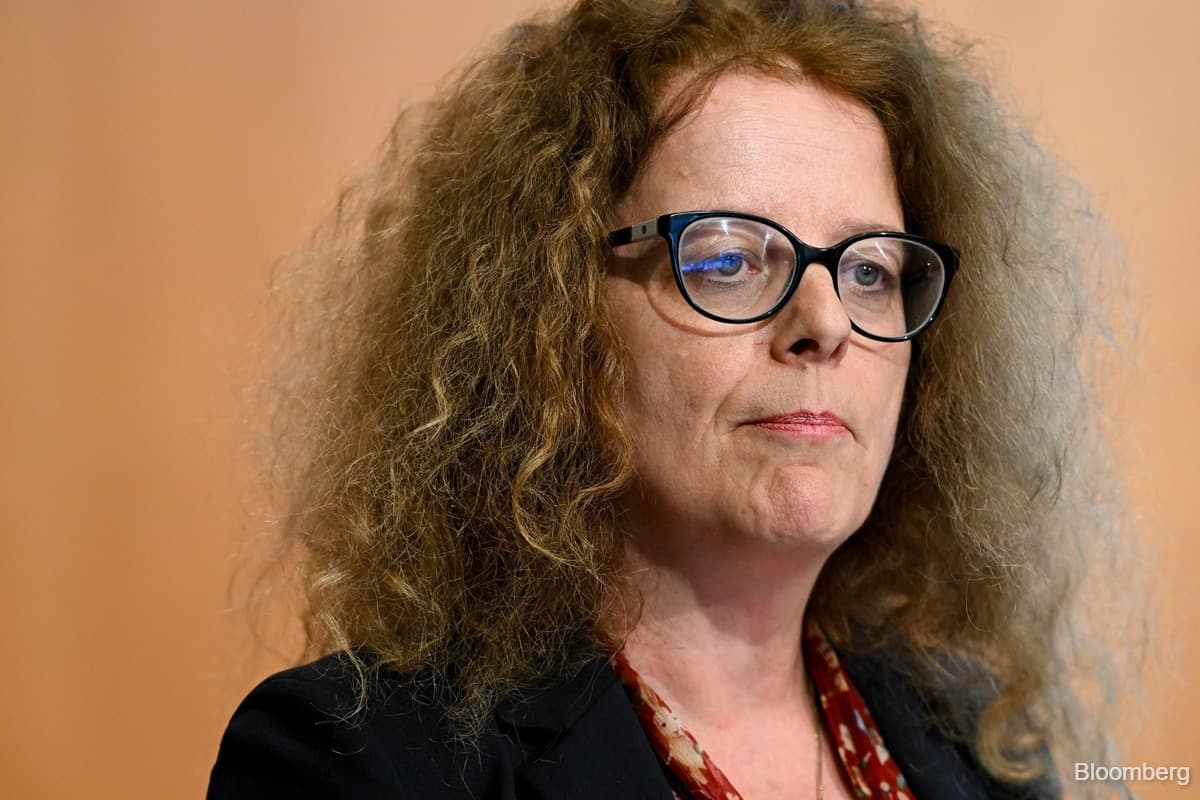
(Aug 26): European Central Bank (ECB) Executive Board member Isabel Schnabel said interest rates must rise further as the lengthy conflict in the Middle East and surprisingly strong euro-zone economy pose upside risks to inflation.
Consumer-price growth is likely to exceed 2% for an “extended period” due to high energy costs, the German official said. Acting only when this feeds into wages would leave policymakers “behind the curve,” she warned.
“At the current policy rate, inflation is unlikely to return to target over the medium term, and therefore further tightening will be necessary,” Schnabel told Bloomberg on Tuesday. “Especially in the current environment of resilient aggregate demand, it is critical to prevent the occurrence of second-round effects early on because acting late could necessitate more tightening.”
The ECB was the first major central bank to lift borrowing costs over the Iran war and officials have pitched next month’s meeting as a crucial juncture to determine whether more is needed. Investors are almost fully pricing a quarter-point move, bringing the deposit rate to 2.5%. They see another by spring 2027, possibly as early as December.
Schnabel said markets “seem to understand our reaction function very well,” without specifying how much further borrowing costs are likely to rise.


Supporting her argument on Europe’s economic resilience, data released Tuesday showed German output rising more strongly than initially estimated in the second quarter. The euro area grew 0.4% in that period after stagnating in early 2026.
“The economy continues to be stronger than expected, and incoming data have repeatedly surprised on the upside,” Schnabel said, pointing to fiscal policy, a pickup in defense spending and the global AI boom as key drivers.
“Sentiment indicators suggest that growth is gaining further momentum,” she said. “So, compared with the June staff projections, I see risks to economic growth as being tilted somewhat to the upside.”
On inflation, which picked up to 2.9% in July, Schnabel warned that energy-price pressures beyond oil are becoming more sustained. Developments with natural gas are “particularly concerning” due to Europe’s low storage levels, she said.
“This poses material upside risks to inflation,” she said. “The longer the conflict lasts, the higher the risk and intensity of indirect and second-round effects, especially if aggregate demand remains resilient.”
A key question is whether rates will need to be lifted to levels where they restrain economic activity. Chief economist Philip Lane has indicated that 2.5% is currently the upper limit of a range within which borrowing costs have a neutral impact.
“How much further tightening is needed will depend on incoming data,” Schnabel said.
Uploaded by Liza Shireen Koshy