

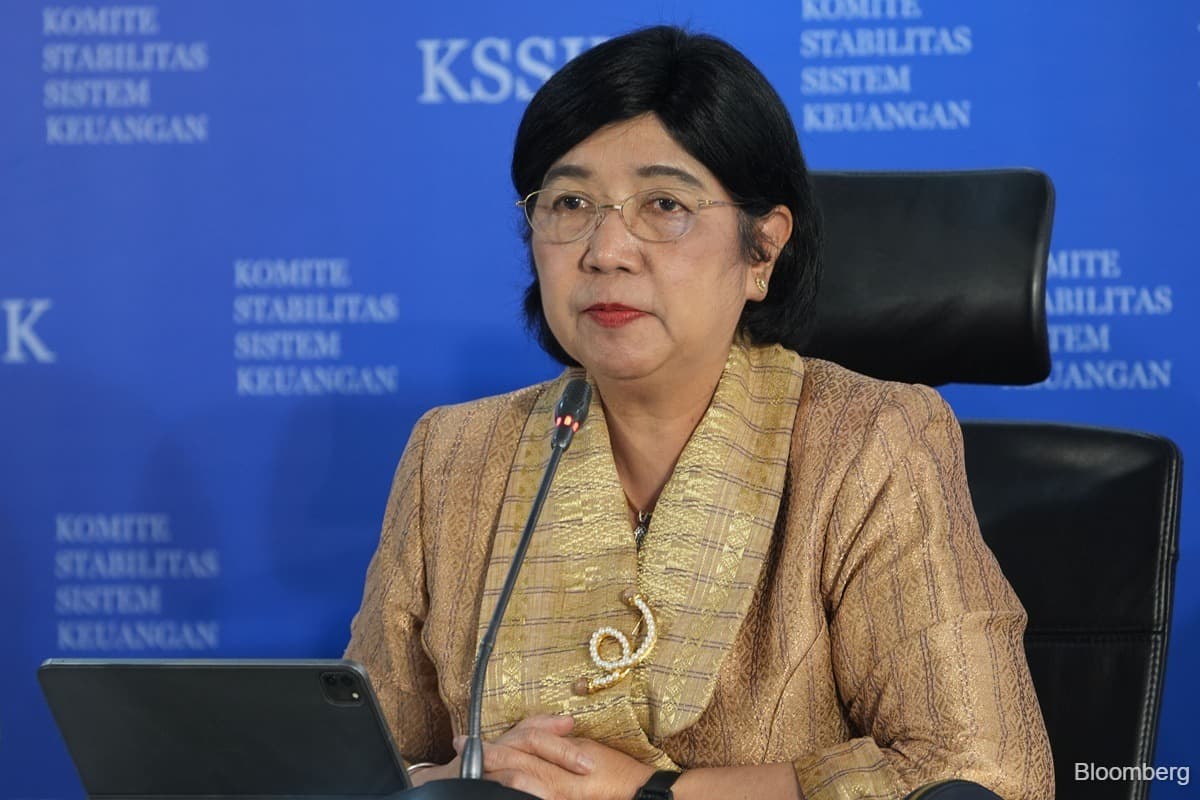
(Aug 26): Bank Indonesia’s prospective governor Destry Damayanti said she would ensure the independence of the monetary authority, even as she pursues closer “synergy” with the government to achieve both stability and economic growth.
Destry faced parliament on Wednesday for her fit-and-proper test, the last major hurdle to become the next governor of Indonesia’s central bank. Lawmakers honed in on how the acting chief would ensure BI’s autonomy, especially in the face of competing demands to stabilise consumer prices and the currency, while supporting the economy.
“Synergy” with the government would allow each institution to use its respective tools to address increasingly complex problems facing Southeast Asia’s largest economy, Destry said.
“I want to emphasise that the word ‘synergy’ doesn’t mean reducing BI’s credibility and independence in carrying out its duties. We will continue to uphold independence” as outlined by the law, she said.
Destry’s pronouncements should come as a relief for investors rattled by a series of policy moves that seem geared toward making the central bank play a larger role in achieving the government’s 8% growth target — a level not seen in three decades.
In this year alone, President Prabowo Subianto has appointed his nephew as deputy governor at the central bank, while disagreements over monetary policy were said to lead to the sudden exit of the long-serving governor Perry Warjiyo, two years before the end of his term. A recent law also expanded the mandate of the central bank to include growth and job creation, on top of currency and price stability.
Destry sought to strike a middle ground during her vetting, telling lawmakers that “strong stability provides business certainty and ultimately supports growth”. BI also has a robust “policy mix” of monetary, macroprudential and payment system tools at its disposal, she added.
Destry’s term will run from 2026 to 2031 once lawmakers give her the nod, chairman of the Indonesian parliament’s financial commission Mukhamad Misbakhun said. If confirmed, she would be the first woman to lead BI since its establishment in 1953.
The rupiah and stocks were little changed, while the 10-year government bond yield kept its increase of three basis points after the announcement.
While the sudden exit of Warjiyo at the end of July triggered a slump in Indonesian assets, the nomination of Destry, a veteran economist and a long-time deputy to Warjiyo, has since prompted a recovery amid hopes of policy continuity.
“The important part of her message is the clear distinction between policy coordination and any dilution of Bank Indonesia’s independence,” said Fesa Wibawa, investment manager at Aberdeen Group plc.
“Today’s comments should be reassuring rather than market-moving. They demonstrate that she is well attuned to the sensitivity of the independence issue and understands the importance of articulating it clearly,” he said.
Same wavelength
Elaborating on her monetary policy stance, Destry told parliament that her primary focus was on “maintaining stability while still providing room for economic growth”. The benchmark BI-Rate would also be used in a “preemptive and forward-looking manner”, she said, using similar wording as her predecessor.
“Perry and I have different personalities. But when we talk about policy, we are on the same wavelength,” she added.
As governor, Destry said she would reinforce the rupiah’s stability through “smart interventions”, while “pro-market monetary operations” should ensure adequate liquidity. Foreign exchange flows will be a priority area, with BI boosting coordination with the government and the new state agency tasked with monitoring commodity exports, she said.

That’s in line with the outcome of BI’s policy meeting last week — the first to be led by Destry. The central bank held the key rate while expanding incentives to lure inflows that can underpin the currency. She also signalled a shift away from using the central bank’s high-yield securities, or SRBI, to attract flows, amid criticism from the government that it soaked up liquidity.
“We expect her appointment to sail through parliament, and so far so good,” said Euben Paracuelles, economist at Nomura Holdings Inc. “She is sticking to the script, with a little bit of everything under BI’s policy mix framework.”
Destry has been Bank Indonesia’s senior deputy governor since 2019. She previously served as chief economist at PT Bank Mandiri and as commissioner at Indonesia’s deposit insurer. She holds a bachelor’s degree in economics from the University of Indonesia and a master’s degree in regional science from Cornell University.
The rupiah’s recent recovery, coupled with modest inflation and improved market sentiment, should allow Destry to keep the BI-Rate on hold, according to Brian Lee, an economist at Maybank Securities Pte Ltd.
However, “continued external volatility will likely pave the way for Governor Destry to be able to chart her own course on monetary policy actions in the coming months”, said Lavanya Venkateswaran, economist at Oversea-Chinese Banking Corp.
Uploaded by Chng Shear Lane