

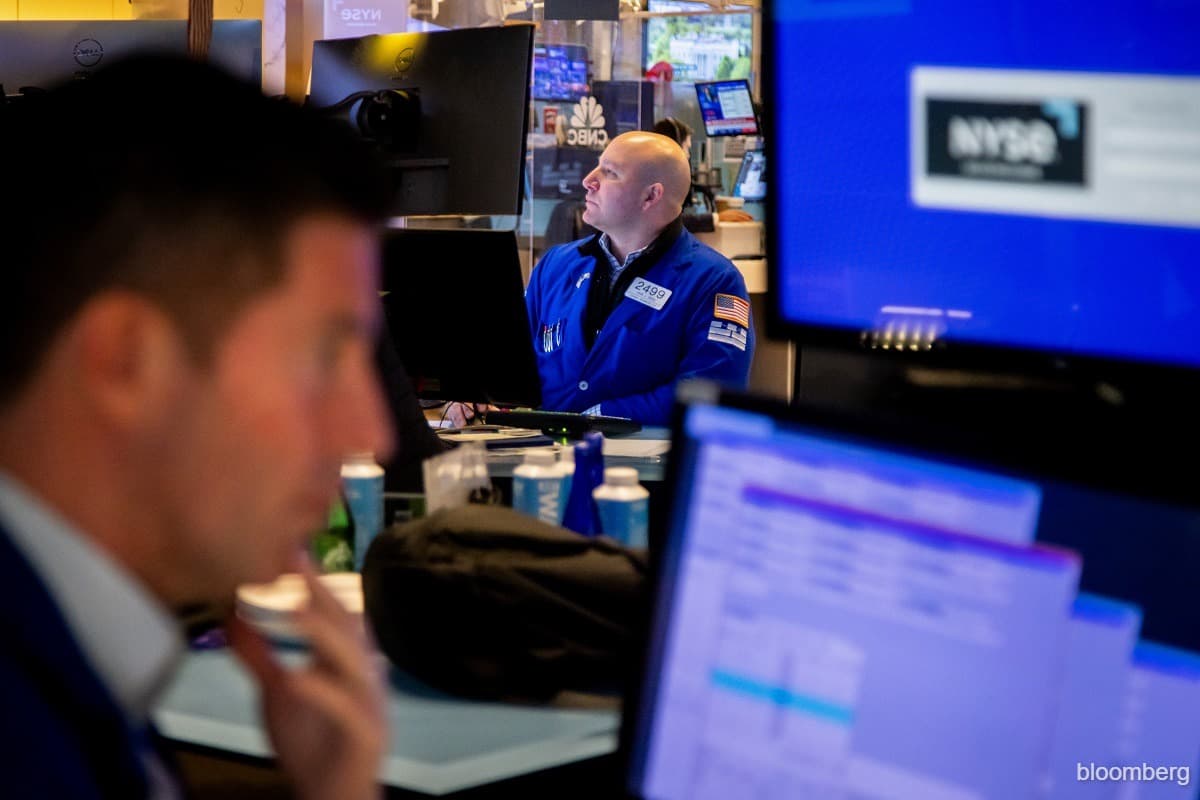
NEW YORK (Aug 25): The S&P 500 and Nasdaq ended lower on Monday, pulled down by technology stocks, as investors weighed fresh US economic pressure against Iran and braced for a week that includes Nvidia earnings and a closely watched inflation report.
The Trump administration announced on Monday a possible expansion of sanctions on countries doing business with Iran as part of what it billed as an "economic D-Day," but stopped short of actually imposing penalties.
Chip stocks sold off, dragging the Philadelphia SE Semiconductor index lower. Nvidia dropped 2.9%, Micron Technology fell 5.8% and Broadcom slid 2.6%, pressuring the S&P 500 Information Technology index.
Sentiment for technology firms was also hit by growing political opposition to AI data centres.
Texas governor Greg Abbott delivered one of the starkest warnings yet from a Republican to the AI industry, saying data centre companies "dug their own grave" and deserve the backlash they're facing after failing to win community support, Axios reported on Sunday.
This month, Abbott ordered a pause on approvals of new data centre projects through the state's grid interconnection process, citing concerns that a surge in electricity demand could threaten reliability at a time when opposition to the projects is growing.
"The bigger worry we have is the hawkish rhetoric we’re starting to hear from politicians on AI and data centres," said Ohsung Kwon, chief equity strategist at Wells Fargo. "We’ve been highlighting that as a big risk heading into the mid-terms."
Financials, however, gained, with JPMorgan Chase up 1.4% and Visa up 3%. They also kept the blue-chip Dow afloat.
The Dow Jones Industrial Average rose 140.15 points, or 0.26%, to 53,417.16, the S&P 500 lost 21.51 points, or 0.28%, to 7,652.86, and the Nasdaq Composite lost 200.26 points, or 0.76%, to 25,980.19.
Eyes on Warsh’s Jackson Hole speech
Concerns over ballooning government debt had pushed the 30-year yield to a 19-year high before the Treasury announced support measures last week.
CNBC reported on Monday that Treasury Secretary Scott Bessent could tap the department's near US$1 trillion (RM4 trillion) General Account to help fund bond buybacks. Yet, the 30-year US Treasury yield remained above the 5% threshold.
This turbulence has sharpened focus on Federal Reserve chair Kevin Warsh's speech at the Jackson Hole symposium on Friday, where investors will look for clues on policymakers' reading of the Treasury's rescue efforts.
Quarterly results from AI giant Nvidia are expected to be another key catalyst for markets. Any sign of slowing growth could reignite concerns over stretched valuations.
"Nvidia needs to impress in order to keep one leg of the stock market stable, and Warsh needs to provide clarity on interest rates in order to keep the other leg stable," said Richard Reyle, chief investment officer at Questar Capital Partners.
Markets will also monitor the Personal Consumption Expenditures report, the Fed's preferred inflation gauge, due on Wednesday. It will follow a benign consumer inflation report earlier this month that reduced the chances of an immediate increase in interest rates.
Traders expect one 25-basis-point hike by the end of 2026, according to LSEG data.
Separately, US President Trump warned that tariffs on cars, trucks and automotive parts from Canada would be increased to 50% starting Jan 1 after trade talks collapsed over the weekend.
Automakers Ford and General Motors fell 3.3% and 1.1% respectively, while trucking company JB Hunt Transport dropped about 5.7%.
Declining issues outnumbered advancers by a 1.08-to-1 ratio on the NYSE. There were 158 new highs and 116 new lows on the NYSE.
On the Nasdaq, 1,955 stocks rose and 2,934 fell as declining issues outnumbered advancers by a 1.5-to-1 ratio.
The S&P 500 posted 17 new 52-week highs and seven new lows while the Nasdaq Composite recorded 87 new highs and 98 new lows.
Volume on US exchanges was 14.36 billion shares, compared with the 16.5 billion average for the full session over the last 20 trading days.
Uploaded by Magessan Varatharaja