

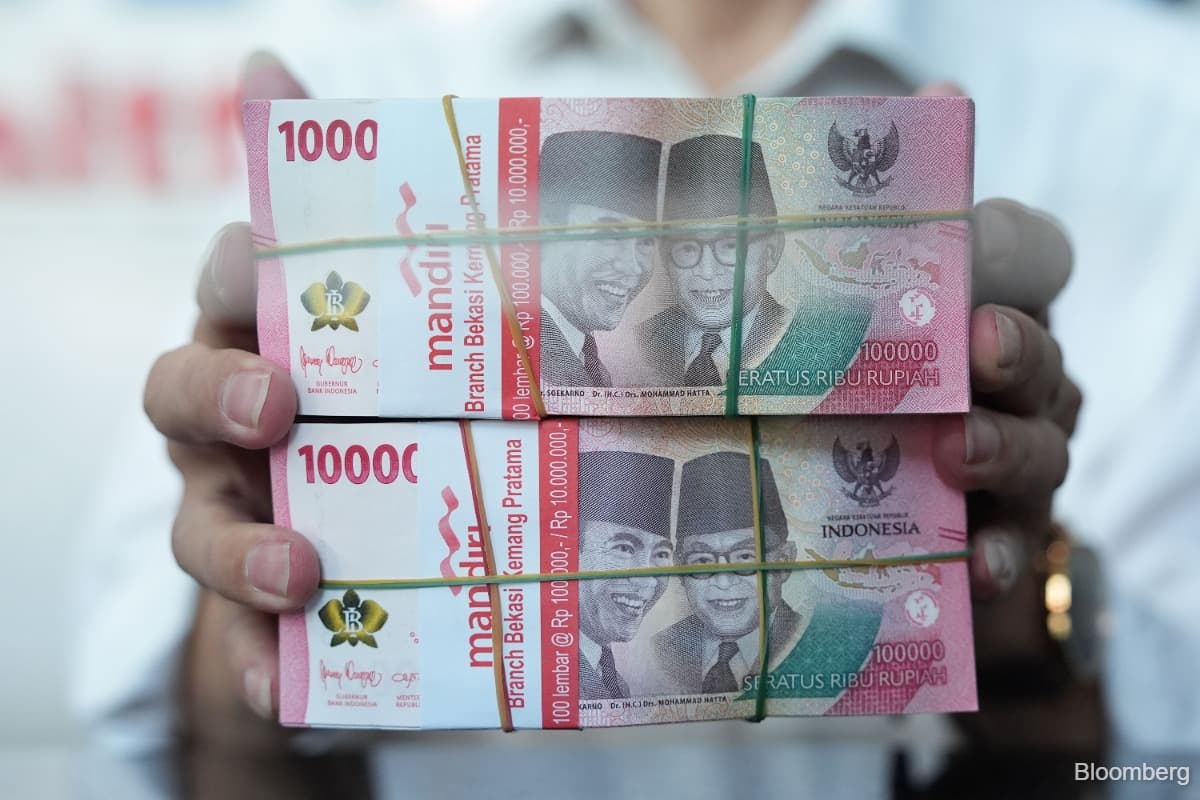
(Aug 24): Indonesian government bonds drew the biggest foreign inflows in more than seven years, helped by a stronger rupiah and expectations that the central bank will keep interest rates steady following a 100-basis-point increase this year.
Global funds bought a net US$656.7 million (RM2.65 billion) of the nation’s debt on Thursday — the most since July 2019, according to latest finance ministry data. That brings this month’s net foreign buying to US$931.74 million, keeping Indonesian bonds on track for a third straight month of inflows.
The surge in inflows reflects improved investor sentiment after Bank Indonesia’s measures to attract foreign funds, which alongside its intervention in the currency market have boosted the rupiah. The rupiah is up 1.8% so far in August, making it one of the best-performing currencies in Asia after a sell-off earlier in the year. Thursday’s inflows came a day after BI held its policy rate steady in the first monetary decision under acting Governor Destry Damayanti, and expanded a hedging incentive programme to lure more inflows.
The high foreign net buying is “the positive impact from BI pivot strategy. No more fear of further interest-rate tightening to curb currency depreciation,” said Wee Khoon Chong, senior Asia Pacific market strategist at BNY. In addition, “the stability in the FX market led to investors re-engaging in the Indonesian bond market”.
President Prabowo Subianto’s plan to lower state budget deficit for next year is also providing a tailwind for these bonds. Improving fiscal credibility, a stronger rupiah and no BI rupiah securities or SRBI auction last week are among factors that triggered the inflows, said Jessica Tasijawa, a fixed-income analyst at PT Mirae Asset Sekuritas Indonesia.
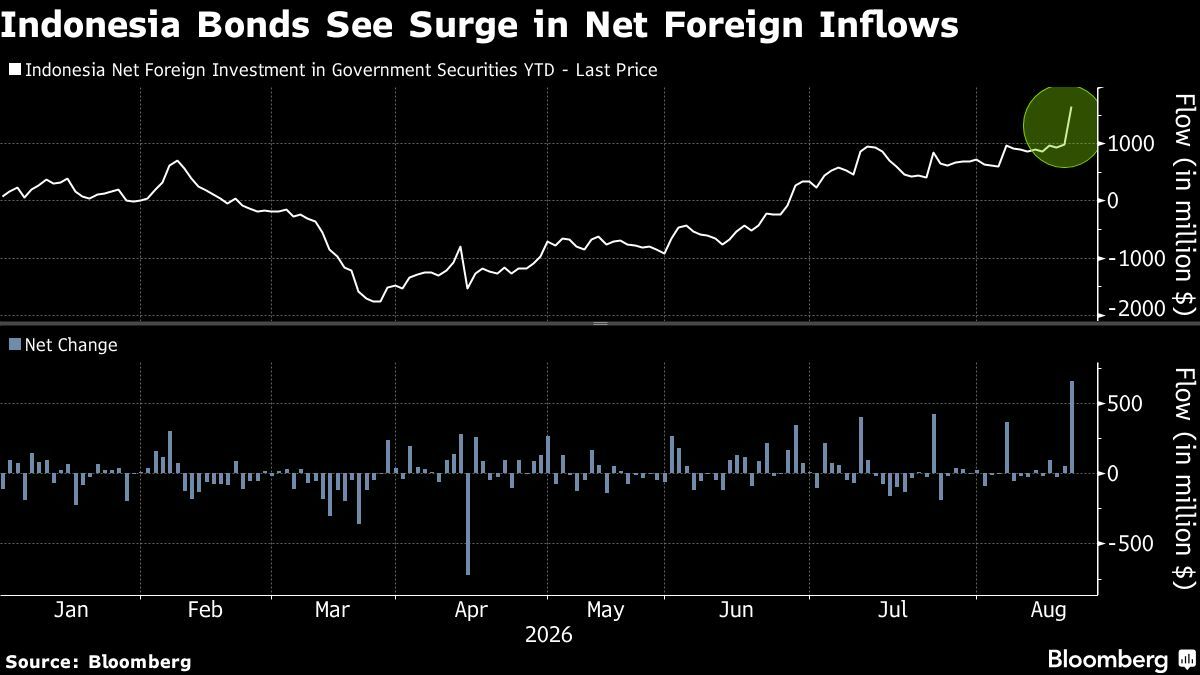
The central bank said on Friday it will cut the frequency of auctions for SRBI from once a week to once every two weeks, after Destry signalled a shift away from the tool to attract foreign investors to the currency.
The rupiah has recovered more than 2.7% from its record low in early June on BI rate hikes, easing fiscal concerns as well as a softer dollar. The 10-year yield, meanwhile, dropped 52 basis points from its June peak, while the rate-sensitive five-year yield fell even more by 69 basis points.
A government bond auction last week saw a strong demand, with the bid-to-target ratio standing at 2.65, the highest since December, according to data compiled by Bloomberg. Foreign bids surged to 17.2 trillion rupiah (US$972 million or RM3.9 billion), well above this year’s average of 8.3 trillion rupiah and making it the highest foreign participation this year, according to PT Mandiri Sekuritas.
Currency expectations are a more important driver of foreign flows into bonds than yield differentials, said Handy Yunianto, fixed-income research head at Mandiri Sekuritas. “A stable-to-stronger rupiah can continue to attract foreign inflows even as Indonesian bonds’ relative yield advantage narrows.”
Uploaded by Chng Shear Lane