

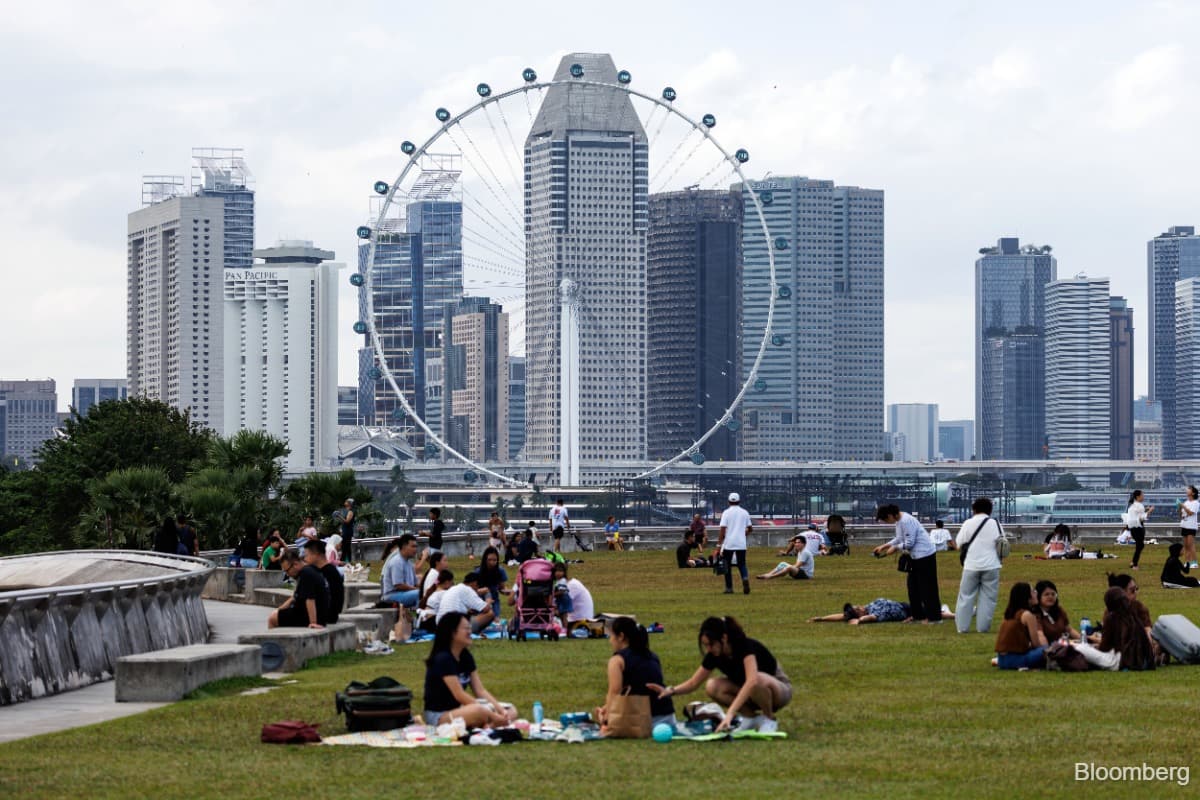
(Aug 24): Singapore’s core inflation surged to a nearly two-year high, driven by higher utility bills as elevated global energy prices filtered through to households.
Core inflation, which excludes housing and private transportation costs, accelerated to 2% in July from a year earlier, according to a statement by the Singapore Department of Statistics on Monday. That was the fastest pace since October 2024, though below the median estimate of 2.2% in a Bloomberg survey.
The all-items inflation rate came in at 2.2%, compared with the 2.4% survey estimate.
Prices of utilities and other fuels surged 6.1% from a year earlier amid higher energy costs from the continued war in the Middle East. Singapore, which imports almost all of its energy needs, was forced to raise its electricity and gas tariffs to a record high for the third quarter.
Transport inflation also remained elevated at 7.9%, while food inflation likewise quickened to 2.2%.

The sharp pickup in core inflation “reflected a lot of the pass-through from the energy shock due to the Iran war, particularly for private transport, land transport, airfares, in addition to health insurance”, said Selena Ling, the chief economist of Oversea-Chinese Banking Corp (OCBC).
She flagged upside risks for the rest of the year, with the threat of a super El Niño dry spell and US-Iran negotiations still at a stalemate.
In his National Day Rally address on Sunday, Prime Minister Lawrence Wong again aired a warning about economic fallout from the conflict. “We are dealing with a major crisis in the Middle East. Shipping through the Strait of Hormuz has been disrupted. This has exposed vulnerabilities in energy, food and other critical supplies,” he said.
Some analysts said the inflationary impact seems contained and will unlikely prompt further action from Singapore’s central bank, which already tightened monetary policy twice this year.
The jump in core inflation was “visibly smaller than expected”, according to Brian Tan, an economist at Barclays plc, who sees the Monetary Authority of Singapore (MAS) standing pat through next year.
The government has already moved to cushion citizens from external shocks, rolling out nearly S$2 billion (RM6.4 billion) of support since the outbreak of the US-Iran war earlier this year. The MAS also tightened policy anew last month. While the central bank maintained its forecast for core inflation at 1.5%-2.5% this year, it warned that price pressures are likely to stay elevated until mid-2027.
To be sure, Singapore’s economy has proved resilient despite the conflict and its inflationary impact. The government recently upgraded its 2026 growth forecast to 4.5%-5.5% as the artificial intelligence boom lifts trade and manufacturing.
The MAS’ current monetary policy stance appears to be in a good place to manage inflation that can emanate from firmer-than-expected growth too, said DBS Group Holdings Ltd economist Chua Han Teng.
Policymakers are “alert to the risk that strong technology-led economic growth could generate demand-pull and upward wage pressures that may influence future monetary policy decisions”, he said.
Uploaded by Tham Yek Lee