

This article first appeared in The Edge Malaysia Weekly on August 17, 2026 - August 23, 2026
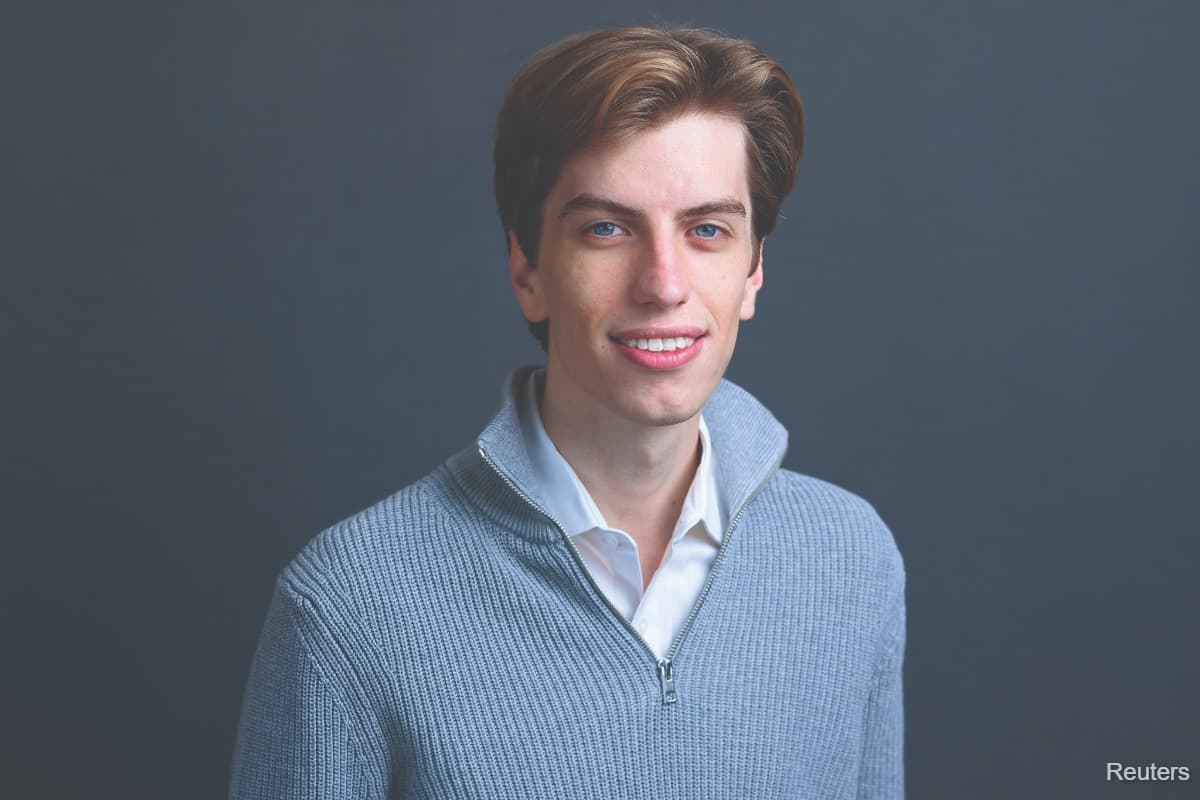
WHAT do you call a 24-year-old with no previous experience in the financial services industry who runs a US$45 billion (RM184 billion) hedge fund? Some might describe him as a whizkid while others might view the German-born, early-career high achiever as more of a wunderkind. In late 2024, Leopold Aschenbrenner, then just 22, launched Situational Awareness, an artificial intelligence (AI)-focused hedge fund with just US$200 million pooled from a “who’s who” of high-profile Silicon Valley tech icons — including Irish brothers Patrick and John Collison who co-founded fintech giant Stripe; Nat Friedman, the former CEO of GitHub and a prominent AI investor; Daniel Gross, an investor and Friedman’s partner in an AI-focused investment fund; as well as elite high-speed quantitative proprietary-trading firm Jane Street.
By the end of his first full year as a hedge fund manager, Aschenbrenner was being hailed as the “Nostradamus of AI”. By late July, Situational had spectacularly blown up and was forced to sell its entire publicly-listed portion of his portfolio to billionaire Ken Griffin’s Citadel at a 10% discount. With a rebound in tech stocks, Citadel is reportedly sitting on over US$2.5 billion in capital gains on the purchase.
For its part, Situational was left with just over US$10 billion in private tech firms, about half of which is in AI frontier lab Anthropic PBC, or public benefit company. The other half of the portfolio is made up of investments in private firms such as MatX, an AI-chip start-up, and Fluidstack, an AI data-centre company as well as two smaller chip firms. “We took the steps that were necessary to fight another day,” Aschenbrenner told investors in a letter after the forced sale, a day before his wedding. “I will make it my mission to ensure that we learn the necessary lessons from this experience.”
Should you care that a rookie hedge fund manager’s fund blew up? Here’s the thing: by the time it collapsed in late July, Situational was the world’s 10th largest hedge fund, with over US$45 billion in assets under management, behind Bridgewater Associates (US$78 billion), Millennium Management (US$77 billion), Elliott Investment (US$76 billion), Citadel (US$67 billion), MAN Group (US$66 billion), D.E. Shaw (US$60 billion), billionaire Cliff Asness’ AQR Capital (US$51 billion), Two Sigma (US$51 billion) and Renaissance Technologies (US$46 billion). No hedge fund has ever catapulted to a global top 10 position as fast as Situational. Indeed, many of today’s top global hedge funds were founded long before Aschenbrenner was even born. Connecticut-based Bridgewater was founded 51 years ago, billionaire investor Paul Singer began building Elliott Investment 49 years ago, Izzy Englander’s multi-manager “pod shop” Millennium has been in business for over 37 years and Citadel has been around for more than 36 years.
Illustrious career
The son of two middle-class Berlin physicians, Aschenbrenner demonstrated a prodigy-level aptitude for mathematics and computer science at an early age and was almost destined to be a star. He attended the prestigious bilingual German-American John F. Kennedy School in the German capital where he graduated at the age of 15, three years earlier than most other high school kids. At 15, he enrolled at New York’s Ivy League institution Columbia University where he graduated four years later as the valedictorian, or the top-ranked student who delivers a farewell speech at the graduation ceremony. He briefly worked for the now-defunct Global Priorities Institute at Oxford University and later joined FTX Future Fund, the philanthropic arm of Sam Bankman-Fried’s FTX Foundation in Nassau, Bahamas, quitting just before FTX imploded in late 2022. He was just 21 years old.
In early 2023, he joined OpenAI, which had just unveiled ChatGPT, the first generative AI chatbot, as a member of its “Superalignment” team, focusing on technical strategies to make sure future superintelligent AI systems align with human values. He remained at OpenAI until April 2024 when he was fired amid disputes over internal security memos and an alleged internal information leak to people outside OpenAI. Aschenbrenner has said he was fired after circulating a memo criticising the company’s security measures and raising internal safety warnings.
After his firing, he wrote the seminal essay titled “Situational Awareness: The Decade Ahead”, a massive 165-page manifesto published in June 2024. The document, which laid out an aggressive, detailed prediction of the AI boom, infrastructure constraints and geopolitical risks, became required reading across Silicon Valley. The wunderkind argued that AI progress would be faster and more world-altering than markets appreciated. Eventually, the thesis turned into an AI fund. Tech founders, CEOs, billionaire venture capitalists and an array of tech industry executives approached him. Some even offered him money to start his own fund. Situational Awareness LP, the hedge fund named after the essay, was launched in November 2024.
Aschenbrenner put his manifesto into a portfolio, going long the “picks and shovels” of the AI boom — chipmakers like Taiwan Semiconductor or TSMC; memory chip giant SK Hynix, which emerged as a global leader in high bandwidth memory and is a key partner of Nvidia; flash memory and data storage player SanDisk; data centre and neocloud names like CoreWeave and Nebius; power players like Bloom Energy, which manufactures the solid oxide fuel cells (SOFCs) that produce electricity through a non-combustion chemical process, providing onsite power for data centres and industrial sectors; as well as a host of other AI infrastructure players — while shorting software companies like Adobe and Oracle he expected would be disrupted by AI.
Situational’s assets under management ballooned from US$225 million at the end of 2024 to US$1.5 billion by mid-2025, US$5.5 billion by the end of 2025 and around US$45 billion in June this year. The fund had returns of 439% in the first half of the year. To be sure, buying AI picks and shovels and selling software has been one of the most crowded trades on Wall Street. But Situational didn’t fail because it was doubling down on a crowded trade; it faltered because the main ingredient in Aschenbrenner’s recipe was leverage through put and call options. Not just a little bit of borrowing but reportedly up to four times leverage for every dollar it had put up itself. When a fund has that sort of leverage, even a relatively small drop in the portfolio can wipe out its equity.
Here is how it all unfolded: In early July, AI and chip stocks began reversing. That hit both sides of Situational’s portfolio simultaneously. The stocks it was long on fell just as its software shorts began rallying strongly. With four times leverage, Situational’s fund had dropped over 67% by Friday, July 24. His prime brokers — Goldman Sachs, JPMorgan and Bank of America — promptly issued margin calls, forcing him to sell. At first, he tried to sell his private tech stocks like Anthropic but changed his mind to sell only the listed shares that he owned at the urging of his then fiancé. Millennium Management and Jane Street looked at the public portfolio and passed. Jane Street, which is an investor in Situational, wanted to cherry-pick some stocks. With the wedding just two days away, Citadel offered a deal Situational couldn’t refuse. It bought the entire listed stock portion of the portfolio at a 10% discount to the closing price on July 29. Despite a 67% plunge in July, the fund’s cumulative return since the start of the year stands at about 80%, mostly due to two funding rounds by Anthropic. The frontier AI lab raised money at a US$183 billion valuation in September last year, then at US$350 billion valuation through a Series G round in February this year and US$865 billion valuation in a Series H round in May.
Rebuilding Situational
What’s next for Situational and its founder? As Aschenbrenner was picking up the pieces of what remained of his fund in the aftermath of the forced sale to Citadel, he told investors he would work hard to show that the recent tumultuous events have made him a stronger and wiser investor.
Having postponed his honeymoon to focus on rebuilding the hedge fund, Situational invested an additional US$400 million in Source Foundry, an AI chip-manufacturing start-up in which it had already invested US$100 million just three days after this wedding. Source Foundry, founded by Stanford researchers, aims to make chip fabrication faster and cheaper. Among its early backers are giant venture capital firm Sequoia Capital. Financial Times reported this past week that Situational had invested up to US$500 million in another private tech firm. Just going by the two new investments, Aschenbrenner’s investment axis seems to be shifting from leveraged bets on listed stocks to private tech firms in the AI supply chain.
Situational’s new investments are the first signs of how Aschenbrenner intends to rebuild his fund. He is doubling down on private chip bets such as Source Foundry rather than the leveraged public AI-infrastructure bets such as Bloom Energy and SK Hynix that blew up his fund. He is buying illiquid positions in private tech companies that can’t be packaged into 3X leveraged long ETFs or margin-called the way his listed stock portfolio was.
A week after he lost nearly US$35 billion and just days after his wedding in Carmel-by-the-Sea on the central coast of California, Aschenbrenner was fielding a surge of inbound interest from Silicon Valley investors wanting to pour more money in. For now, Situational is turning them away. It has told investors it is not accepting new capital at the moment but will let them know once it is ready to do so. It’s a smart strategy. He has readily accepted blame for his own actions, has been contrite, promised to put in better risk management processes and instead of grabbing all the new money that is coming through the door, he is telling investors he will inform them when he is ready to accept new money.
Silicon Valley has rallied around Aschenbrenner in the aftermath of the margin call and forced sale. Situational is still a 20-month-old fund and he has a long road ahead of him. Before the margin calls that forced the sale of the listed stock portfolio, Aschenbrenner was reportedly worth about US$5 billion. His net worth is down to just US$300 million. He still lives in Nob Hill, the wealthy, upscale San Francisco neighbourhood. Warren Buffett, who retired as CEO of Berkshire Hathaway at the end of last year, currently has a net worth of around US$150 billion. The Oracle of Omaha launched his professional investing career by setting up Buffett Partnership Ltd at the age of 25. Though he reached millionaire status when he was 32, the vast majority of his wealth was accumulated much later in life. Buffett only became a billionaire at the age of 56 in 1985.
Anyone who invested in Situational until late last year is still way ahead. Late-stage investors who came in over the last five or six months are obviously down. People I have spoken to in Silicon Valley say Aschenbrenner is very smart, has learnt his lesson and will quickly bounce back. He is still young. Indeed, he turned 25 last week. The best time to take big risks and learn hard lessons is when you are 24, because you have a lot of time to recover. With talent and a track record like his, I have no doubt that Aschenbrenner will at some point emerge as an investing legend. Last month’s margin call might turn out to be merely a footnote in a much bigger Situational story.
Assif Shameen is a business and investment writer based in North America
Save by subscribing to us for your print and/or digital copy.
P/S: The Edge is also available on Apple's App Store and Android's Google Play.