

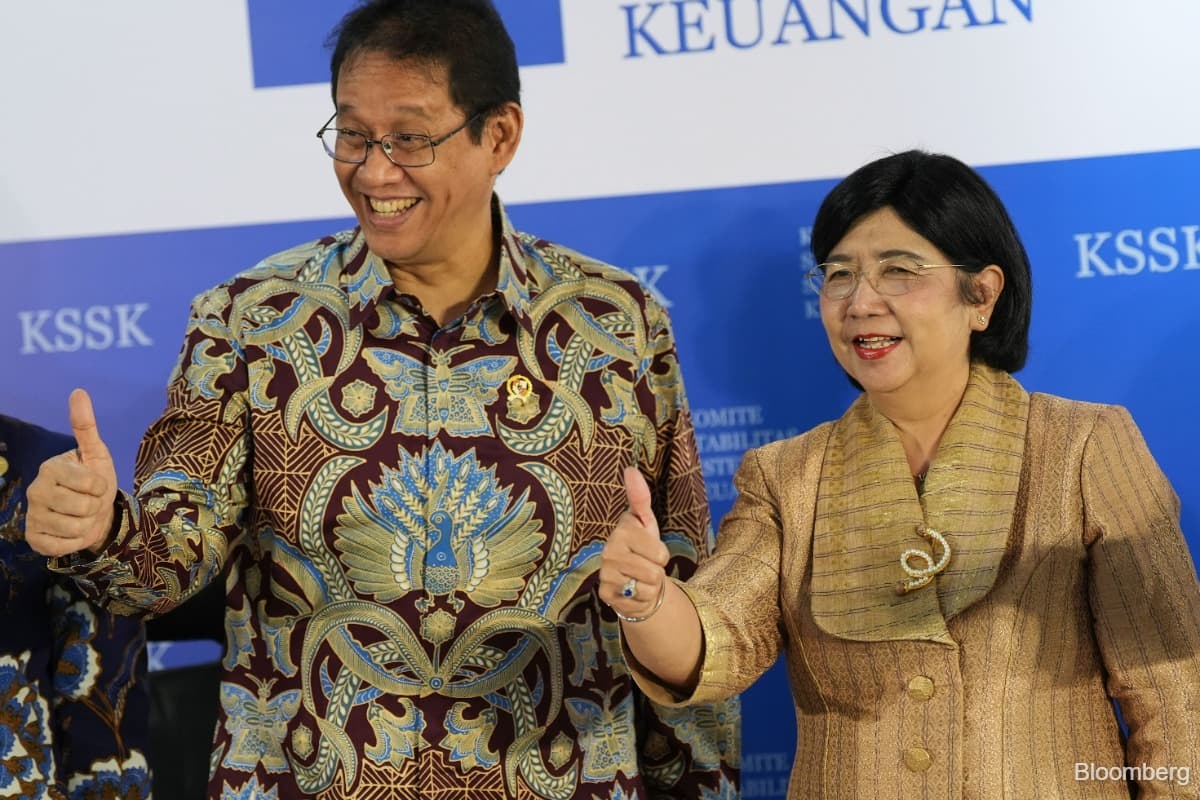
(Aug 21): Indonesia’s new central bank chief is putting a nascent rupiah rally at risk by shifting away from a tool meant to attract foreign investors to the currency, according to analysts.
In leading her first policy meeting as acting governor on Wednesday, Destry Damayanti said the bank would pivot to offering hedging incentives, instead of letting yields on its rupiah securities, or SRBI, climb further. Meanwhile, it kept its benchmark rate unchanged, a move the new chief said would support the currency and economic growth.
“It is prudent that BI does not want to rely indefinitely on ever-higher SRBI yields to support the rupiah,” said Christopher Wong, a strategist at Oversea-Chinese Banking Corp in Singapore. The recent array of hedging incentives offered by the bank should help at the margin by reducing some of the currency risk, though the perks are unlikely to generate inflows on their own, he said.
“Foreign demand will ultimately still depend on the yield pick-up, confidence in the rupiah and policy direction, as well as the broader backdrop in US yields and oil,” Wong said.
The heavy reliance on SRBIs — and the risk that they crowded out demand for the government’s own bonds — has been a source of tension between the central bank and the finance ministry, and is said to be one of the reasons behind long-serving Governor Perry Warjiyo’s abrupt resignation last month.
The change is a significant shift in the role of SRBI, a brainchild of Warjiyo introduced in 2023. Offering juicy premiums on the securities became one of his main ways to lure foreign funds to underpin the currency, without raising the policy rate. Warjiyo had touted SRBI’s sizeable yield differential over US Treasuries earlier this year when the rupiah was hitting record lows.
Destry’s move contrasts with last month’s BI statement that “SRBI yields were raised to attract foreign portfolio investment flows,” Nomura Singapore Ltd’s analysts Euben Paracuelles and Nabila Amani wrote in a note. “The use of SRBIs could face headwinds because these have some side effects such as tightening liquidity conditions in banks and crowding out government bonds, which may not be amenable to Finance Minister Purbaya Yudhi Sadewa,” they wrote.
Purbaya has publicly argued repeatedly that BI’s efforts to stabilise the rupiah made it harder for the government to boost economic growth. The cumulative impact of SRBI’s high yields, and the aggressive interest-rate hikes that later followed, tightened liquidity in the financial system and hindered lending and consumption, the finance minister has said.
At its peak in June, there was over US$60 billion (RM242.73 billion) in outstanding SRBI. Average yields on its 12-month paper hit a record-high 7.74% that month, while the 10-year government bond yield stood at 7.08%. It has since declined sharply after Warjiyo’s sudden exit in end-July. The trend will likely continue at the central bank’s next SRBI auction on Friday.

Government bonds rallied on Thursday after BI signalled a shift away from rate hikes to defend the currency, with the policy-rate sensitive five-year yield dropping as much as 20 basis points to its lowest in almost three months. The 10-year yield fell eight basis points to its lowest since mid-June.
Destry’s new approach would see BI “walking a fine line between avoiding tightening liquidity, which could negatively affect growth, and maintaining a credible defence of the rupiah”, said Rajeev De Mello, global macro portfolio manager at Gama Asset Management. Still, “higher yields on rupiah-denominated securities are the best way to support the currency”.
BI’s move to reduce outstanding SRBI and their yields suggests some foreign investors may pull money out of the securities in coming quarters, according to Helmi Arman, an economist at Citigroup Inc. He expects the 12-month SRBI rate to fall another 25 to 75 basis points by year-end, following a roughly 20-basis-point drop last week.
To be sure, the rupiah has enjoyed a recent spell of strength, gaining more than 1.4% this month amid a more prudent fiscal stance and stabilising global oil prices. That gives BI some room to reduce its reliance on high SRBI yields while the currency remains stable.
Destry’s expansive policy toolkit will allow BI to preserve the currency’s stability while still supporting growth and credit demand, according to Dhiraj Nim and Sanjay Mathur, economists at ANZ Group wrote in a note.
But that flexibility could quickly fade if Middle East tensions ramp up anew or the Federal Reserve raises interest rates, boosting the greenback. “If external risks intensify and lift demand for the dollar, this balance would be harder to sustain,” ANZ said, expecting that BI might need to raise its key rate once again to defend the currency.
Uploaded by Chng Shear Lane