

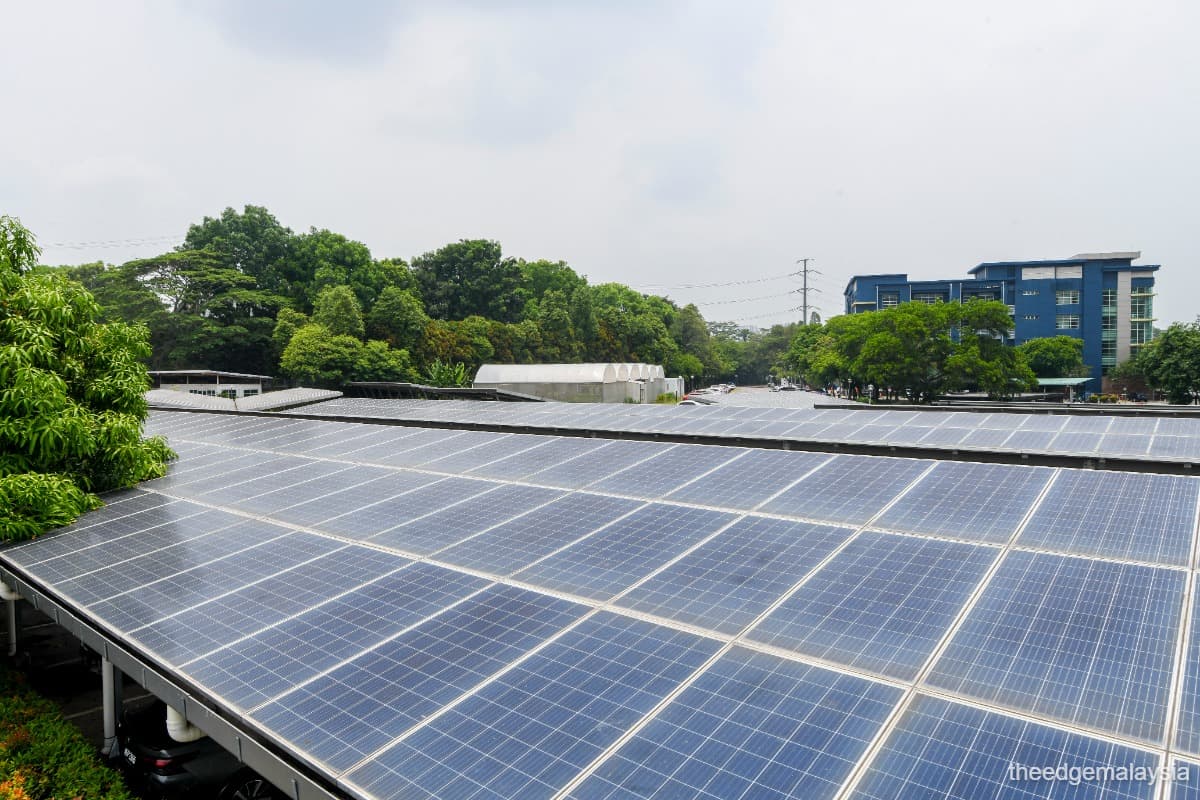
This month, two of AirTrunk's renewable energy partnerships providing more than 50MW of power across Australia and Malaysia became operational.
While there is more to do, they reflect a broader trend.
Around the world, digital infrastructure is becoming an increasingly important source of long-term investment in clean energy.
For countries like Malaysia, that presents an important opportunity.
Malaysia has established ambitious plans to grow both its digital economy and its clean energy sector. The challenge now is ensuring these ambitions reinforce one another.
Large electricity users should expect to support the clean energy needed for their own growth. That is being responsible.
But it should be the floor, not the ceiling.
Success should ultimately be measured by what those investments make possible: more renewable generation, stronger networks, greater storage capacity and a more resilient electricity system.
Achieving those outcomes will require policies that encourage investment while giving industry the flexibility to deliver it in the most effective way.
This is already beginning to happen.
Across the region, major digital infrastructure providers are increasingly entering long-term renewable energy partnerships while investing in battery storage and other supporting infrastructure.
These investments do more than support individual campuses.
They help create the investment certainty needed to bring forward new energy infrastructure.
As Malaysia continues to expand its digital economy, electricity demand will grow alongside it.
That demand should not simply be viewed as a challenge for the grid. It should be recognised as an opportunity to strengthen it.
Taken together, these investments show that large, long-term electricity users can be more than customers of the electricity system.
They can become strategic infrastructure partners, providing the investment certainty that helps unlock new renewable generation, storage and transmission.
The challenge now is ensuring policy settings maximise that opportunity.
Malaysia can, and should, achieve both digital growth and the clean energy transition.
But the stakes are high.
Globally, nearly half of all corporate renewable energy procurement has been driven by digital infrastructure, with most investment flowing to the US.
Every major economy is competing for the same capital, and investment will increasingly flow to countries that provide confidence, coordination and clear pathways to delivery.
Malaysia has the opportunity to position itself among them.
That will require thinking differently about how infrastructure is planned.
Too often, renewable generation, networks, storage and major electricity demand are developed independently.
Greater coordination between governments, utilities, renewable energy developers and major electricity users would reduce costs, improve reliability and accelerate investment.
There are three practical things Malaysia can do.
First, plan for where demand is heading. AI and digital infrastructure will become a significant source of electricity demand. Future energy planning should anticipate that demand and use it to guide where renewable generation, storage and transmission investment occurs.
Second, coordinate infrastructure investment.
Energy, digital infrastructure, water, telecommunications and transport should increasingly be planned together rather than sequentially.
Planning these systems together will improve utilisation, reduce costs and provide investors with greater confidence.
Finally, we should focus on outcomes.
Whether investment is delivered through renewable energy procurement, battery storage, network infrastructure or other commercial arrangements, the objective should remain the same: bring forward new clean energy infrastructure, strengthen the electricity system and improve long-term resilience.
Policies that reward those outcomes will encourage innovation, attract investment and strengthen Malaysia's regional position as both a digital and clean energy leader.
Large electricity users are not simply another source of electricity demand.
Properly integrated, they can become part of the investment model that accelerates Malaysia's energy transition.
With the right forward thinking policy, predictable regulatory environment and industry consultation, Malaysia has a rare opportunity to ensure the growth of digital infrastructure strengthens the country's clean energy ambitions rather than competing with them.
Realising that opportunity will require governments, utilities, renewable energy developers and industry to plan together from the outset.
If Malaysia gets that right, digital infrastructure will do more than power the digital economy.
It will help build a stronger, more resilient energy system for the country.
Industry is ready to help make that happen.
Joscha Schmitz is vice-president of energy and land strategy at AirTrunk.