

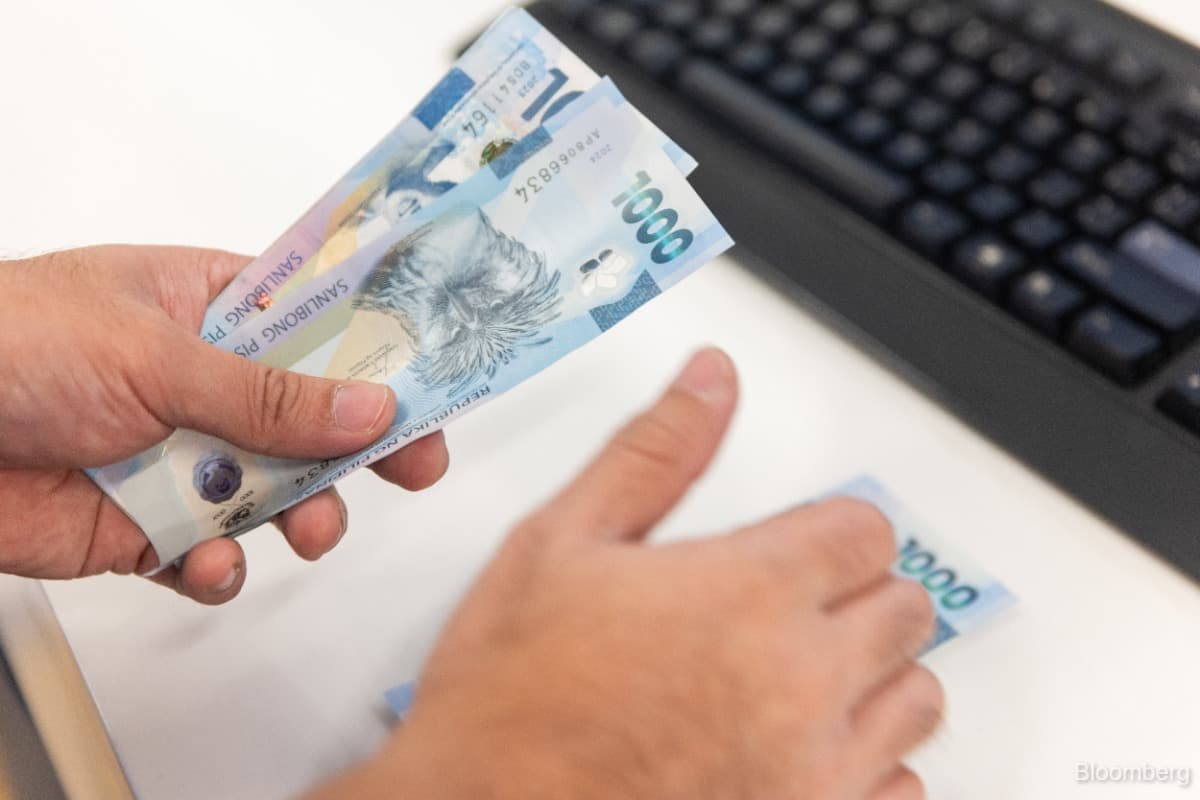
(Aug19): The Philippine peso fell to a record low against the dollar as oil prices climbed, putting more pressure on the central bank to take action.
The peso fell as much as 0.3% to 61.995 per dollar, weakening past the previous all-time low of 61.850 set in July. Bangko Sentral ng Pilipinas said on Wednesday that it “intervenes to address disorderly market conditions and smooth extreme volatility, especially when these can accelerate inflation”.
Brent crude has jumped about 5% in four days, weighing on the peso as the Philippines imports almost all of its oil. Traders are now watching whether the currency will breach the level of 62 per dollar, placing further pressure on the central bank to respond.
The BSP “will probably be biased to hike rates again to defend the peso, but the impact of rates hikes to curb FX depreciation is diminishing”, said Wee Khoon Chong, senior Asia Pacific market strategist at BNY in Hong Kong. “With the dollar-peso breaching the previous top of 61.85 with minimal resistance, market and momentum is likely to drive it higher towards 62.00 and beyond.”
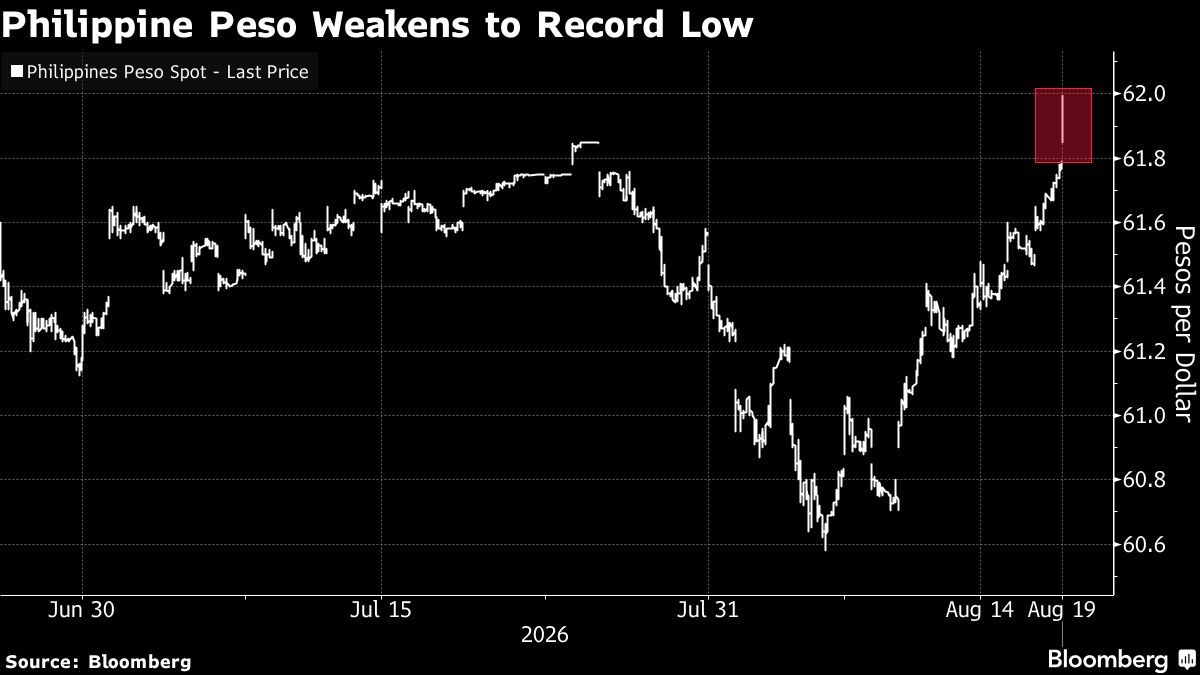
The peso has lost around 5% this year, making it one of Asia’s worst-performing currencies. Philippine President Ferdinand Marcos Jr said last week that the Philippines would not spend all its reserves to defend the peso, while foreign-exchange holdings have fallen almost 7% this year to US$103 billion (RM418.61 billion).
Ahead of its Aug 27 meeting, the BSP faces a tougher policy choice as the peso weakens and oil prices climb. The central bank has said it is prepared to step in if needed, with July inflation at 6.2%, well above its 3% target.
“The BSP may hike rates next week to stem inflation on the back of the movement in FX,” said Philip McNicholas, Asia sovereign strategist at Robeco in Singapore. “It may use FX intervention to smooth out aggressive moves, but should not go beyond that as it still wants the market to determine the level of peso.”
Uploaded by Arion Yeow